
Qatar's property market has moved through a significant growth cycle since 2022. Residential transaction values reached QAR 9.23 billion in Q2 2025, representing a 114 percent year-on-year increase according to Knight Frank. Lusail City and The Pearl continue to absorb the highest volumes of luxury residential demand, with Qetaifan Island North and waterfront districts drawing both Qatari nationals and Gulf residents buying for occupation and rental income. Villa prices edged lower across some segments even as apartment prices rose 3.5 percent to an average of 13,270 riyals per square metre — a combination that has made well-designed properties more competitive as rental assets and more attractive as lifestyle purchases.
Against that backdrop, interior design projects in Qatar have grown more complex and more considered. Clients are no longer simply furnishing a new apartment. They are designing against specific climatic, cultural, and architectural conditions that vary by property type, district, and intended use. A villa in Al Waab operates under different spatial and social logic than a penthouse in The Pearl or a serviced residence in West Bay. Each demands a different brief, a different material palette, and a different understanding of how the space will be lived in.
Algedra has worked across Qatar on residential and hospitality projects, and the questions that clients raise before a project begins tend to follow a consistent pattern: what styles work in this market, how do budgets behave, what materials hold up in the climate, and what does the process look like from first meeting to handover. Our interior design services in Qatar cover villas, apartments, penthouses, and commercial interiors. This article addresses the key questions directly, drawing on work completed across Doha, Lusail, and Al Rayyan.
1. Understanding the Qatar Property Context
Qatar's interior design market does not operate like the UAE or Saudi Arabia, even though all three are GCC luxury markets. Qatar's residential stock is newer on average, and much of it was built to a high structural specification. In Lusail, district cooling, smart metering, and generous floor plates are standard rather than premium features. The city is purpose-built at scale — Lusail covers a total development value of QAR 164 billion and is designed to house over 200,000 residents across villas, apartments, hotels, and retail districts. Projects such as Les Vagues by Elie Saab, The Grove, and Carlton House are among the developments completing delivery in 2026, and buyers in these properties typically receive handover at Category A standard: concrete walls, electrical first fix, and minimal finishes. The entire interior design scope begins at that point.
Established residential zones in Doha — West Bay Lagoon, Al Waab, and the villa districts of Al Rayyan — present a different brief. Properties there are larger, often family-owned for a generation or more, and the design requirement frequently involves renovation or restyling rather than a first fit-out. Clients in these areas typically want to retain the spatial volume of their villas — the high ceilings, the generous majlis proportions, the garden relationship — while updating surfaces, lighting, joinery, and furniture to align with current standards. The scope is narrower in theory but often more technically demanding, because new finishes must integrate cleanly with existing structural and decorative elements that cannot simply be removed.
The Pearl-Qatar sits in a third category. As a man-made island development originally built to absorb Qatar's first freehold properties, it holds 16,000 villas and 25,000 apartments across a Riviera-style waterfront layout. Many units are now at the renovation or upgrade stage as original buyers refresh interiors after a decade or more of use. The Pearl also attracts a significant share of expatriate buyers who are less familiar with Qatari design conventions and need a studio that understands both international standards and local context.
2. Interior Design Styles That Perform in Qatar
Contemporary with Cultural Anchoring
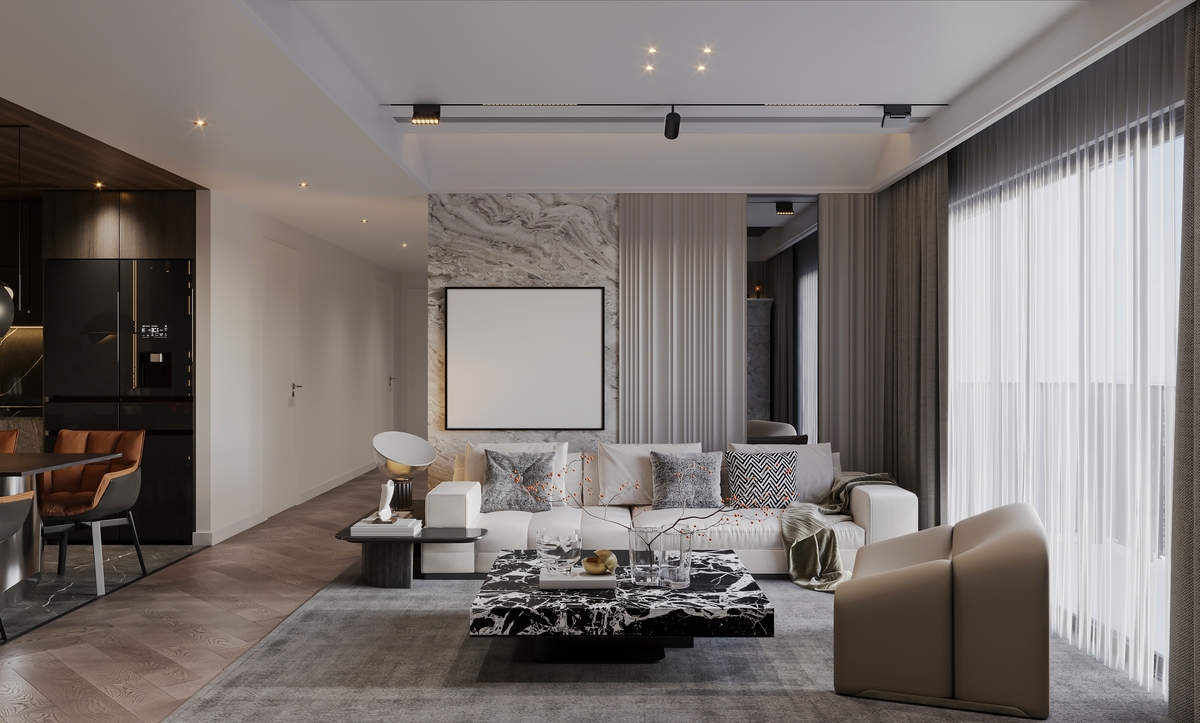
The dominant direction in Qatar's luxury residential market is warm modernism built on cultural anchoring. Clients want interiors that read as international and contemporary but carry visible references to Qatari and Gulf heritage. The result is not a pastiche of traditional motifs applied to an otherwise generic shell — it is a considered integration of cultural logic into spatial decisions, material choices, and lighting design.
The majlis remains a genuine spatial requirement in most villas. Not a token gesture toward tradition, but a fully programmed reception room with its own lighting scheme, seating configuration, acoustic consideration, and surface quality distinct from the rest of the home. Arched niches, textured wall panels in locally referenced stone, patterned marble inserts at floor junctions, and layered chandelier systems all contribute to a room that performs culturally without becoming decorative pastiche. Getting this right requires genuine understanding of how a Qatari family uses the space — the sequencing of guest arrival, the relationship between the majlis and the kitchen, the sight lines that matter for privacy.
Algedra approaches the majlis as a primary space in the design sequence rather than a final-stage addition. The same principle of cultural grounding within a contemporary frame shapes our work across Gulf and Turkish residential markets. For clients interested in how heritage motifs and modern proportions coexist in practice, our overview of villa design trends across Turkey illustrates the approach — Ottoman and Seljuk references handled with discipline rather than nostalgia. The logic translates directly into how Algedra designs for Qatar.
Classical and Neoclassical
A segment of Qatar's high-net-worth residential market — particularly in large villas, palace-scale properties, and majlis wings of prominent family homes — retains a strong preference for classical and neoclassical interiors. Ornate plaster ceilings, marble column detailing, layered chandeliers, and formal symmetry remain current for these clients. The technical execution of this register requires genuine specialist experience: proportional column placement, the relationship between cornice profiles and ceiling height, the balance between decorative density and visual calm. Our detailed look at luxury mansion interiors in Qatar covers how these elements — from custom calligraphy walls to indoor palm gardens and private wellness suites — come together in Qatar's most ambitious residential projects.
Modern Minimal
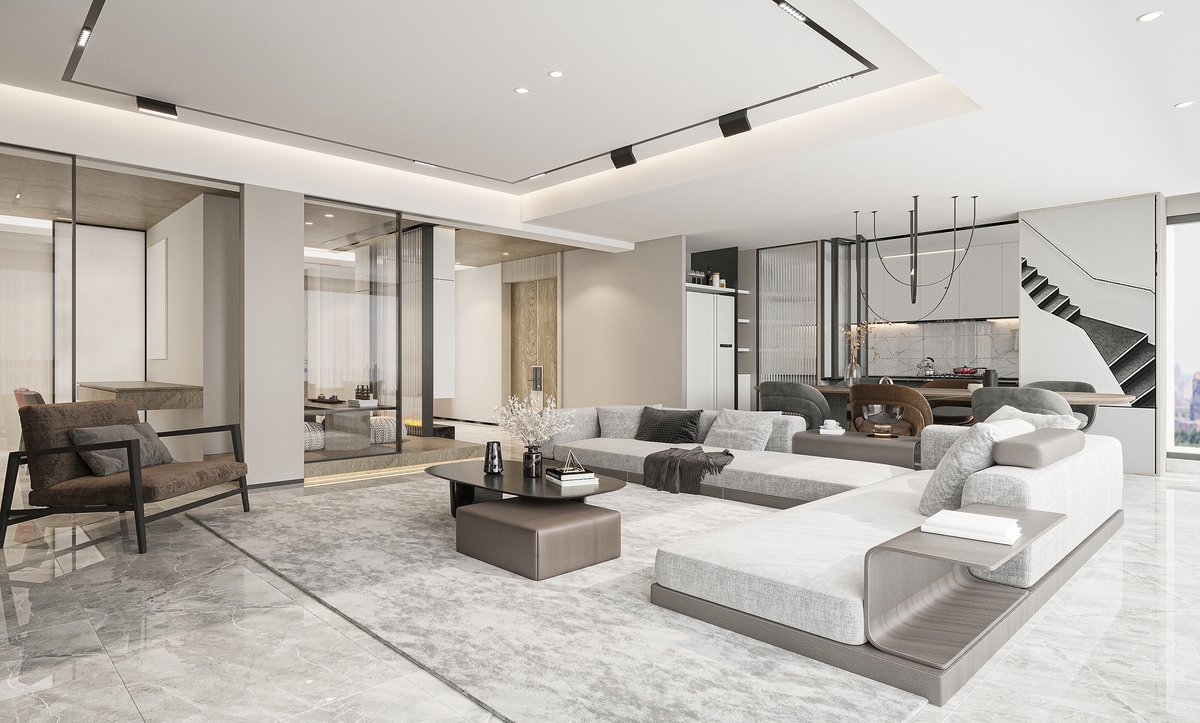
Penthouse apartments in The Pearl and Lusail towers often suit a minimal palette. Clean stone surfaces, frameless joinery, and integrated ceiling lighting work well against the large glazed facades these properties offer. Material selection becomes the entire design at this end of the spectrum — the absence of ornamentation means every surface decision carries proportionally more visual weight. Our villa interior design service page outlines how Algedra approaches material selection and spatial planning across residential project types, from minimal high-rises to classically registered palace interiors.
3. Climate Considerations and Material Selection
Qatar's climate runs extreme across the year. Summer temperatures exceed 45°C, UV exposure degrades certain textiles and surface finishes rapidly, and coastal humidity in The Pearl and Lusail affects material performance at the building envelope. Interior designers working in Qatar need to account for these conditions from the specification stage, not as a remedial exercise after problems appear on site.
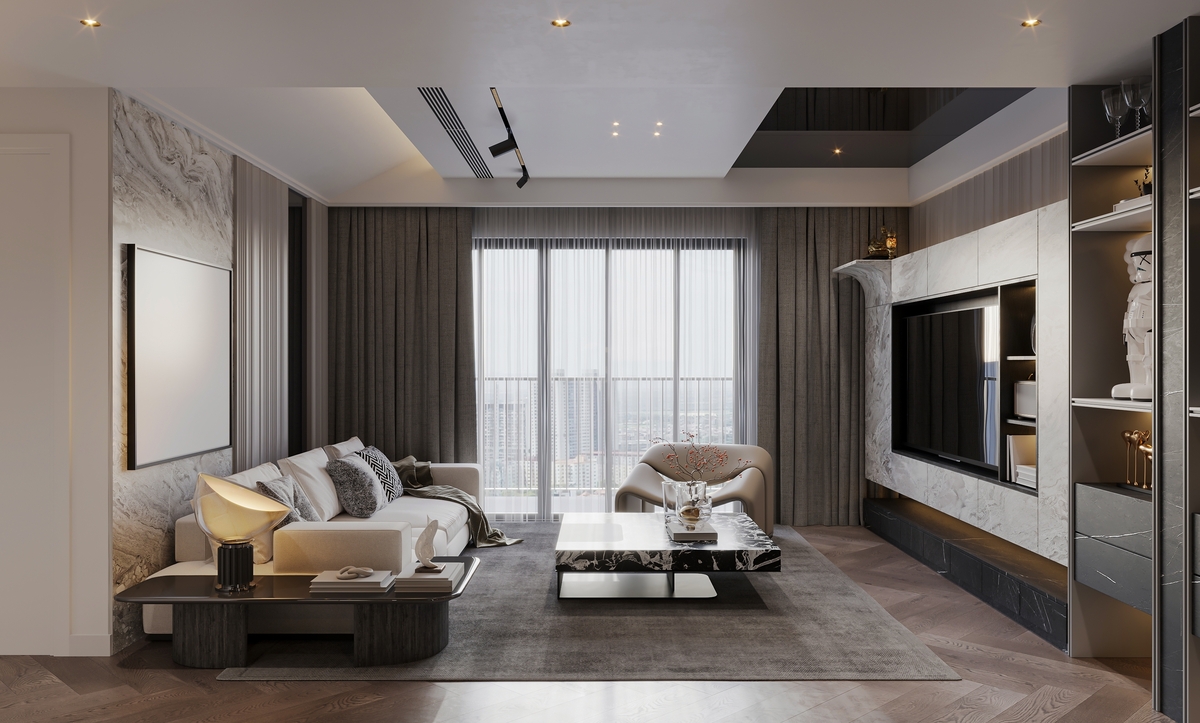
Natural stone performs well in Qatar when selected and sealed appropriately. Turkish marble — Afyon White, Bilecik Beige, and Marmara Island stone — is widely used in Gulf residential projects and holds up in conditioned interior environments. Algedra sources these materials directly from Turkish quarries, where site visits allow slab-level quality control before stone is cut. This is a practical advantage over marble sourced at greater distance, where the gap between catalogue specification and delivered material can be significant on large-area floor or wall applications.
The kitchen is where material specification decisions carry the most daily consequence. Countertop stone, cabinetry board grades, hardware finishes, and surface treatments all need to perform under repeated heat, moisture, and cleaning cycles. Algedra's completed kitchen design choices in Qatar — from minimalist open-plan kitchens in Doha villas to classical Arabic-register kitchens in Al Wakrah — illustrate how material decisions at the specification stage determine how a kitchen ages over five and ten years of daily use.
Textiles require careful specification throughout the rest of the home. Solution-dyed fabrics resist UV degradation considerably better than standard upholstery. In rooms that receive direct afternoon sun through west-facing glazing — common in Lusail's waterfront orientation — this distinction directly affects how long a specified interior looks its original self. Velvet and heavy linen, both popular in Gulf luxury interiors, need proper lining, backing, and directional placement to perform over time in air-conditioned environments that cycle between very dry and very cold.
Wood veneers and solid timbers need engineered substrates and appropriate humidity management to remain stable. Joinery and fitted furniture should use moisture-resistant board grades throughout, even in rooms that appear climatically stable. Qatar's building systems cycle between intensely air-conditioned interiors and very high exterior humidity at transitions — entrance zones, service corridors, areas near external doors — and movement stress on inferior board products is a documented cause of premature joinery failure in GCC fit-outs. Specifying correctly at the beginning is less expensive than replacing cabinetry inside three years.
These material standards apply equally across Algedra's hospitality interiors work in Qatar, where hotel lobbies, restaurant fit-outs, and spa interior design projects all operate under the same climatic demands. The difference in hospitality is that material failure is visible to paying guests rather than resident owners, which raises the tolerance requirement further.
4. Budget Structures for Interior Design in Qatar
Interior design fees in Qatar are typically structured either as a percentage of the total project value or as a flat per-square-meter rate, depending on scope and the studio's model. For full residential fit-out projects in the luxury segment — concept through to site handover, including furniture procurement and project supervision — a combined cost of USD 800 to USD 1,500 per square meter is a reasonable planning range for mid-to-high specification work. This figure covers design fees, furniture, finishes, joinery production, installation, and logistics but excludes structural works, MEP upgrades, and smart home systems, which carry separate cost structures.
Palace-scale or trophy properties sit well above this range. Imported marble from Italian or Turkish sources, bespoke furniture production with lead times of sixteen to twenty weeks, custom metalwork, and integrated automation systems each compound quickly on floor plates above 1,000 square metres. Clients at this level typically work with Algedra on a phased programme — concept and design development first, then procurement in controlled tranches — to maintain cost visibility throughout execution.
Qatar-based projects benefit from the absence of import duties on most furniture and finish materials. Unlike some GCC markets, Qatar does not apply blanket tariffs that significantly inflate the landed cost of specified items, which makes international furniture procurement more cost-predictable than in markets where duties add 5 to 15 percent to procurement budgets. Clients can review completed examples across residential and commercial project types in Algedra's fit-out portfolio to calibrate scope and finish expectations against real delivered work.
Clients planning renovations rather than new fit-outs should budget a contingency of 15 to 20 percent above initial estimates. Structural discoveries, updated MEP requirements, and specification changes during execution are routine in renovation scopes, and underfunded contingencies are the most consistent cause of project delays and fractured client-designer relationships. Setting this contingency at the outset, and treating unspent contingency as a bonus rather than a routine expenditure, keeps projects on track.
5. How Algedra Delivers Projects in Qatar
Algedra operates as a full-service interior design and fit-out firm, meaning the same team that develops the design concept also manages technical drawings, procurement coordination, contractor oversight, and site supervision through to handover. Clients in Qatar working with Algedra do not need to engage a separate fit-out contractor and then manage coordination between that contractor and a design consultant — a division of responsibility that introduces version conflicts, accountability gaps, and timeline slippage in a large proportion of Gulf fit-out projects.
The project sequence begins with a briefing session — either in person in Doha or conducted remotely via video with a detailed site survey — followed by a concept development phase that typically produces mood boards, spatial layouts, and material references within two to three weeks. Three-dimensional visualisation is produced in full before any procurement decisions are made. Clients receive a photorealistic view of every principal space before committing to marble, joinery finishes, or furniture, which reduces late-stage change orders considerably.
For projects that begin at the architectural stage — new builds in Lusail or Al Rayyan where Algedra is engaged before shell construction is complete — our architectural design service covers structural planning, facade design, and spatial zoning before the interior brief begins. Handling architecture and interior design under one firm eliminates the coordination gap that develops when two separate practices must reconcile structural decisions with interior requirements after the fact.
For clients purchasing property in Lusail or The Pearl and managing their interior design remotely from Istanbul or elsewhere in the Gulf, Algedra's Istanbul base provides a practical coordination structure. Design reviews, material approvals, and procurement decisions can all be handled across the Istanbul–Doha axis. Travel to Doha is scheduled for site surveys, critical approval stages, and handover rather than routine progress meetings, which keeps the client's time commitment proportionate to the decision weight of each stage.
The practical outcome is that Algedra clients in Qatar receive a single point of accountability from first sketch to furniture placement. Timelines, budgets, and design intent are held by one team across the full project duration, which is the most reliable structure for delivering luxury residential and hospitality interiors to the standard Qatar's current market demands.
Ready to begin your Qatar interior design project? Contact Algedra to discuss your property in Doha, Lusail, Al Rayyan, or The Pearl. Our team works across residential, hospitality, and commercial scopes throughout Qatar and the GCC. Reach us at info@algedra.com.tr or call +90 533 701 89 71.
Frequently Asked Questions
Does Algedra take on interior design projects in Qatar from its Istanbul base?
Yes. Algedra manages projects across Qatar and the wider GCC from its Istanbul office. The design and concept phase is handled remotely, with travel to Doha for site assessments and key milestones. Many clients find this arrangement practical, particularly those who split time between Istanbul and Doha or who are purchasing off-plan and managing the interior brief before taking physical possession.
What types of properties does Algedra design in Qatar?
The scope covers luxury villas in Al Waab, West Bay Lagoon, and Al Rayyan, apartments and penthouses in The Pearl and Lusail, and hospitality and commercial interiors across Doha. Algedra also works on palace-scale residential projects requiring classical or Islamic design registers, and on new-build architectural scopes in Lusail where the client brief begins before shell completion.
How long does a full villa interior design and fit-out take in Qatar?
For a new-build villa fit-out — from first briefing to furniture installation — a realistic timeline is six to nine months. Larger properties or projects requiring bespoke furniture production from European or Turkish workshops may extend to twelve months. Renovation projects in established districts vary depending on structural scope, but four to six months is a reasonable expectation for mid-scale restyling without structural changes.
What is the difference between interior design and fit-out in Qatar?
Interior design covers the concept, space planning, material specification, and visual direction of a project. Fit-out is the physical execution — joinery production and installation, flooring, painting, ceiling works, and furniture delivery. Many clients engage a designer and a fit-out contractor separately, which introduces coordination complexity. Algedra provides both under one contract, with one team accountable for both design integrity and execution quality through to handover.
Can Algedra source materials from Turkey for Qatar projects?
Yes. Turkey is a significant source of marble, joinery components, custom furniture, and decorative stone for Gulf projects. Algedra's Istanbul base allows direct procurement from Turkish manufacturers and quarries, with quality control visits at source before materials are cut or shipped. Turkish marble — Afyon White, Bilecik Beige, and Marmara Island stone — is regularly used in Algedra's Qatar and GCC residential projects, and Turkish furniture workshops produce custom pieces to international specification at competitive lead times.