
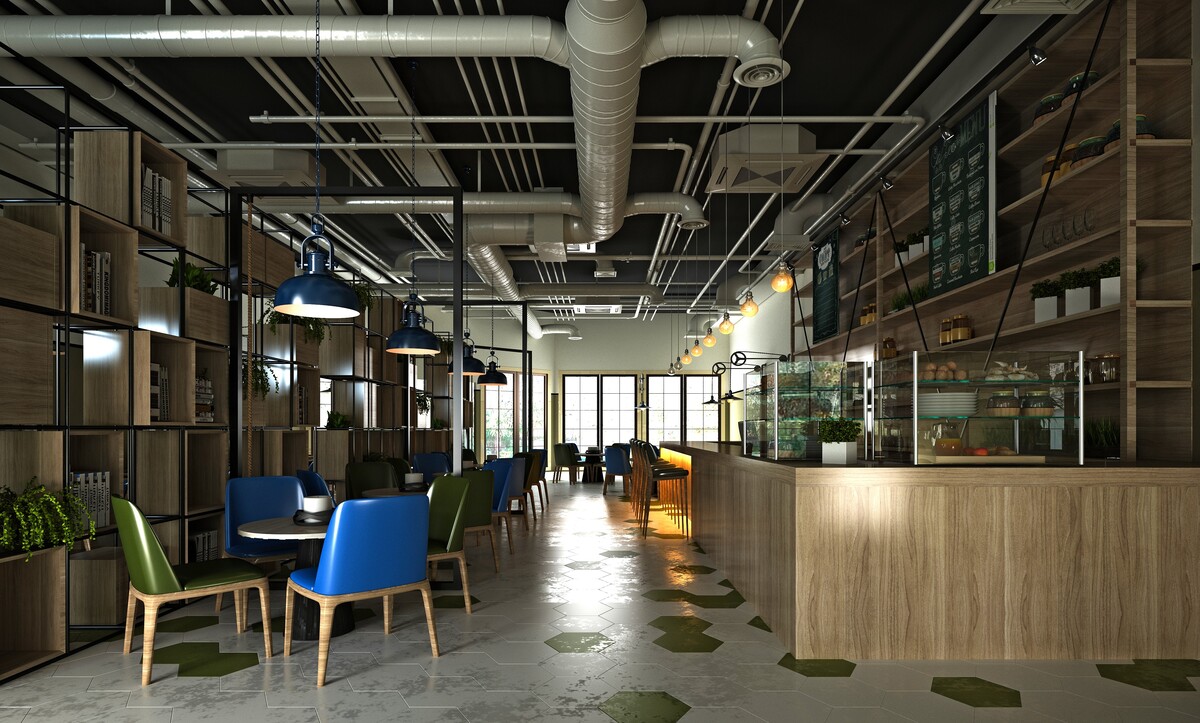
Creating a world-class industrial-modern cafe design requires a strategic merger of raw structural elements and high-end contemporary finishes. This industrial coffee shop guide provides a deep dive into the specific steps necessary to build a space that feels high-energy, authentic, and operationally superior. By utilizing strategic cafe interior design principles, you can develop a destination that draws in crowds and encourages repeat visits.
1- The Architecture of Industrial Coffee Shop Design
At the center of every industrial cafe design is the building itself. This style thrives by revealing structural components that traditional designs seek to hide. To achieve an authentic urban coffee shop look, you must lean into the raw history of your location.
Exposed Brick Walls
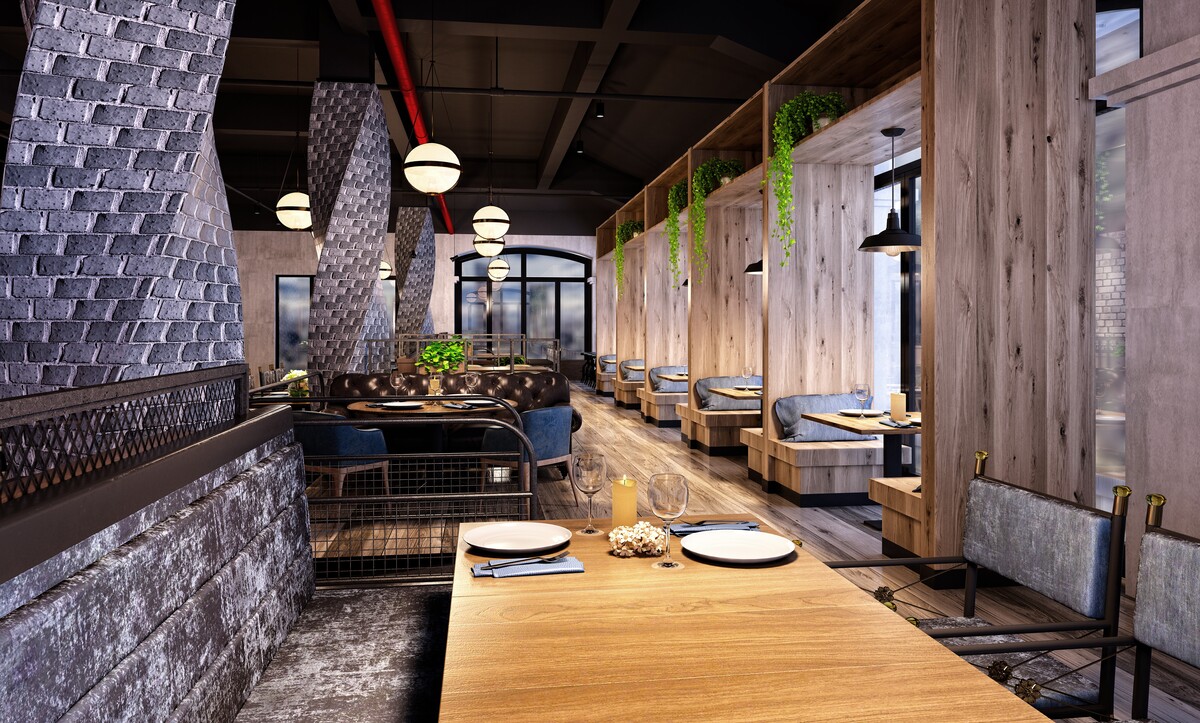
Original brickwork is a primary asset. Instead of covering it, use a clear sealant to prevent dust while showcasing the natural variation in color. If your building lacks real brick, thin-set brick veneers provide a realistic alternative that adds immediate character. The texture of aged brick provides a tactile quality that smooth drywall cannot replicate, giving your coffee house design a sense of permanence and grit.
Polished Concrete Flooring
For high-traffic areas, polished concrete floors are the gold standard. They are incredibly durable, easy to sanitize, and offer a sleek, monolithic appearance. To add a modern twist, consider a matte finish rather than a high gloss, which keeps the space feeling grounded. Concrete is also an excellent thermal mass, helping to regulate the temperature of your modern cafe naturally.
Visible Ceiling Structures
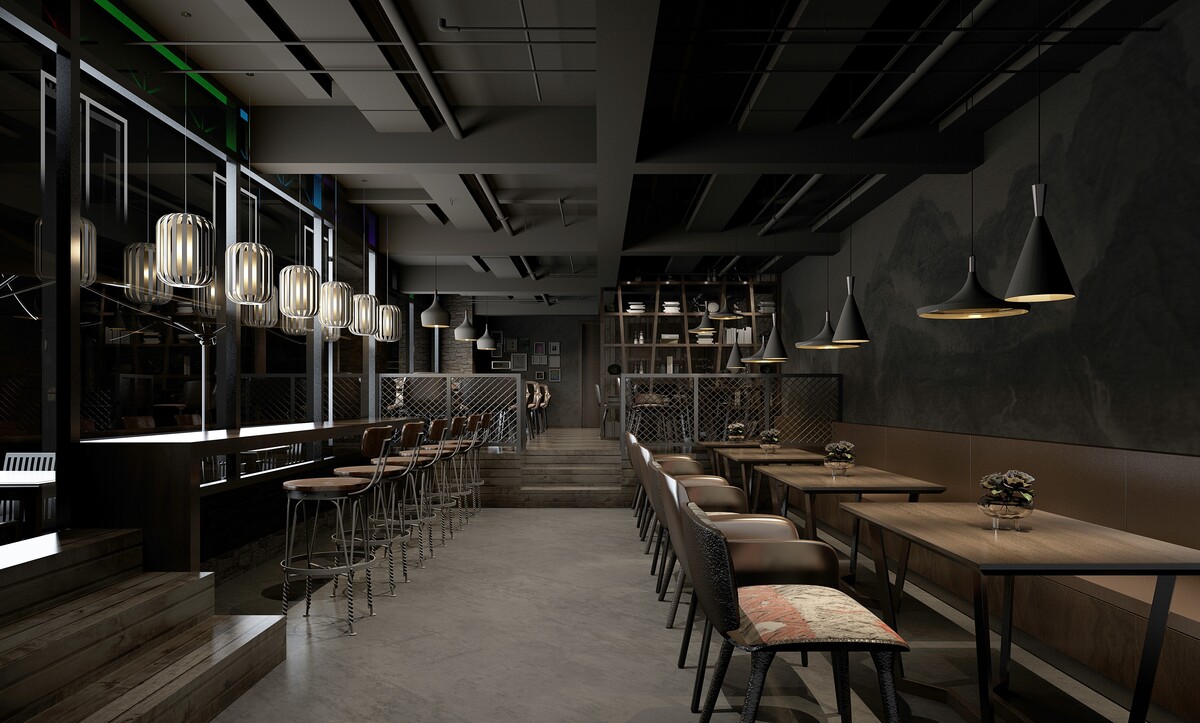
A true industrial-style cafe leaves the ceiling open. Painting exposed ductwork, electrical conduits, and steel rafters in a uniform matte black or charcoal gray creates a clean but rugged look. This approach increases the vertical volume of the room, making a small floor plan feel significantly larger. High ceilings also allow for better air circulation, which is vital in a busy specialty coffee shop.
2- Master the Material Palette
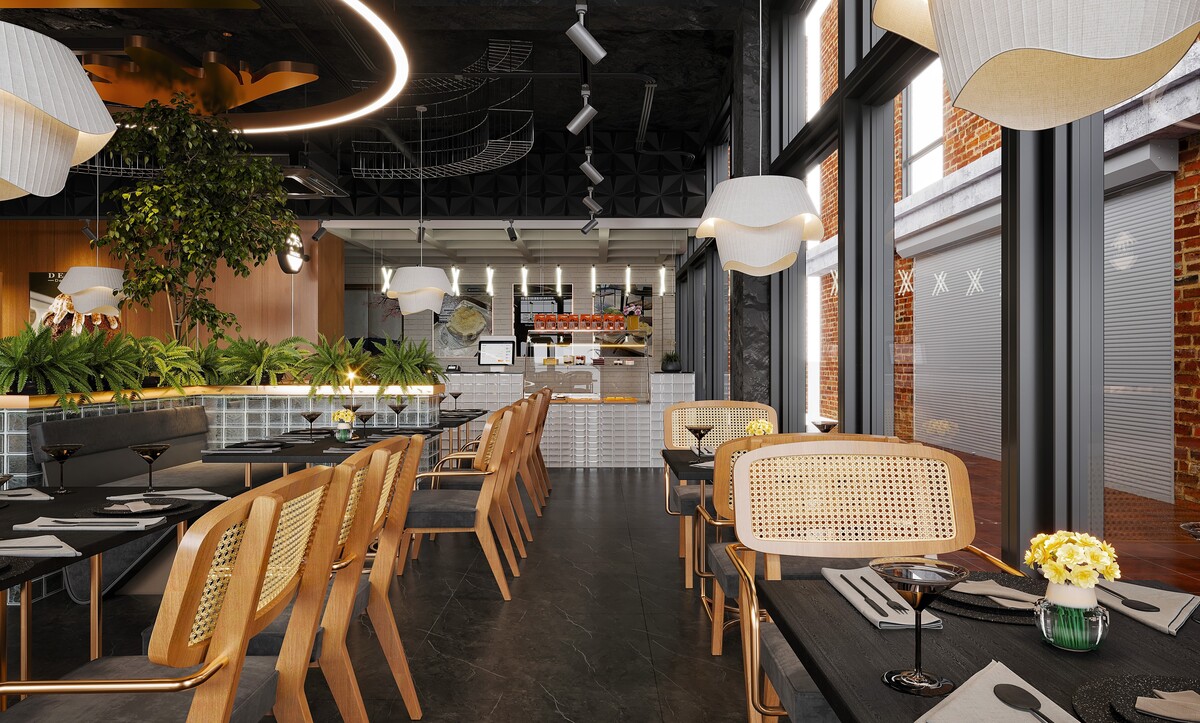
Selecting the right materials is what separates a generic shop from a high-end specialty coffee interior. The industrial-modern look depends on a high-contrast relationship between hard and soft surfaces.
Steel and Metal Accents
Incorporate black powder-coated steel into your shelving units, window frames, and table bases. This material provides the sharp, graphic lines necessary for a modern edge. For a more vintage touch, use distressed iron or copper piping for custom wall displays. Metal is not just a visual choice; its longevity makes it a smart investment for a high-traffic business design.
Natural Wood Finishes
To prevent the industrial elements from feeling too cold, introduce plenty of wood. Reclaimed timber or thick walnut slabs are ideal for the main coffee bar and communal tables. The organic texture of the wood grain provides a necessary balance to the surrounding concrete and metal. Using wood also helps with the acoustic design of the room, as it absorbs sound better than cold steel.
Leather and Textiles
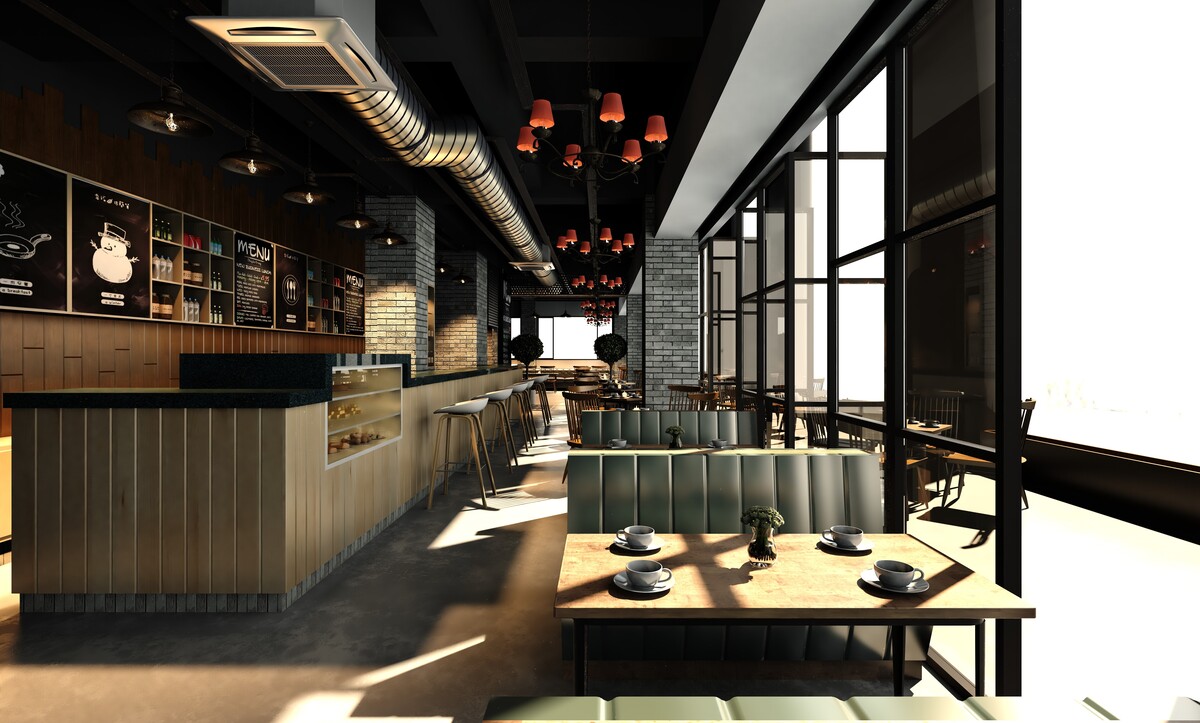
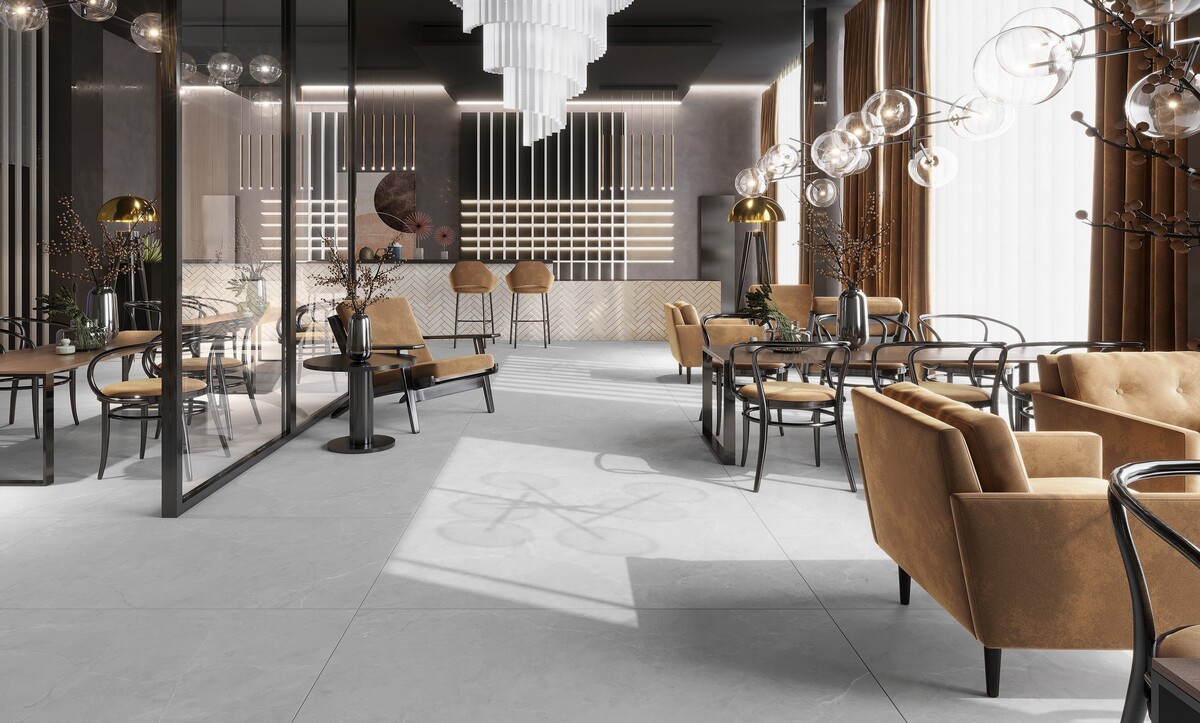
Seating is an opportunity to introduce luxury. Cognac leather armchairs and stools add a vintage warmth that develops a beautiful patina over time. For booths, use heavy-weighted fabrics in charcoal or olive green to improve the cafe acoustics while maintaining the rugged theme. These soft touches make guests want to stay longer, increasing the average ticket price.
3- Planning an Efficient Coffee Shop Layout
A beautiful cafe design must work for the people behind the counter. High-volume success depends on a functional coffee shop layout that minimizes friction and maximizes speed.
The Service Hub
The ordering counter is the stage. Position your espresso machine facing the customers so they can see the precision of the baristas. This transparency is a key tenet of third-wave coffee culture. Ensure there is at least 36 inches of clearance behind the bar to allow staff to move without collision. A well-organized barista station is the heart of a profitable coffee business.
The Customer Journey
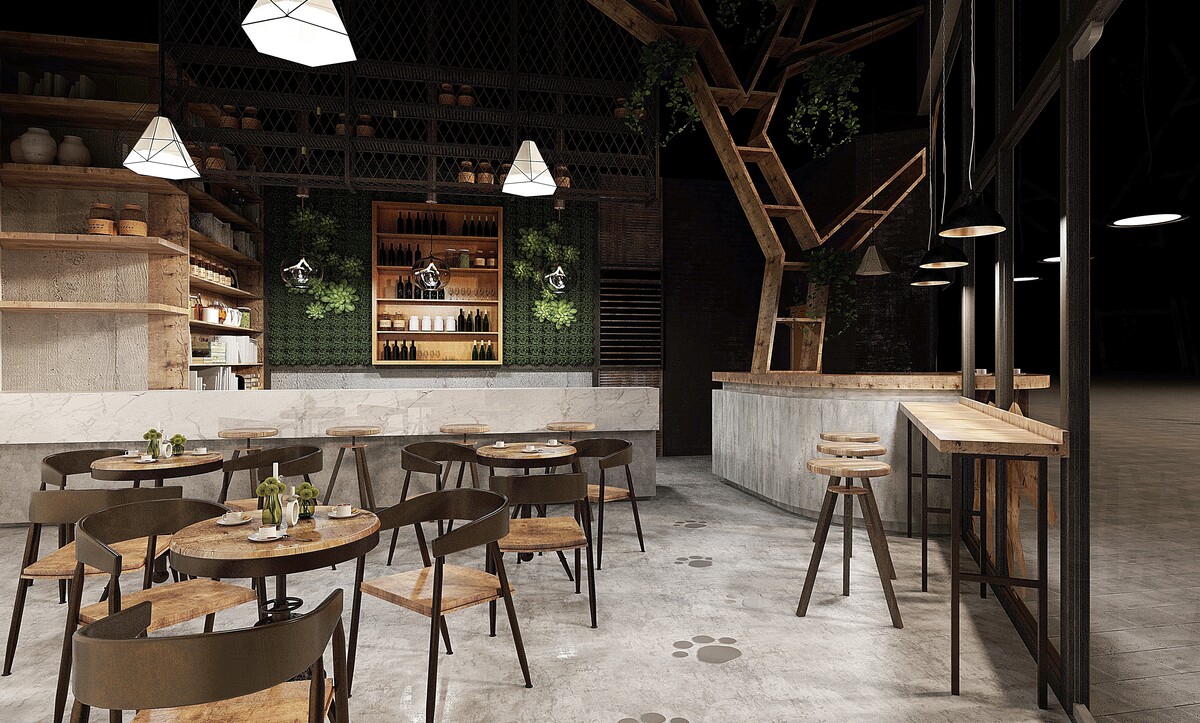
Design a clear path from the entrance to the POS system. Use floor transitions or lighting clusters to guide the queue naturally. Avoid placing seating directly in the line of travel to the pickup station, as this creates bottlenecks during peak hours. A smooth flow keeps customers happy and prevents the space from feeling overcrowded.
Zoned Seating Strategies
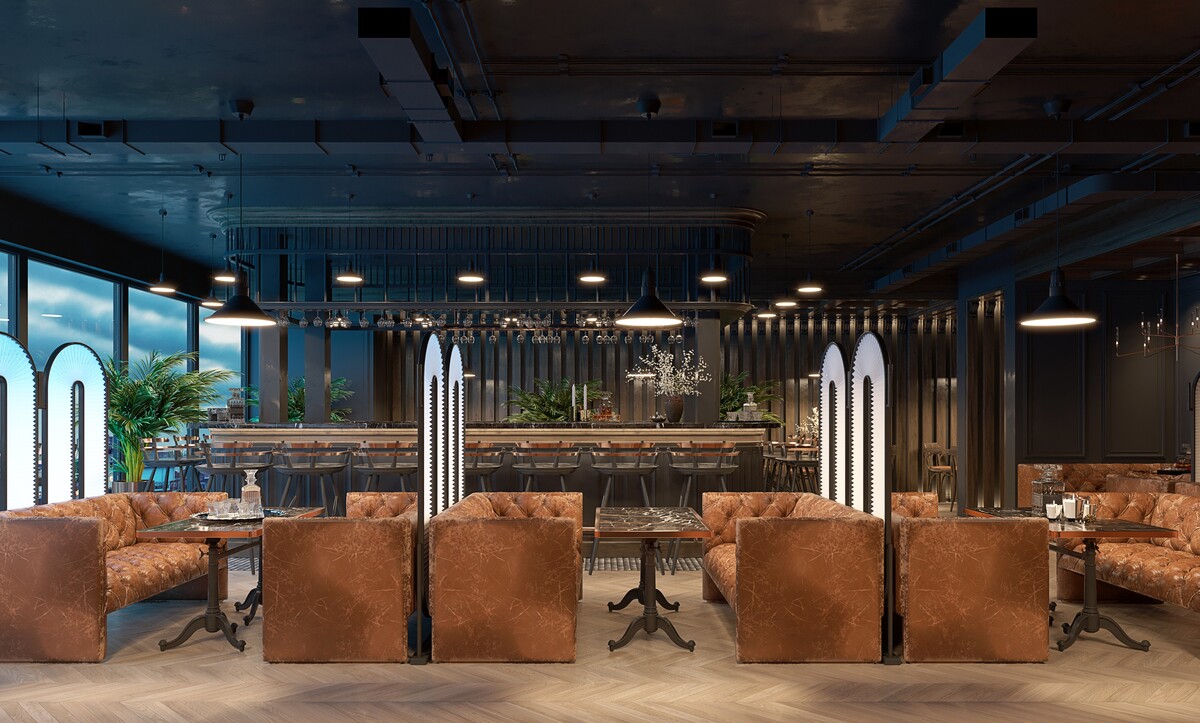
A versatile cafe seating plan caters to different customer behaviors:
- The Power Bar: Install a long bar along the front window with plenty of USB charging ports for solo workers and digital nomads.
- The Social Hub: Place a large communal wood table in the center of the room to encourage groups and community interaction.
- The Lounge Nook: Use a corner for soft seating and low coffee tables, creating a space for long-form relaxation and casual conversation.
4- High-Impact Lighting Design
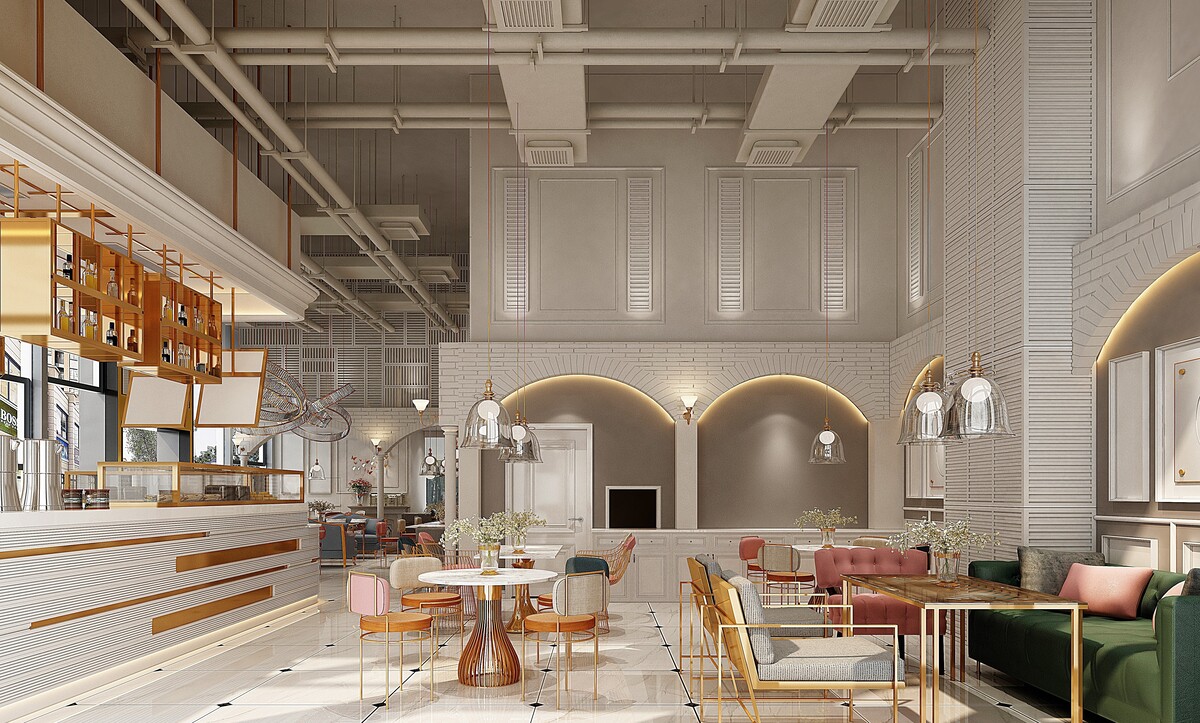
Lighting is the most powerful tool in modern cafe interiors. It sets the mood and highlights your best architectural features.
Layered Lighting Sources
Effective coffee shop lighting uses three layers:
- Ambient Light: This is your general illumination. Use a combination of natural light from large windows and recessed ceiling fixtures to provide a safe, clear environment.
- Task Lighting: Focus bright, direct light over the espresso bar and registers so staff can see clearly. This helps with accuracy and speed during the morning rush.
- Accent Lighting: Use oversized industrial pendants or Edison bulb fixtures to create a warm, inviting glow over tables. This layer adds the "wow" factor to your interior design.
Natural Light Maximization
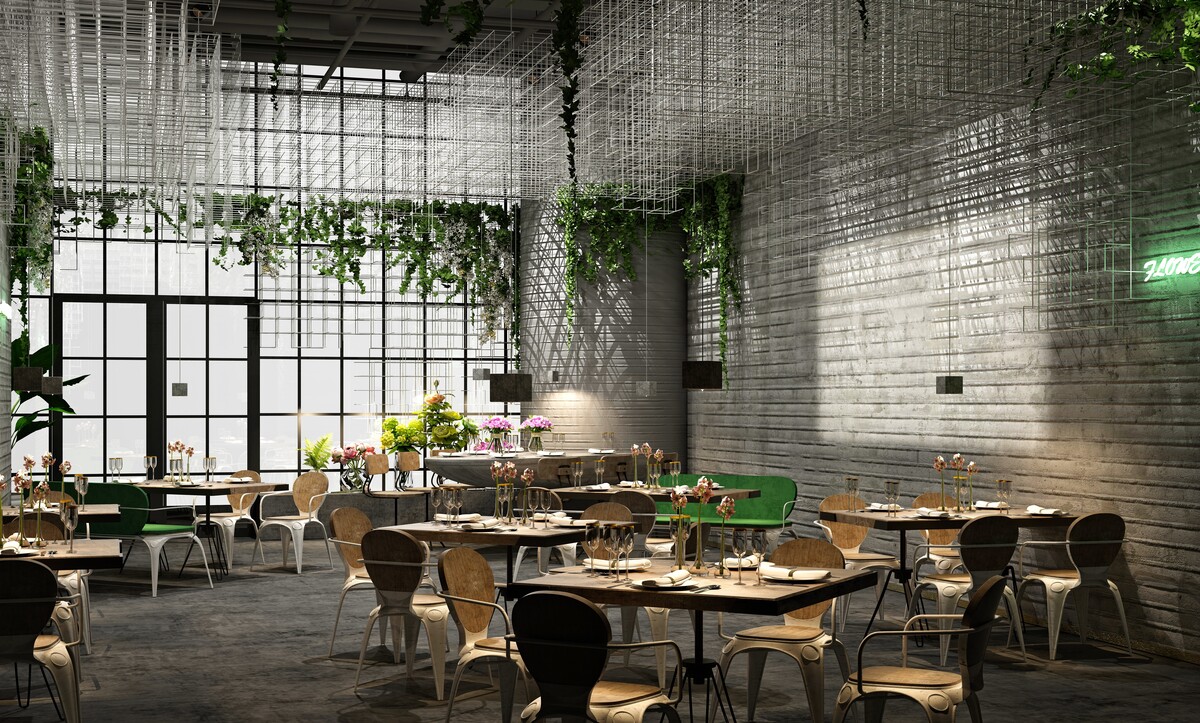
Large, steel-framed windows are essential. They connect the interior with the street and provide the best light for Instagrammable coffee photos. If your space lacks windows, consider adding skylights or using large mirrors to bounce available light into darker corners. Natural light makes a small cafe design feel much larger and more pleasant.
5- Decor and Sensory Details
The small details are what build a memorable coffee shop brand. Every choice should reinforce the industrial-modern theme and create a cohesive experience.
Biophilic Design in Cafes
Plants are the perfect "modern" addition to an industrial space. The vibrant green of a Monstera deliciosa or a tall Fiddle Leaf Fig looks striking against a gray concrete wall. Use hanging planters to fill empty vertical space and introduce an organic, living element to the room. Plants also improve air quality and provide a sense of well-being for your guests.
Minimalist Branding and Signage
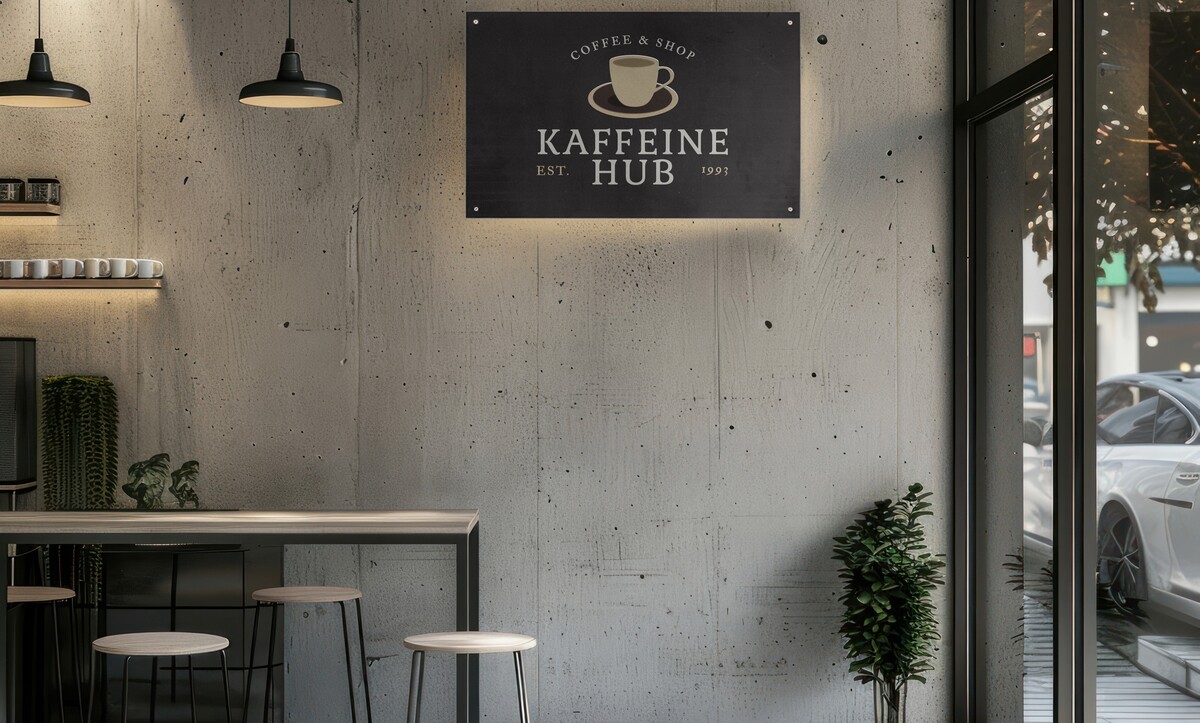
Keep your branding clean and sharp. Use bold typography on your menu boards and consider a custom neon sign for a pop of color. High-contrast signage—such as white letters on a black background—aligns perfectly with the industrial aesthetic. Your cafe logo should be visible but not overwhelming, integrated naturally into the wall decor.
Acoustic Management
Hard surfaces like brick and concrete reflect sound, which can make a cafe feel noisy. Install acoustic ceiling baffles or use heavy area rugs under seating groups. These elements absorb sound while adding another layer of texture to your cafe decor. A well-tuned sound environment allows for easy conversation and a more premium feel.
6- Integrating Technology into Modern Cafe Design
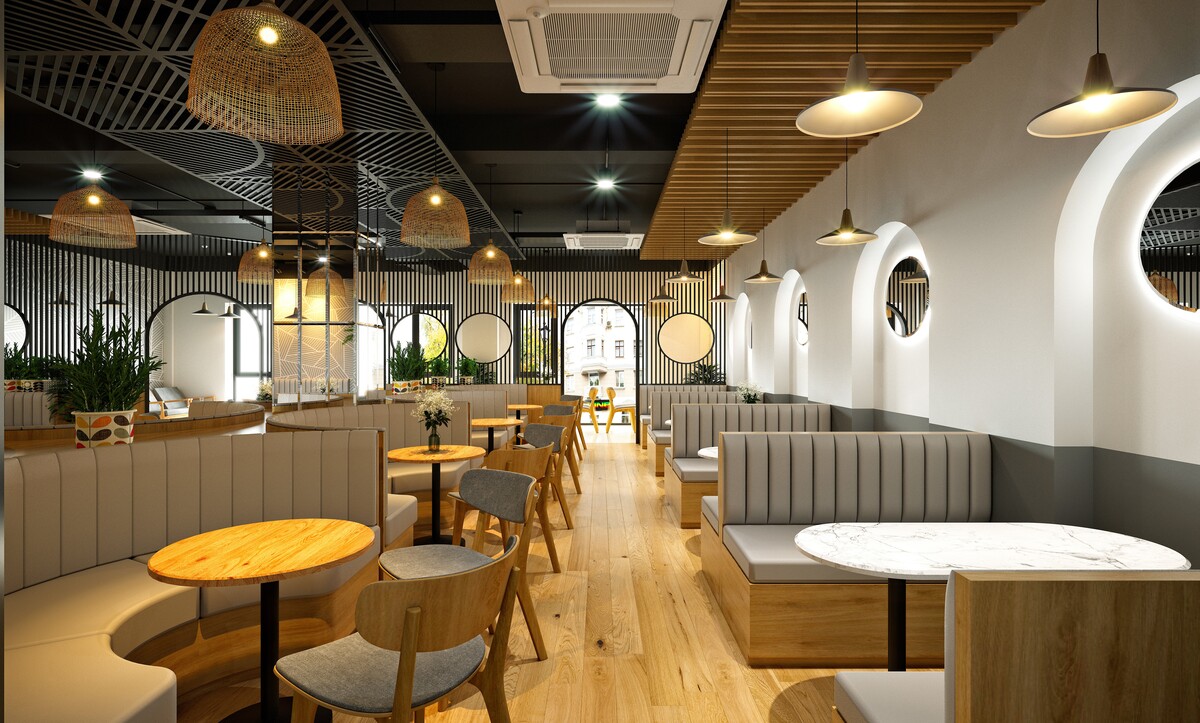
In today's market, your industrial cafe needs to be tech-friendly. This doesn't mean hiding the tech, but rather making it a part of the modern design.
Integrated Charging Stations
Hide power outlets in the metal frames of your tables or under the wooden bar tops. This allows customers to charge their devices without messy cords cluttering the design. Offering high-speed Wi-Fi is a standard expectation, so ensure your router is powerful enough to cover the entire industrial space.
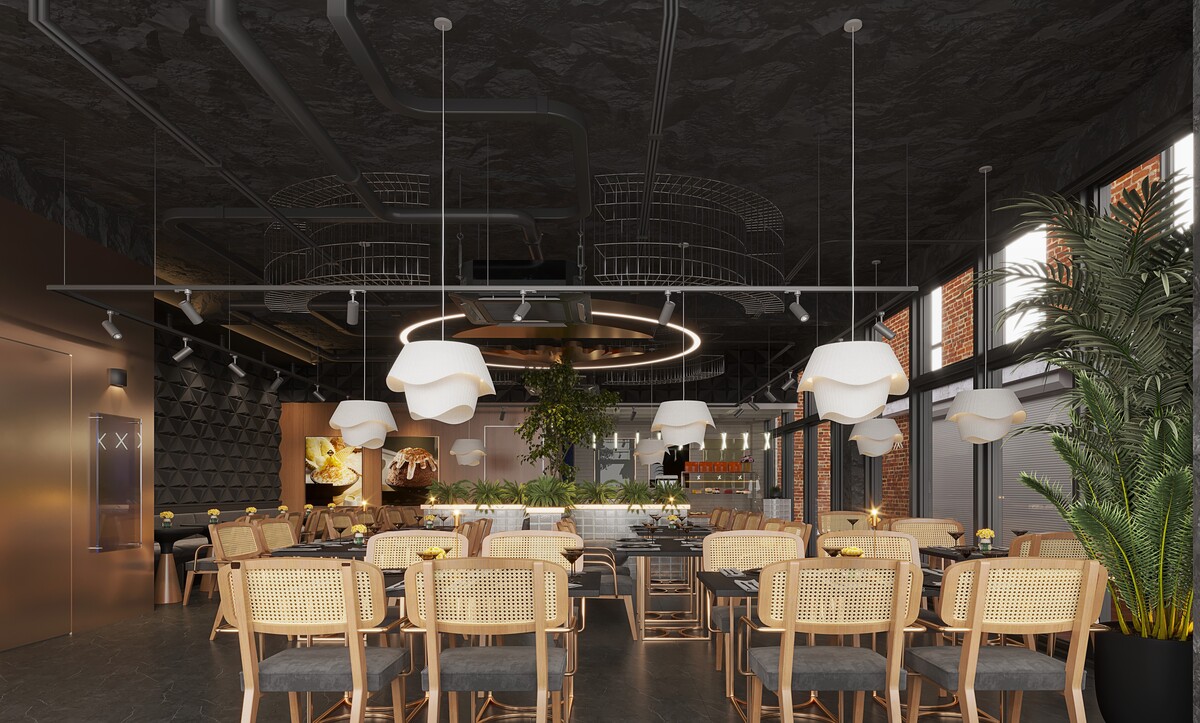
Digital Menu Boards
While chalkboards are a classic industrial cafe staple, digital screens with high-resolution graphics can offer a modern twist. Use frames that match your black steel accents to keep them in line with the industrial-modern aesthetic. These allow for real-time updates to your specialty coffee menu.
7- Why Choose Industrial-Modern Design?
Choosing an industrial-modern coffee shop design is a smart business move. This aesthetic uses durable materials that withstand the rigors of daily use. It offers a timeless look that doesn't go out of style as quickly as more trendy designs.
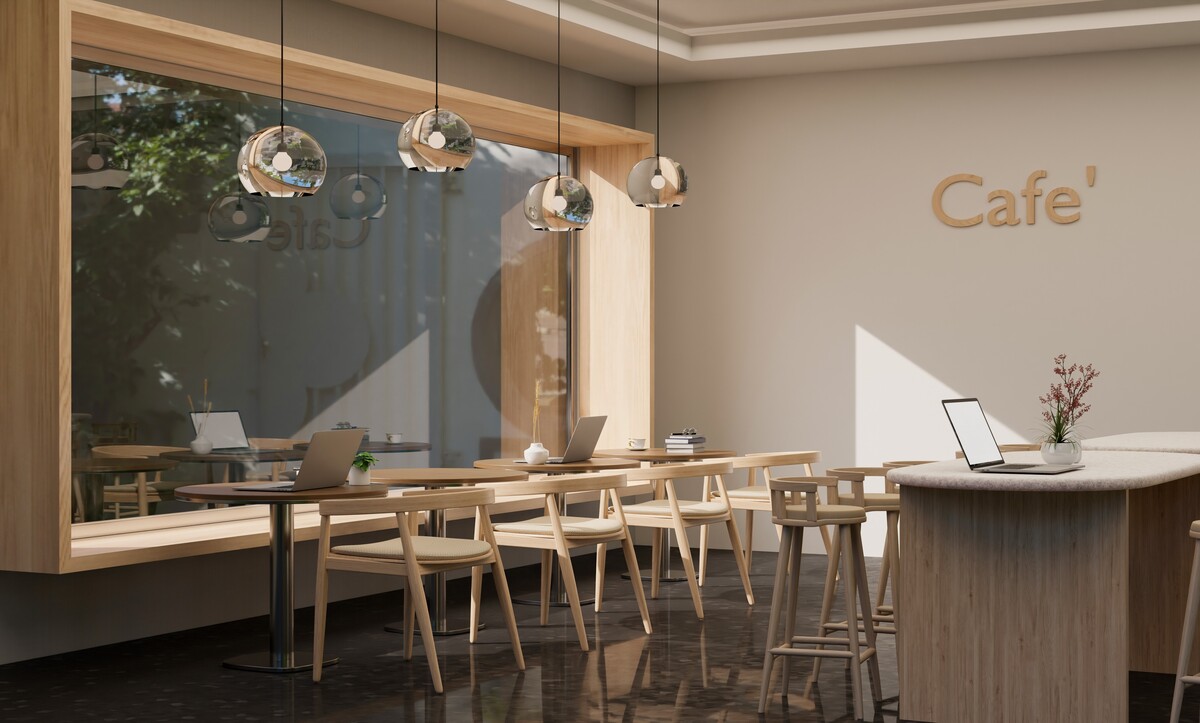
By focusing on the raw architecture, refined materials, and smart layout, you create a space that feels both professional and approachable. This design attracts a wide range of customers—from the early-morning commuter to the afternoon freelancer—ensuring your cafe remains a vibrant part of the community. The industrial-modern style is a powerhouse for branding, as it conveys a message of strength, quality, and contemporary taste.
8- Final Design Checklist for Success:
- Flooring: Polished concrete, matte-finish stone, or reclaimed wood planks.
- Countertops: Poured concrete, high-grade quartz, or thick live-edge wood.
- Walls: Exposed original brick, dark-toned plaster, or metal cladding.
- Lighting: Large industrial pendants, track lighting, and Edison bulbs.
- Seating: A mix of metal-framed stools, leather armchairs, and communal tables.
- Plants: Tall indoor trees and cascading hanging greenery.
- Acoustics: Felt panels, rugs, and strategic furniture placement.
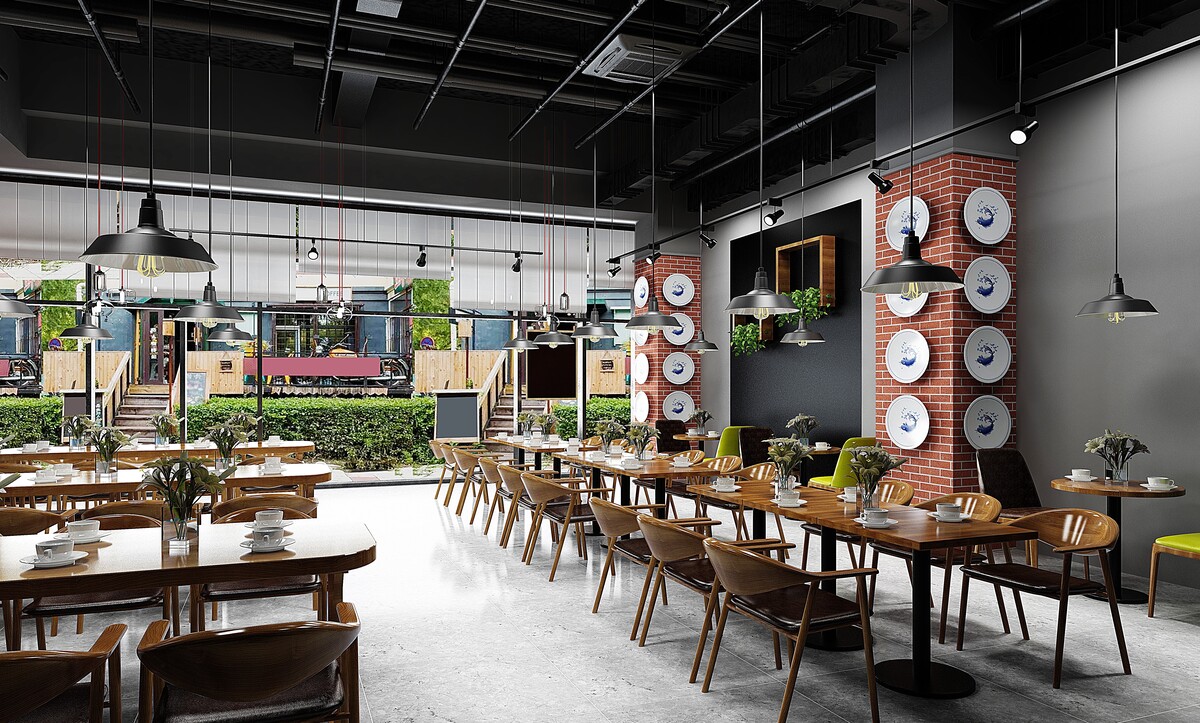
A well-executed industrial-modern cafe is a place where quality coffee and quality design meet. When you build with these principles, you create a destination that stands as a leader in the local market. This approach provides a sturdy foundation for your brand to grow while offering a stylish environment that customers will love for years to come.
Conclusion
The success of a modern coffee shop hinges on the seamless integration of aesthetics and utility. An industrial-modern theme provides the perfect canvas for this balance, utilizing the inherent strength of raw materials to create a lasting impression. By carefully selecting industrial lighting, durable concrete floors, and warm timber accents, you build an environment that thrives on contrast. This guide highlights that great cafe design is a holistic process, involving everything from the structural bones of the building to the smallest barista station details. When these elements align, the result is a high-performing, stylish destination that defines the local coffee scene.
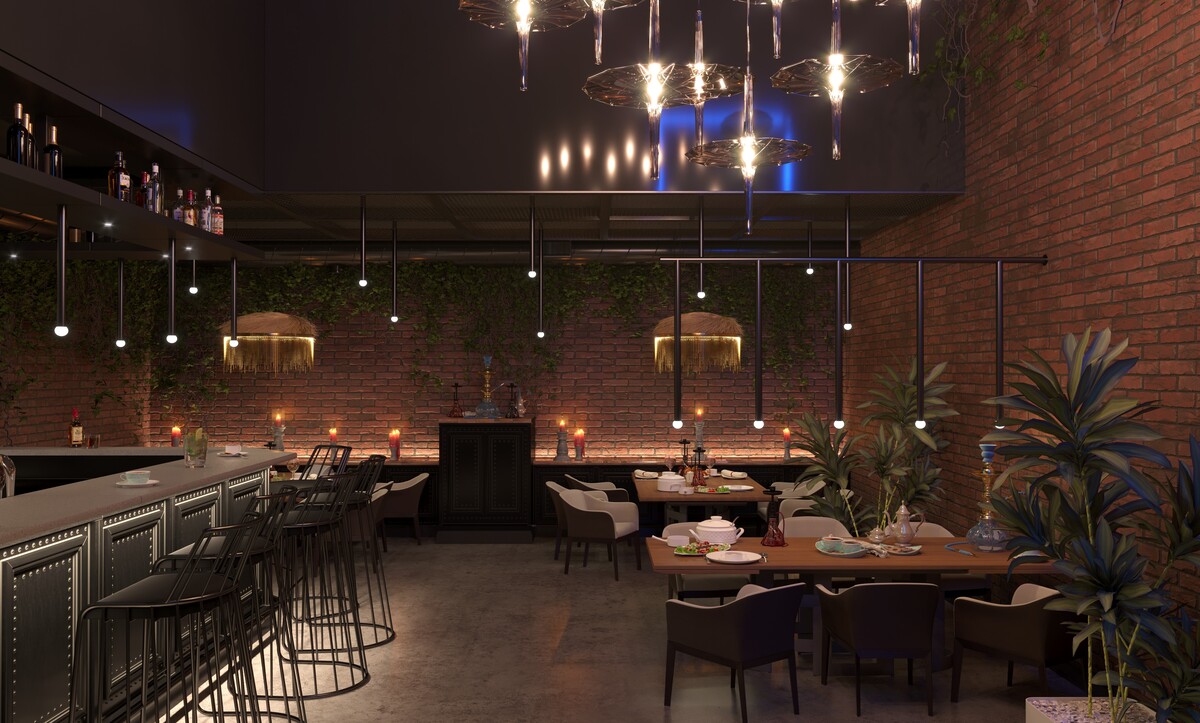
Elevate Your Space with Algedra
Are you ready to bring your industrial-modern cafe design to life? At Algedra, we specialize in world-class cafe and restaurant design that combines stunning visuals with peak operational performance. Our team of experts understands the nuances of specialty coffee interiors and knows how to create spaces that drive business growth.
Whether you are starting a new urban coffee shop or looking to refresh your existing restaurant interior, we provide the creative vision and technical expertise to exceed your goals.
Contact Algedra today to start your next hospitality design project and create a space that captivates every guest.