

Istanbul's Bosphorus-view properties occupy a category of their own in global real estate and interior design. The strait runs 31 kilometres through the city, and the residential addresses along its banks — from Rumelihisarı on the European side to Kuzguncuk on the Asian — vary enormously in terms of architecture, orientation, plot depth, and what "a Bosphorus view" actually means in practice. A ground-floor apartment in Bebek looking across a two-lane coastal road to the water is a fundamentally different design problem from a top-floor residence in Arnavutköy where the glazing begins at floor level and the strait fills three walls of vision. Understanding these differences is where serious interior work on the Bosphorus begins.
1- What "Bosphorus View" Actually Means — and Why It Changes Everything
The phrase gets used loosely in property listings, but designers working on these projects make sharp distinctions. A direct-facing view — where the water sits roughly perpendicular to the main window axis — behaves very differently from an angled view, where the strait is visible from one corner of a room. Direct-facing interiors receive reflected light off the water surface for a significant portion of the day, which creates a specific brightness problem: the view becomes extremely high-contrast against the interior, making everything inside appear darker than it is to the human eye. This is not fixed by adding more artificial light. It requires careful calibration of surface reflectivity throughout the space, so that interior brightness rises gradually toward the window rather than jumping abruptly from dark room to blazing view.
Angled views, by contrast, allow more consistent interior lighting and often give designers more freedom with colour. The water reads as a compositional element rather than a dominant light source.
Floor level matters enormously too. Low-floor units along the coastal road in districts like Kuruçeşme or Ortaköy sit close to street traffic and ferry wake, which introduces both noise and a sense of exposure. High-floor units in the newer towers of Beşiktaş or Sarıyer trade that immediacy for a panoramic but somewhat removed relationship with the water. Neither is better — they require different responses.
2- The Technical Problem of Glare
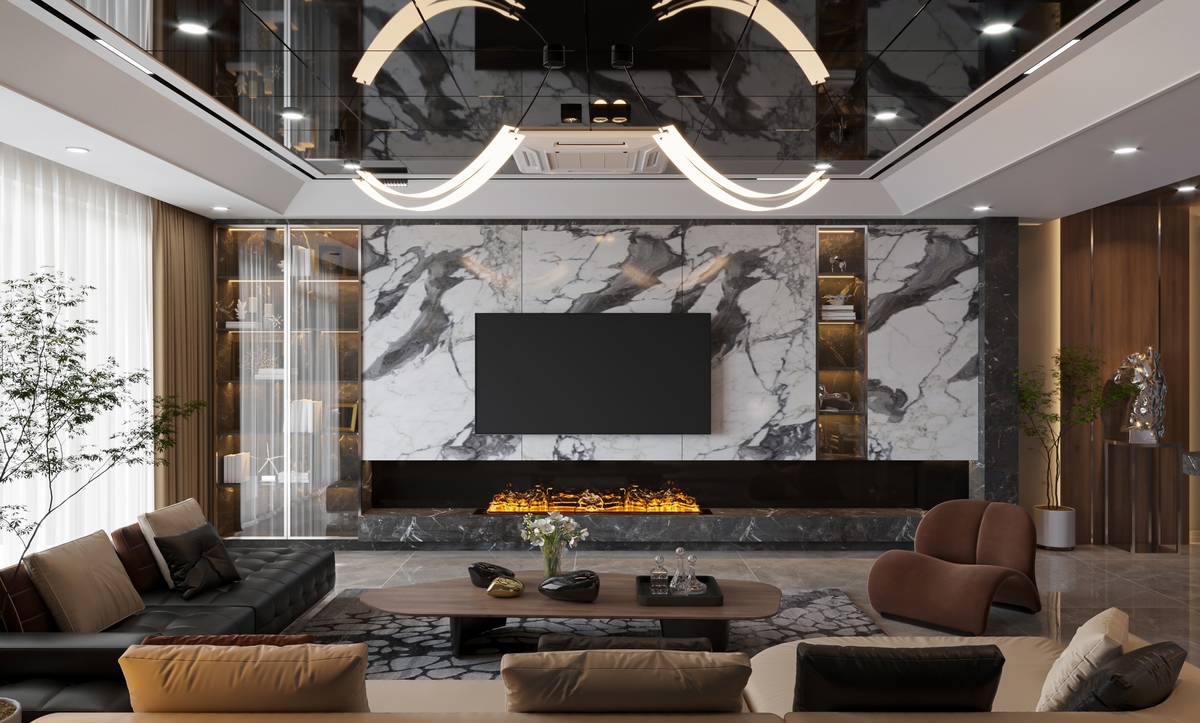
This is one of the most under-discussed practical issues in Bosphorus-view design, and it is the one that most clients underestimate when they first see a property. Water reflects sunlight at a very high intensity, especially between roughly 10 a.m. and 2 p.m. on clear days. In a south- or southwest-facing apartment, this can render screens unusable, make dining uncomfortable, and cause significant eye fatigue.
The standard solution — heavy curtains or external shutters — defeats the purpose of paying for the view. The more considered approach involves several layers. First, external solar control glazing with a visible light transmission (VLT) rating in the 40–55% range, which cuts glare without noticeably tinting the view or reducing colour accuracy. Second, interior ceiling geometry that creates a natural overhang or soffit above the main glazing, casting a shadow band that reduces the brightness differential between the room interior and the window. Third, matte or low-sheen finishes on all surfaces within two to three metres of the glass, so there are no secondary reflections inside the room amplifying the problem.
Some of the more recent high-end projects on the Bosphorus have gone further, using electrochromic glass that shifts from clear to tinted at the touch of a button, though this technology still carries a significant cost premium and the tinted state tends to give the view a slightly greenish cast that not everyone accepts.
3- Orientation and the Seasonal Calendar
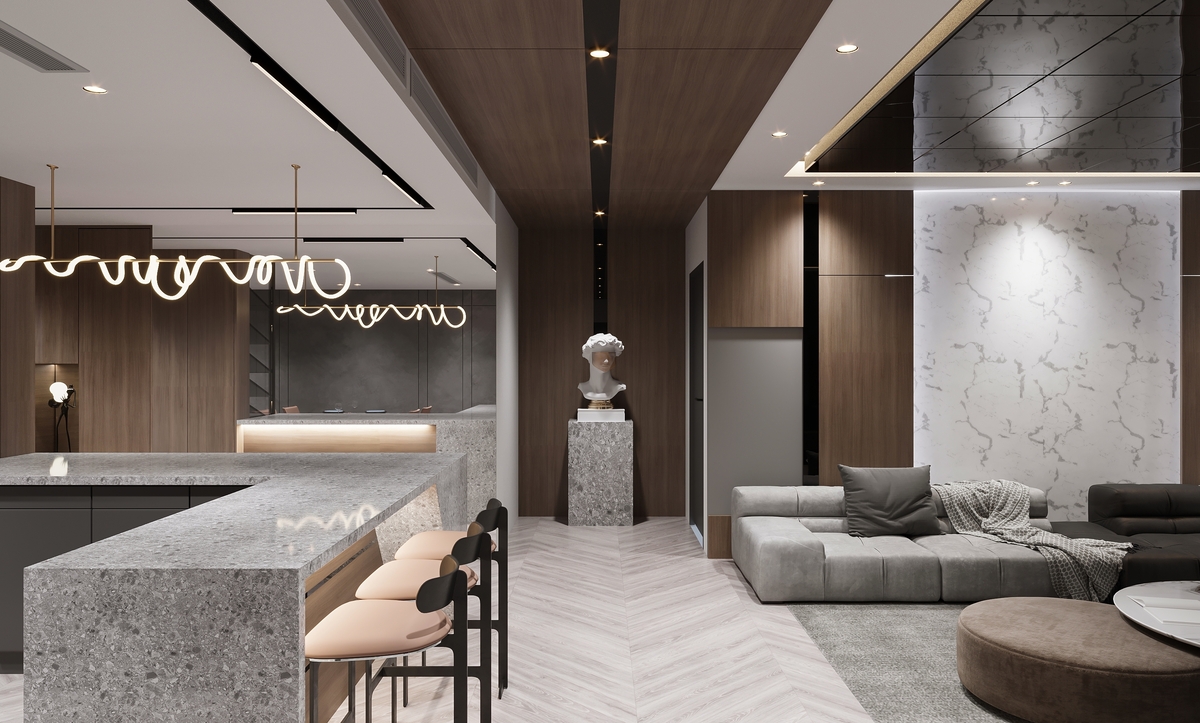
The Bosphorus runs roughly northeast to southwest through the city. This means that European-side apartments facing east catch the morning sun directly off the water, while Asian-side apartments facing west get the afternoon and evening light. Neither orientation is universally superior, but each has different seasonal behaviour that serious design work has to account for.
European-side, east-facing rooms are at their most dramatic in winter and early spring, when low-angle morning sun hits the water at a sharp angle and creates long shadows across the current. These same rooms can be extremely hot and bright by mid-morning in summer. Asian-side, west-facing rooms come into their own in the long evenings of June, July, and August, when the light over the European hills turns the water a series of colours that no paint manufacturer has reliably named. But these same rooms face into the prevailing southwest wind — the lodos — which in autumn can be severe enough to make terrace use impossible for days at a time.
Good interior design on the Bosphorus is seasonal design. It accounts for how a space will be used in January as well as July, and it does not treat the view as a fixed quantity that looks the same year-round.
4- The Real Constraints of Yali Restoration
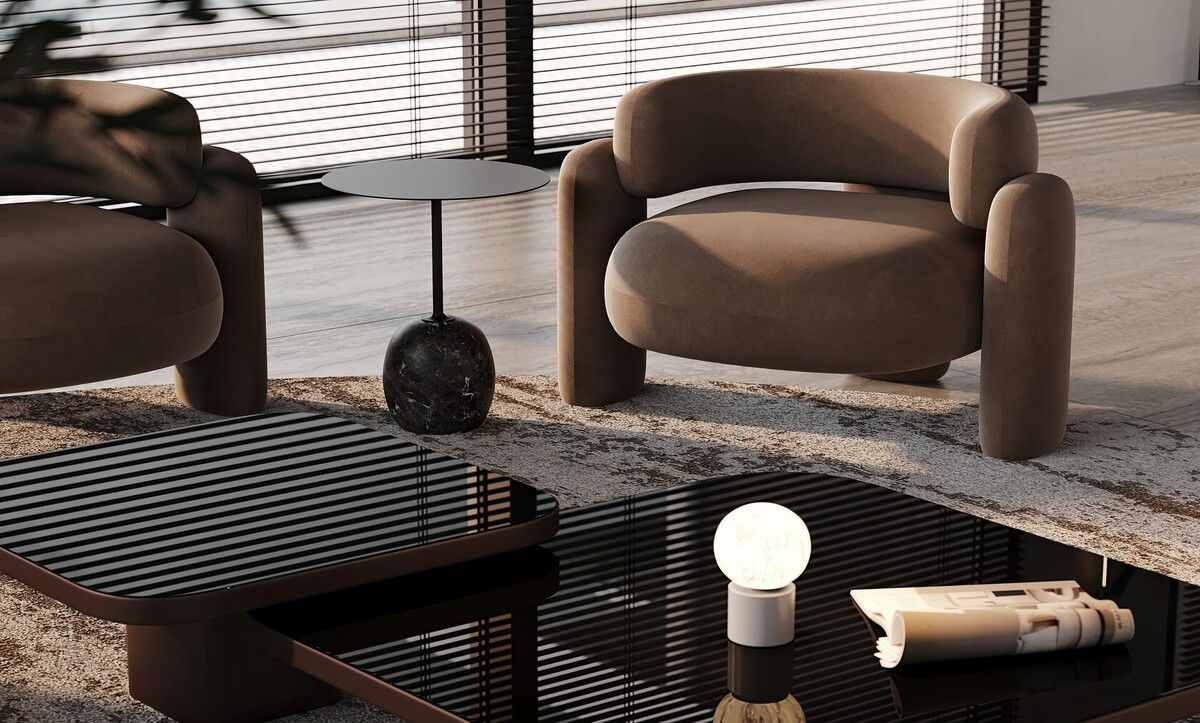
There is significant appetite in the market for restored yalis — the historical timber waterfront mansions that remain the most prestigious addresses on the Bosphorus. But the realities of working within these structures are far more complex than the property listings suggest, and they impose specific design constraints that many buyers are not prepared for.
The primary issue is structural. Traditional yali construction uses a timber post-and-beam system with infill walls that are not load-bearing, which in principle gives interior designers flexibility to reconfigure spaces. In practice, decades of incremental modification, water damage, and sometimes poor-quality earlier restoration work mean that the structural condition of any given yali is highly specific to that building. Layouts that appear straightforward to change on a plan sometimes cannot be touched without triggering a broader structural intervention that has regulatory implications, because protected yalis fall under the oversight of the relevant regional cultural heritage board.
Mechanical and electrical systems are the other major constraint. Original yalis were built without any concealed infrastructure — no wall chases, no ceiling voids deep enough to run modern ductwork, no floor construction that accommodates underfloor heating in the conventional way. Achieving contemporary comfort standards (heating, cooling, high-speed data infrastructure, integrated AV) within a protected yali requires a level of ingenuity and cost that is substantially higher than equivalent work in a new-build. Radiators in historically consistent designs, surface-mounted conduit in painted wood trunking, and specially designed thin-profile heating elements under the original timber floors are all used, but none of them are simple or cheap.
5- Material Sourcing and the Local Supply Chain
One of the distinguishing factors of high-quality Bosphorus interior projects is the depth of engagement with Turkey's domestic materials industry, which is far more sophisticated than its international profile suggests.
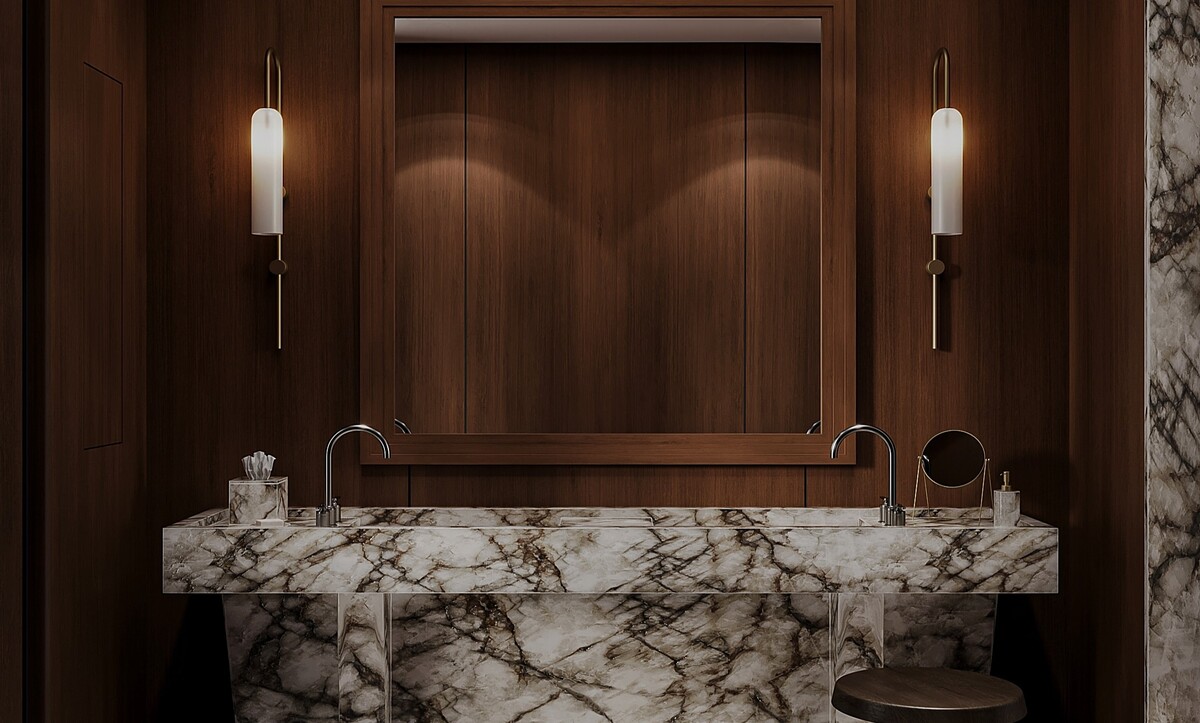
Turkey is one of the world's significant marble producing countries, and the range of stone available domestically is wide: Afyon White, Bilecik Beige, Marmara Island marble, and the grey-veined stones from the Aegean region are all used extensively in waterfront projects. The advantage of working with domestic stone beyond cost is proximity — designers can visit quarries, select specific slabs in person, and maintain closer quality control than is practical with imported material. Several Istanbul design studios have established long-term relationships with specific Anatolian quarries that give them access to material before it reaches the open market.
Hand-woven textiles represent another area where the domestic supply chain offers genuine quality. Uşak and Hereke remain active production centres for hand-knotted carpets and rugs, and while genuine Hereke silk is extraordinarily expensive, the broader range of Anatolian weaving traditions gives designers access to textile work that is unavailable anywhere else. The practical challenge is that lead times for custom pieces from established workshops run to months, and the best weavers work to their own schedule. This requires projects to be planned with considerably more runway than is typical in fast-turnaround residential work.
6- How Furniture Scale Works on the Bosphorus
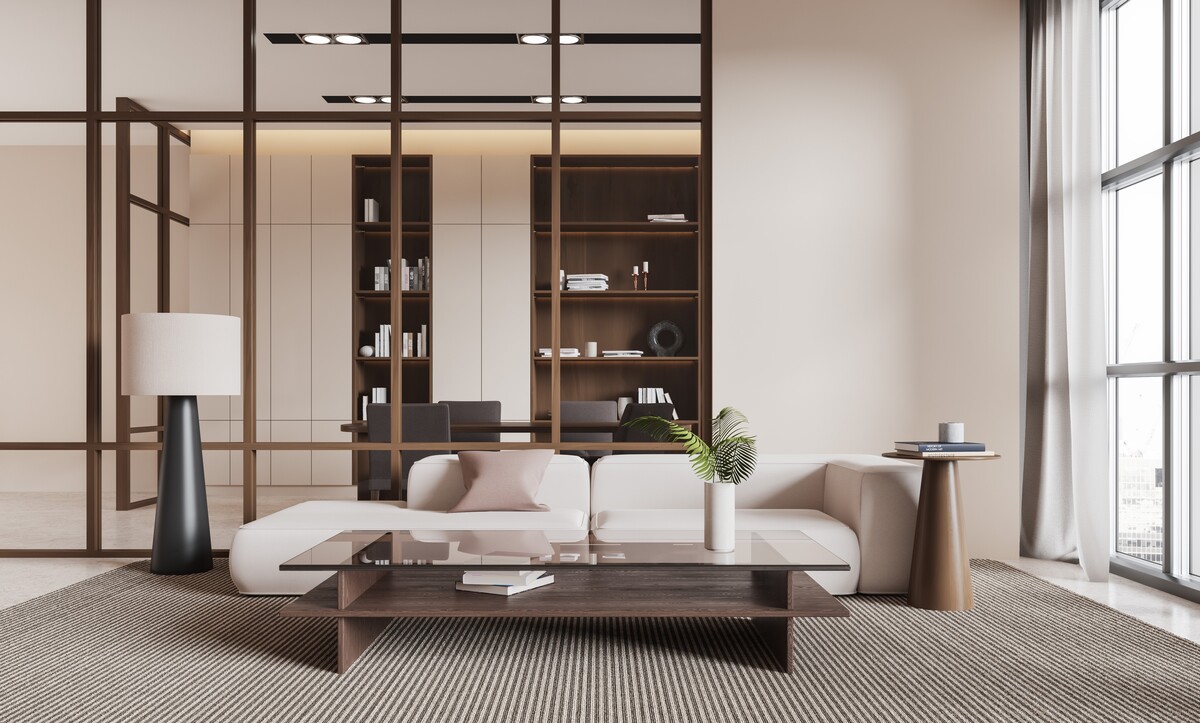
There is a consistent error in less considered Bosphorus interiors: furniture that is scaled for a standard room in a city without a dramatic view. When a space has a wall of glass looking onto open water, the visual scale of the room is effectively extended by the view. The eye reads the space as much larger than its actual footprint. This means that furniture which would be correctly proportioned in an enclosed interior reads as undersized and slightly lost when placed in a Bosphorus-facing room.
The practical response is to work with slightly larger than standard pieces, reduce the total number of items in the room, and prioritise mass and visual weight in the pieces that remain. A sofa 20 cm deeper than the standard catalogue dimension, in a fabric with real visual substance — heavy linen, thick bouclé, wool — will hold its own against a 270-degree water view in a way that a lighter piece will not. This is not about filling the room; it is about giving the interior enough visual anchoring that it does not feel like an afterthought to the window.
Dining tables on the Bosphorus follow similar logic. A table that seats eight in a closed dining room might seat ten in a waterfront space of the same footprint without feeling crowded, because the view provides the visual breathing room that walls normally would.
7- The Private Terrace Problem
Many Bosphorus properties, particularly the newer apartment buildings, come with terraces designed by architects who prioritised the appearance of the building from the outside rather than the usability of the space from within. The result is terraces that are either too exposed to the lodos wind to be used for most of the year, too narrow to accommodate proper furniture, or oriented in ways that mean residents sit with the sun directly in their faces during the hours when they would most want to be outside.
Remedying this within the constraints of existing building regulations and structural limitations is a significant part of the brief on many projects. Partial glass wind screens — frameless, structural glazing — can extend terrace usability by several months per year on exposed sites without blocking the view. Retractable fabric systems provide solar control without the visual heaviness of fixed pergolas. The critical detail is that any of these additions in a regulated building require approval, and the approval process in Istanbul for modifications to building exteriors varies considerably depending on the district, the building's age, and whether any heritage protections are in place.
Furniture choice for Bosphorus terraces also matters more than for standard outdoor spaces. The salt content in the air from the strait accelerates corrosion in metals, and cheaper aluminium furniture with painted finishes starts to look poor within two to three seasons. Marine-grade stainless steel, powder-coated with a high-quality exterior finish, or teak and iroko hardwoods that are properly maintained are the practical choices for anything intended to last.
8- Lighting Design After Dark
After dark, the Bosphorus does not disappear — it becomes something else. The lit shipping lanes, the illuminated bridges, the running lights of tankers, the glow from the Asian shore: at night, the view through a Bosphorus window is still active and still demanding of a considered interior response.
The standard approach to evening lighting in high-end residential work — a mix of ambient, task, and accent sources on dimmer control — applies here, but with one specific addition: the lighting scheme needs to be designed to minimise reflections in the glass. A poorly positioned spot fitting that shines directly toward the window will create a ghost image of the room in the glass at night, effectively destroying the view. All directional fittings near the glazing perimeter should be aimed inward, not outward, and any surface-mounted sources close to the window should be reviewed specifically for their reflection behaviour.
The most successful Bosphorus interiors after dark work with very low ambient levels in the zones closest to the glass, allowing the exterior view to carry the visual interest, while delivering task and accent light in the mid and rear zones of the room where it is actually needed. This is the opposite of what most people's instinct suggests — the natural impulse is to light up the beautiful view — but it consistently produces better results.
9- Navigating the Apartment Building Context
The majority of Istanbul residents who live with a Bosphorus view do so in apartment buildings rather than standalone villas or yalis, and this creates a set of constraints that are worth understanding clearly.
Site management rules in Istanbul apartment buildings — governed by the Kat Mülkiyeti Kanunu, or Condominium Ownership Law — give the building's residents' association significant power over modifications to common areas, facades, and in some interpretations, the visible interior elements of individual units. Replacing standard double glazing with a different specification, modifying a balcony, or changing entrance door design can all require residents' association approval. In practice, the level of enforcement varies widely by building and neighbourhood, but it is a factor that any designer working on an Istanbul apartment needs to account for from the outset of a project, not after the specifications have been finalised.
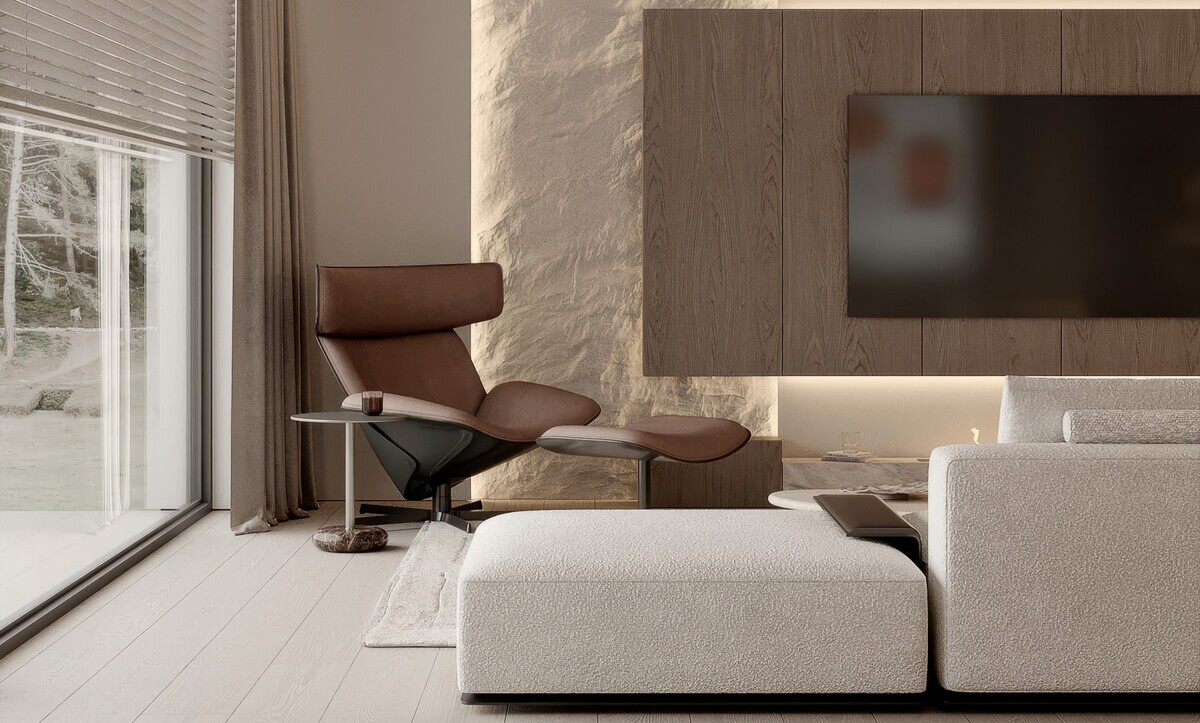
For those working within these constraints while aiming for a result with real design quality, our guide on achieving quiet luxury in your Istanbul apartment covers the practical strategies that produce excellent outcomes within the typical limitations of apartment living in the city.
10- The Intersection of European and Ottoman Design Logic
Istanbul sits at a genuine cultural junction, and this is not a metaphor — it shows up concretely in architectural decisions that were made in the city over the past two centuries and that designers working here today still have to navigate.
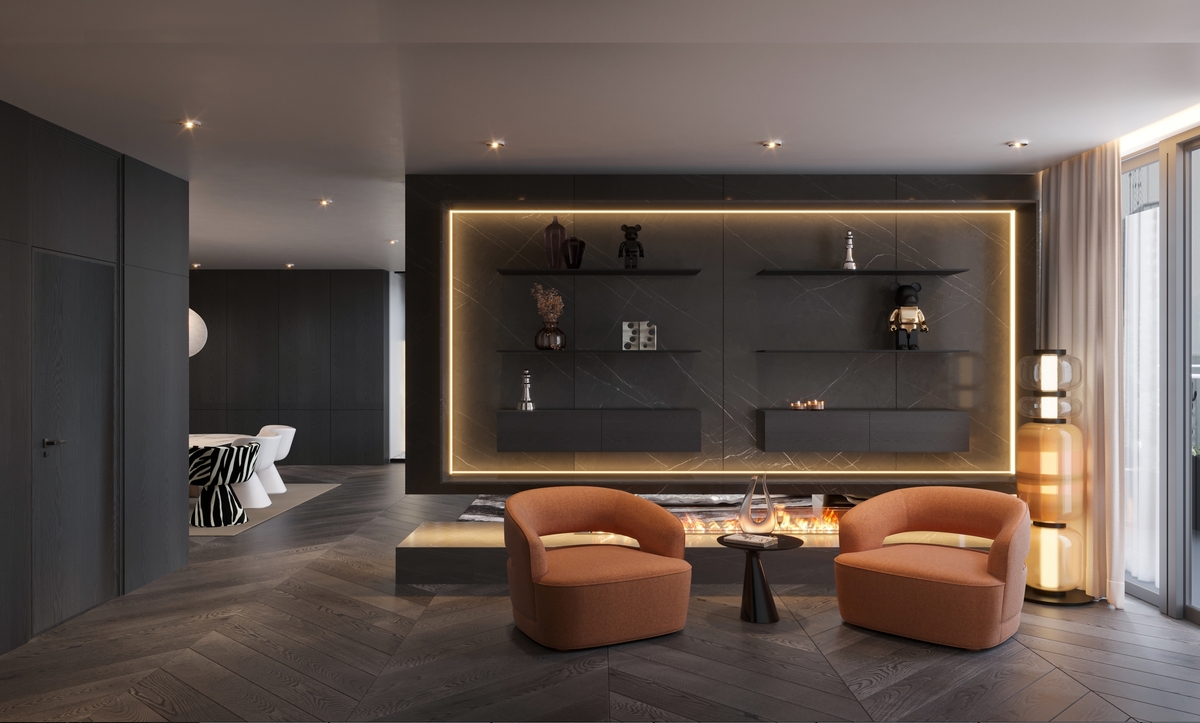
The late Ottoman period produced buildings that mixed European Beaux-Arts planning logic — symmetrical facades, formal room sequences, central hall arrangements — with Ottoman spatial habits: the preference for seating at the perimeter of rooms, the use of the eyvan (a recessed alcove open to a larger space), the integration of running water features inside residential buildings. These hybrid buildings, many of which survive in the Bosphorus-adjacent neighbourhoods of Nişantaşı, Beyoğlu, and Kadıköy, require a design approach that can read both systems and work fluently with both. Our analysis of how European interior thinking meets Middle Eastern architectural structure goes into detail on how this plays out in practice.
The more recent challenge is different: how to furnish and finish a contemporary glass-and-concrete building in a way that has genuine local character rather than replicating the visual language of an apartment that could equally be in Dubai, Singapore, or Frankfurt. This is harder than it sounds, because the global supply chains that feed high-end residential projects tend to produce convergent results. The designers who avoid this work specifically to introduce elements — material, craft, spatial logic — that are grounded in the specific geography and culture of the city.
11- Bedroom Orientation and the Morning Routine
Bedroom placement in Bosphorus-view apartments is often determined by the developer's floor plan and cannot be changed without significant structural work. But within whatever layout exists, the orientation of the bed relative to the view, the window, and the morning light source has a larger effect on how the space functions in daily life than most clients initially anticipate.
The specific challenge with Bosphorus-facing bedrooms is that the east-facing variants — the ones with morning water views — receive direct light at a very low angle in the early hours, which penetrates deeply into the room and can make sleeping past dawn genuinely difficult without effective blackout provision. The layering approach works well here: a blackout blind on a recessed track closest to the glass, a lighter translucent layer in front, and if the ceiling height allows, a heavy outer panel in a fabric with enough weight to provide acoustic dampening as well as light control. The operational logic is that residents can choose any combination of these layers depending on the day and season, rather than being committed to one fixed condition.
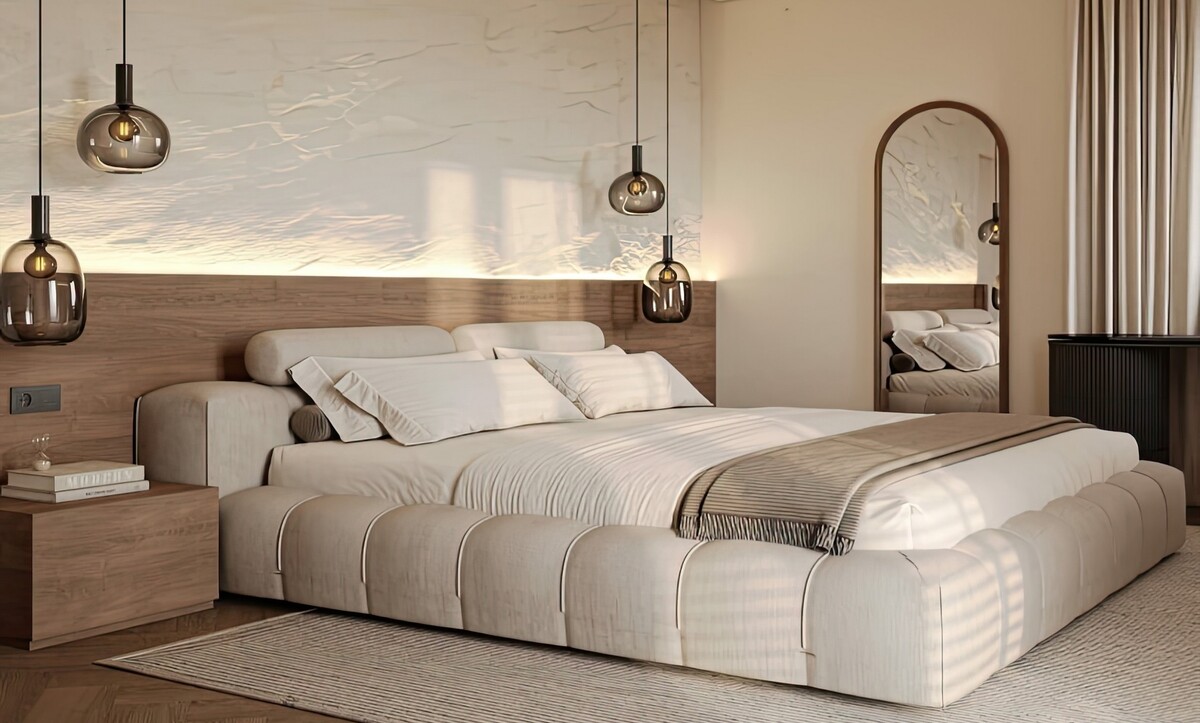
For the detailed technical and styling considerations behind this kind of bedroom setup, the piece on bedroom styling as practised by Turkish designers covers the specifics of how these spaces are put together at a high level of finish.
Conclusion
The Bosphorus is genuinely one of the most demanding contexts in which to design residential interiors. The view is exceptional and it sets a high bar for everything else in the space. The buildings range from centuries-old protected structures with significant technical constraints to new-build apartments with their own planning and building management limitations. The light, the wind, the seasonal variation, and the technical problems of glare and reflectivity all require specific solutions. Getting these spaces right is not primarily about aesthetics — it is about a detailed, practical understanding of the site, the structure, and the way people actually use the space across the full calendar year.
Ready to Design Your Bosphorus-View Interior?
Algedra is an Istanbul-based interior design studio with direct experience across the full range of Bosphorus-facing residential projects — from protected yali restorations on the European shore to contemporary high-floor apartments in Sarıyer and Çengelköy. We work with the specific technical, regulatory, and sourcing realities of this city, not against them.
If you are planning a project on the Bosphorus — whether you are still in the property selection phase or already holding the keys — we are available for an initial consultation. We can review your floor plan, orientation, and glazing conditions and give you a clear picture of what is achievable within your specific building context.
Contact our Istanbul company directly to start the conversation.
Frequently Asked Questions
1. How much does a high-end Bosphorus-view interior project typically cost in Istanbul?
There is no single answer because the variables are too wide. A full fit-out of a 200 sqm apartment in a new-build Bosphorus tower — including bespoke joinery, quality stone, quality lighting design, and furnishing — typically runs from $3,000 to $6,000 per square metre at the higher end of the Istanbul market, depending on material specification and the complexity of built-in elements. Yali restoration projects sit in a different cost category entirely, because the structural and regulatory work involved adds substantial fees before interior finishes are even considered. Budget conversations should happen early and in specific terms, not after a design direction has been agreed.
2. Is it possible to change the glazing in a Bosphorus apartment to reduce glare?
In most cases, yes, but it requires approval. In a standalone villa or yali, glazing replacement is primarily a structural and heritage regulation matter. In an apartment building, you will additionally need the agreement of the residents' association under the Condominium Ownership Law, and in some buildings the facade specification is fixed by the original development contract. Solar control glass with a VLT rating around 40–55% is the most common upgrade and makes a significant practical difference. Electrochromic glass is an option in buildings where facade modification is permitted, but the cost is considerably higher.
3. What is the most common design mistake in Bosphorus-view apartments?
Over-furnishing. When a space has an active, high-contrast view across open water, the instinct to fill the interior with furniture and decoration works against the space rather than for it. The view already provides more visual information than most rooms contain. Interiors that compete with it end up feeling busy and slightly anxious. The more effective approach is to reduce the number of pieces, increase the visual weight and quality of what remains, and allow the view to carry the room rather than trying to match it.
4. How do you handle the lodos wind on Bosphorus terraces?
The lodos is a southwest wind that can reach significant speeds in autumn and early winter, making exposed terraces on the European side particularly difficult to use during those months. The practical solutions are frameless structural glass wind screens positioned at the terrace perimeter — which block the wind without obstructing the view — and retractable fabric systems that provide additional protection when needed. Both require building management or residents' association approval in apartment contexts. Furniture should always be specified in marine-grade materials, as the salt air from the strait degrades standard outdoor finishes faster than most owners expect.
5. Can a smaller Bosphorus-view apartment be designed to the same standard as a large one?
Yes, and in some ways a smaller footprint imposes a discipline that produces sharper results. The principles that govern large Bosphorus interiors — glare management, furniture scale relative to the view, material quality, seasonal lighting — apply equally at 90 sqm as at 300 sqm. The constraints are tighter and the margin for error is smaller, which means every decision carries more weight. A smaller apartment with a coherent, well-executed design will consistently outperform a larger one that has been filled without a clear logic. The budget allocation also shifts in smaller spaces: it makes more sense to concentrate spend on the elements the eye contacts most frequently — flooring, key furniture pieces, lighting — rather than spreading it evenly across everything.