

Designing a bedroom for a girl is really about building a small universe where she can sleep, study, dream, and grow. Tastes change fast from cartoons to K-pop, from unicorns to architecture, so the smartest girl’s bedrooms are flexible, easy to update, and grounded in what she loves rather than what is stereotypically “girly”.
Below is a detailed guide you can actually use, whether you are planning for a toddler, a school-age kid, a tween, or a teenager.
1. Start with the girl, not the trend
Before thinking about paint or furniture, answer a few questions about the girl who will live there:
- How old is she right now, and what will she be like in 3 to 5 years
- What does she enjoy most reading, drawing, dancing, gaming, sports
- Is she introverted and calm, or energetic and social
- Does she share the room with a sister or a friend sometimes
This gives you direction on:
- How much floor space is needed for play or hobbies
- How serious the study corner should be
- Whether she needs more display space for collections and trophies
- How much storage you need for clothes, toys, skincare, makeup, or tech
For younger girls, you can be playful with themes, but keep big elements flexible. Walls, main furniture, and lighting should be neutral enough to survive the Frozen or Barbie era. The characters can stay on bedding, posters, pillows, and inexpensive decor that can be changed easily.
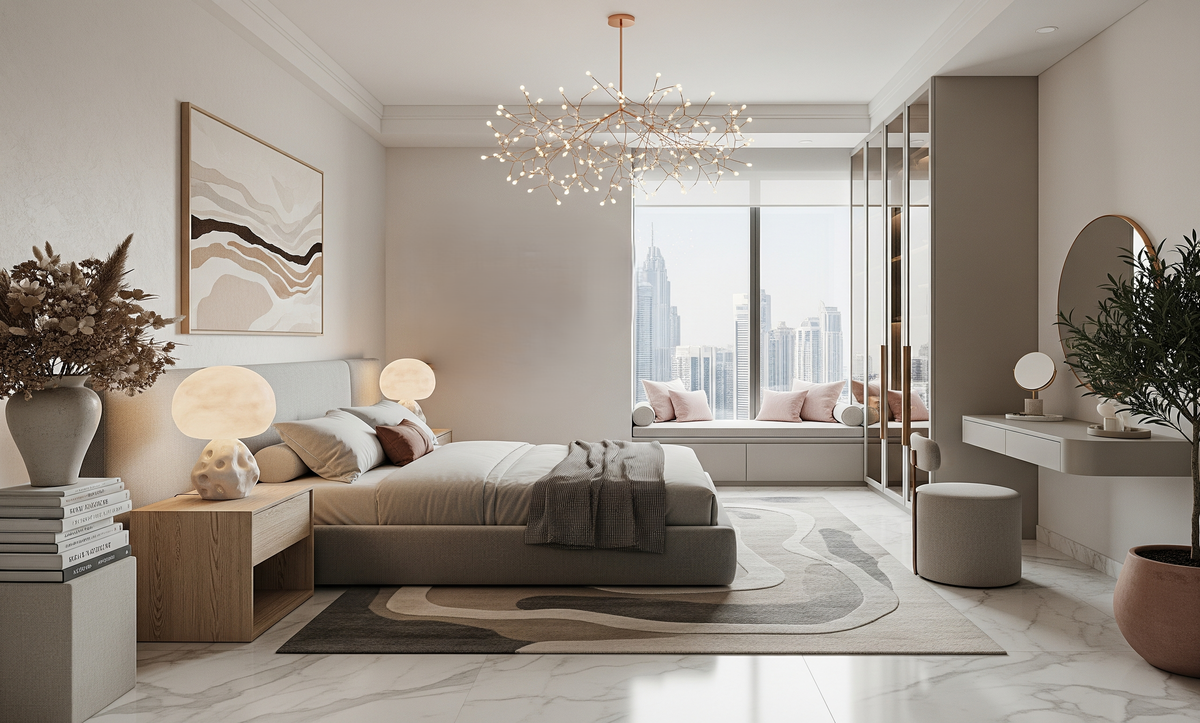
2. Color choices for girls’ bedrooms – what science says
Color in children’s rooms is not just about style. Studies and pediatric advice consistently point out that softer shades support calmer sleep, while strong, saturated colors work better in play or study zones. Soft blue, lavender, sage green, warm beige, and muted tones generally help kids relax and drift off more easily.
Key directions for girls’ bedrooms:
Pink, rose and peach
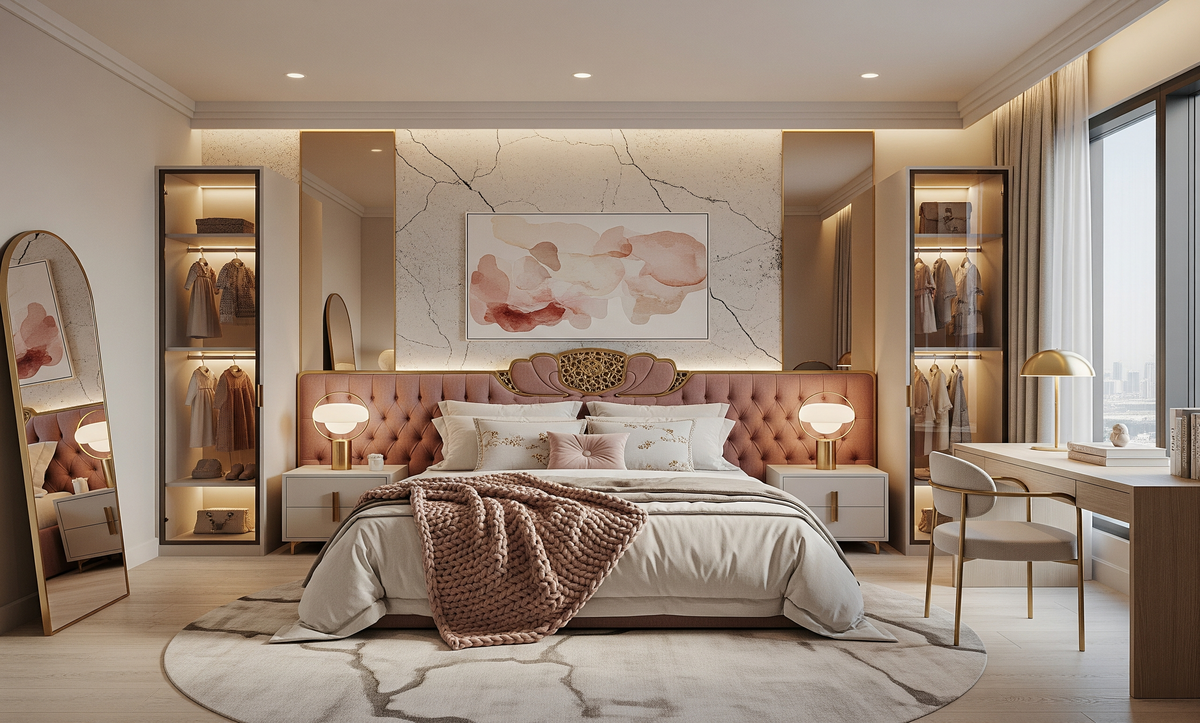
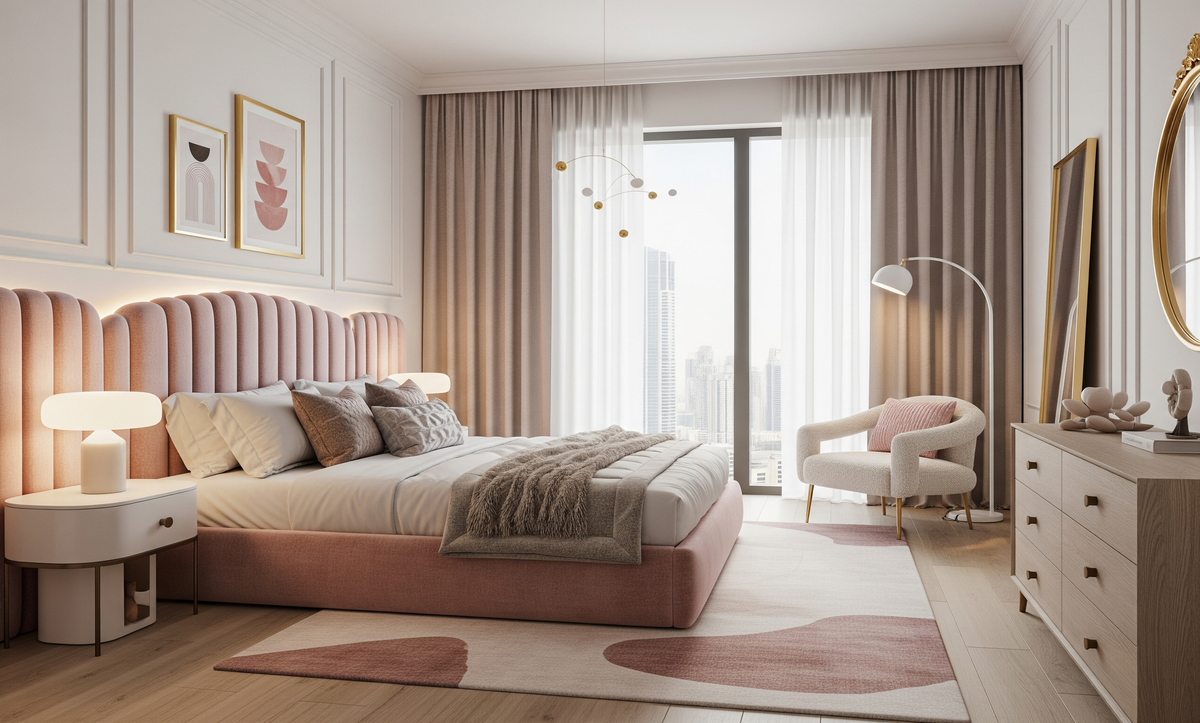
Pink has a strong emotional link for many girls. Recent color psychology articles point out that blush and rose tones can give a feeling of warmth, care, and comfort, especially when mixed with soft neutrals and a bit of gold or terracotta.
If you use pink, keep it soft and slightly dusty rather than neon. This looks less childish and works just as well for a teenager.
Soft blues and greens
Blue is one of the best colors for sleep and calm, and also supports concentration, so it works well if the bedroom includes a serious study area.
Sage or mint green brings a fresh, natural feel and suits girls who love nature, plants, or animals.
Lavender and lilac
Lavender combines the calm of blue and the imaginative feel of purple. It appears often in guides about kids’ rooms as a good choice for relaxation and bedtime.
Use it on walls, bedding, or curtains, and pair it with white, natural wood, or soft grey to avoid an over-sweet look.
Bright colors as accents, not full walls
Bright yellow or coral can stimulate creativity and energy, but large surfaces in these colors may feel intense at night.
Use bright colors on cushions, art, a single accent chair, or storage boxes, while keeping walls and large furniture quiet and calm.
3. Bedroom layout – think zones
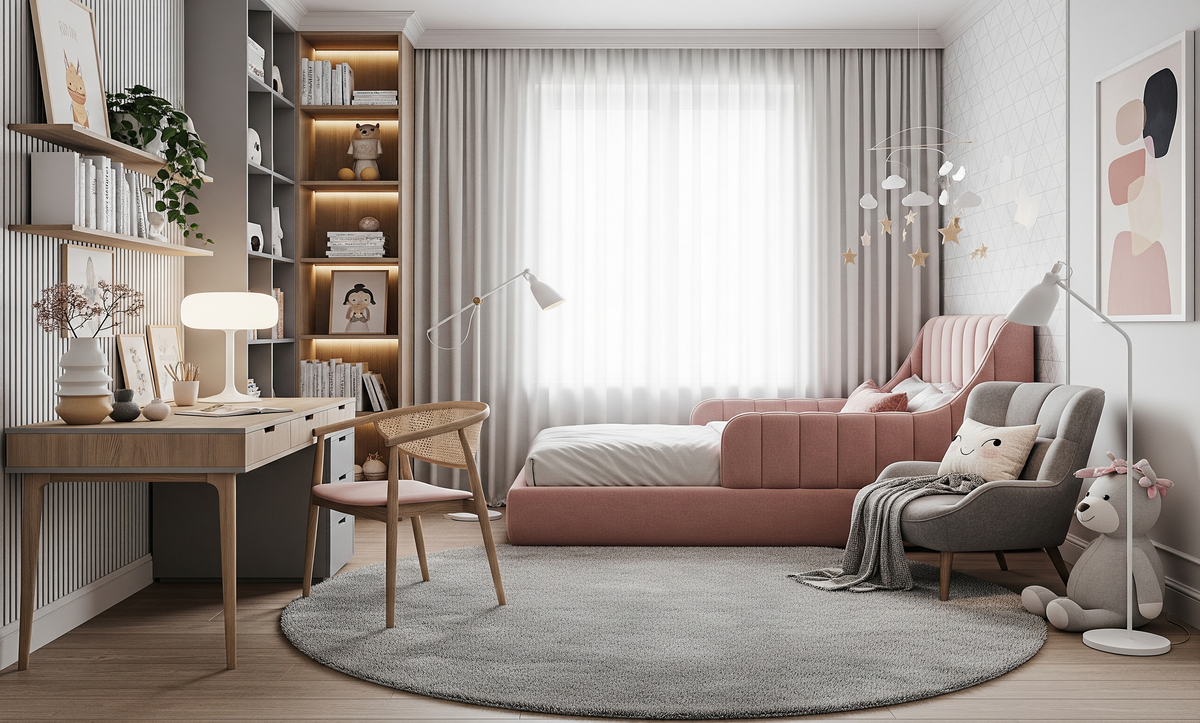
A good girl’s bedroom usually has four key zones:
- Sleep
- Study
- Play or hobbies
- Storage
You may not have space to give each zone a full corner, but you can still separate them visually.
Sleep zone
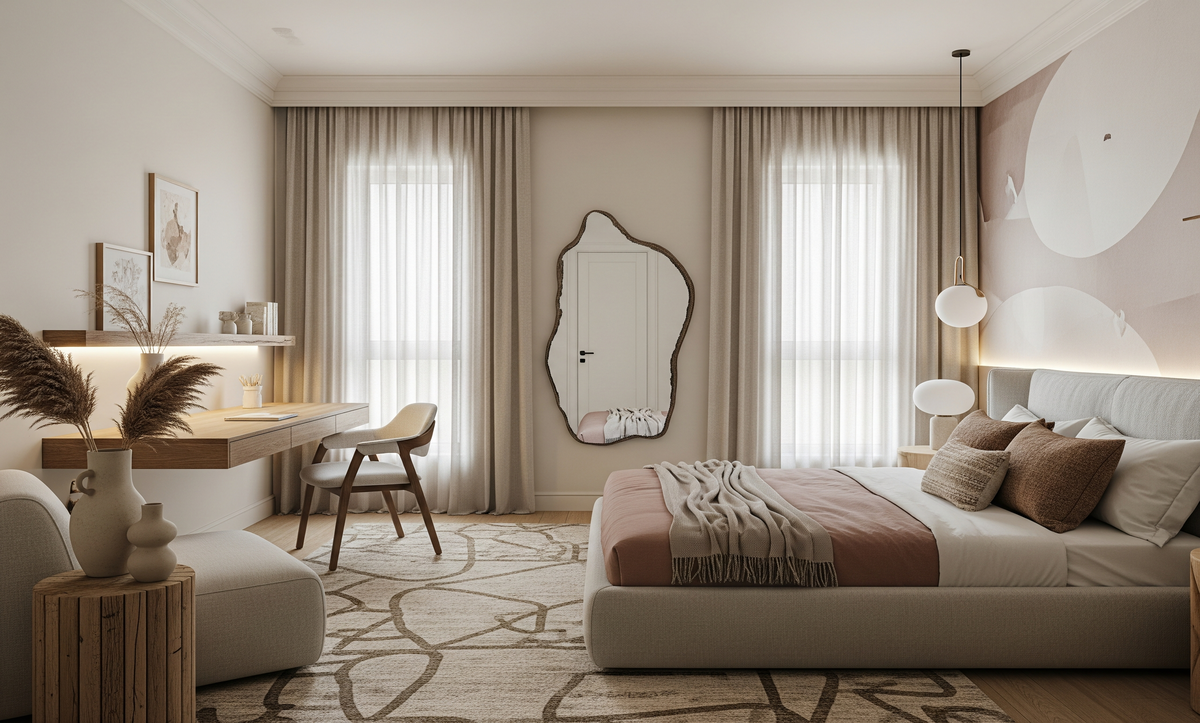
- Place the bed on a solid wall, not under a window if possible
- Keep strong patterns or very bright colors away from the headboard area
- Use a rug under the bed to make the area feel cozy and warm
- For shared rooms, position beds to give each girl her own “territory” and maybe her own wall color or wallpaper panel
Studyzone
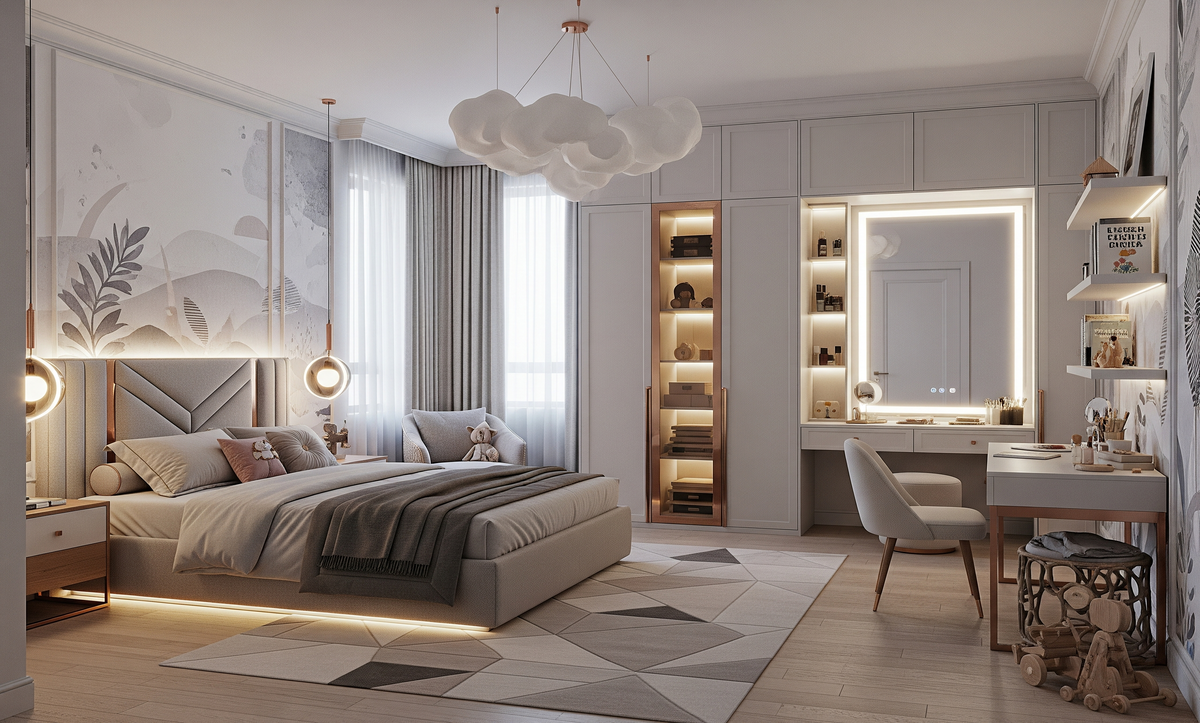
For school-age girls and teens, the study corner is crucial.
- Put the desk near natural light to protect the eyes
- Use a simple desk with enough surface for books and a laptop
- Add shelves or a pegboard above the desk for pencils, notes, and decor
- Keep the color scheme calmer than the play area greens, soft blues, or neutrals help with focus
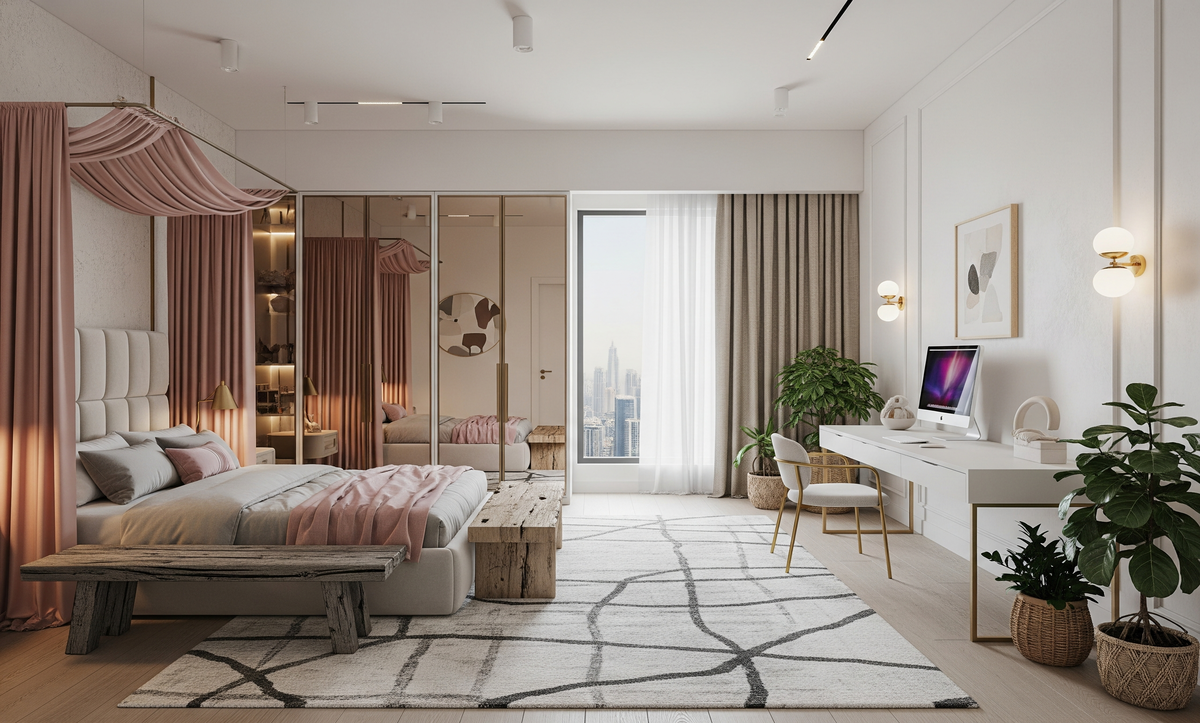
Play or hobby zone
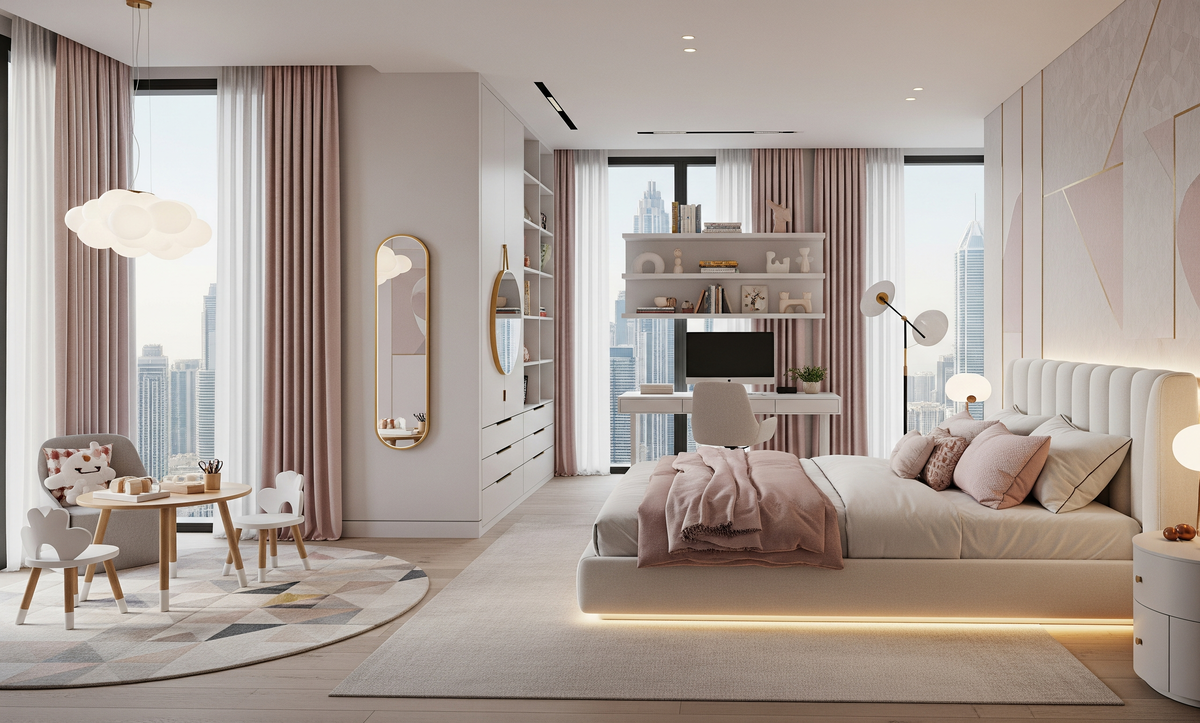
Younger girls may need floor space for dolls and building toys. Older ones may want an area for music, reading, art, or gaming.
- Use a washable rug or play mat
- Provide a low table for Lego, puzzles, or crafting
- For teens, a comfy chair or daybed corner for reading, journaling, or talking with friends works well
4. Furniture choices – comfort, longevity, and safety
Furniture in a girl’s bedroom has to handle jumps, sleepovers, and endless rearranging. Safety is critical.
Recent guides on kids’ furniture stress rounded edges, sturdy construction, and non-toxic finishes. Child safety resources also recommend securing tall furniture to the wall and planning the room so heavy items cannot be climbed easily.
Bed types
- Classic single bed
Best for most ages. Choose a frame that is not too childish, so it still works for a teenager. - Storage bed or divan
Drawers under the bed are powerful for bedding, seasonal clothes, or toys, especially in small rooms. - Bunk beds and loft beds
Ideal for shared rooms or tiny spaces, but secure them well, avoid ceiling fans near the top bunk, and check that younger kids can climb safely.
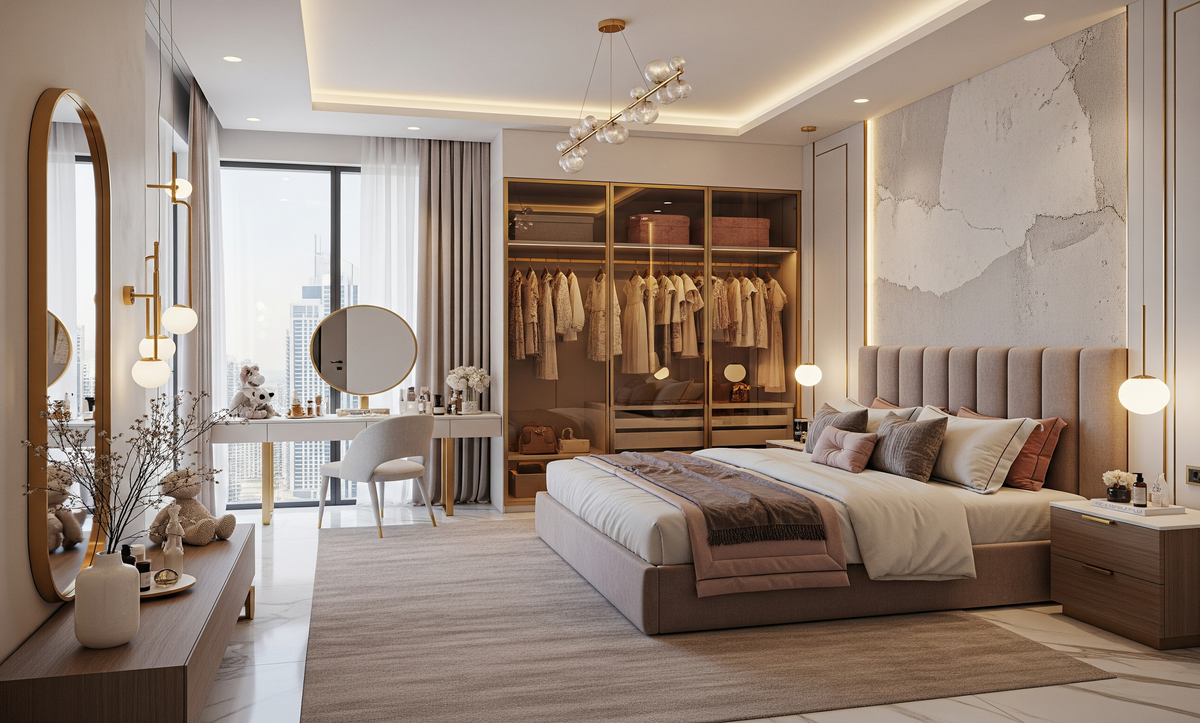
Wardrobes and dressers
- Choose enough hanging and drawer space for clothes, costumes, and later for teen outfits
- Mount tall wardrobes and bookcases to the wall so they cannot tip over if a child climbs on them
- Use drawer stoppers and soft-close hardware so small fingers stay safe
Desk and chair
- The chair should support good posture for homework and screen time
- For younger girls, pick an adjustable chair that can grow with them
- Keep cables tied up and away from wandering feet
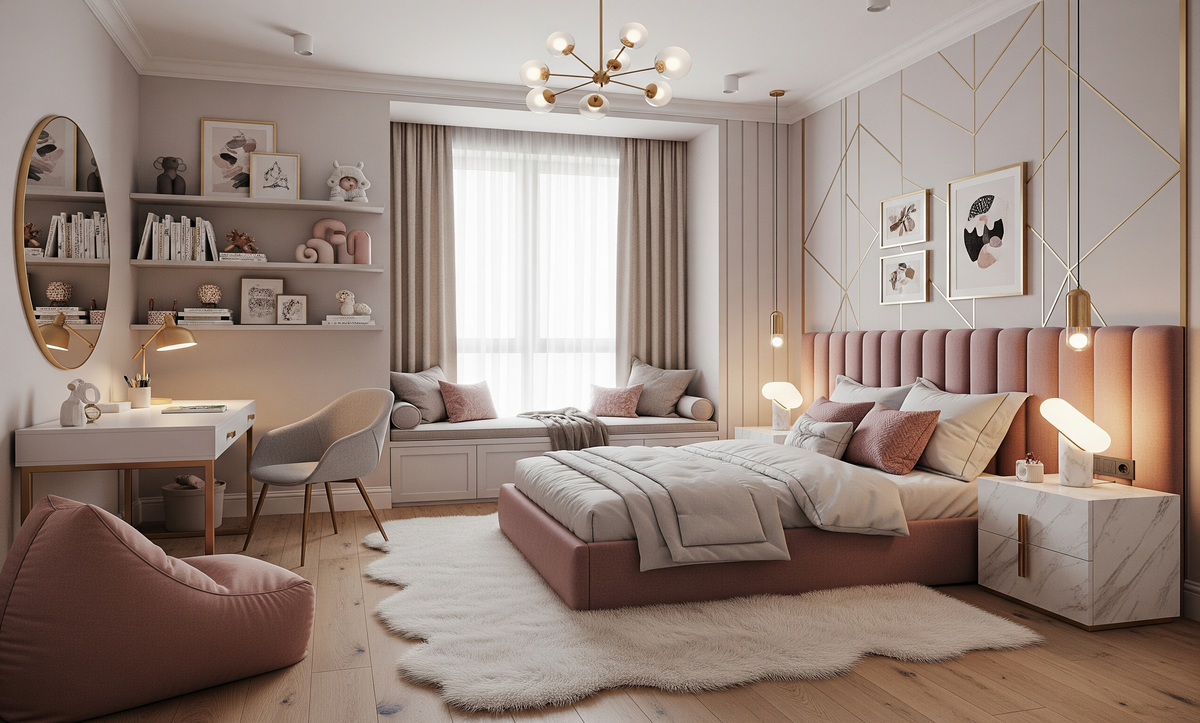
5. Storage ideas that keep the room tidy
Girl’s bedrooms collect stuff fast from toys and books to hair clips and art supplies. Smart storage prevents chaos and supports independence because she can find and put away her own belongings.
Ideas that work well:
- Under-bed storage
Built-in drawers or low rolling boxes are perfect for off-season clothes, toys, or bedding. - Hooks and peg rails
Hang bags, hats, medals, and necklaces. This frees wardrobe space and turns collections into decor. - Cube shelves with boxes
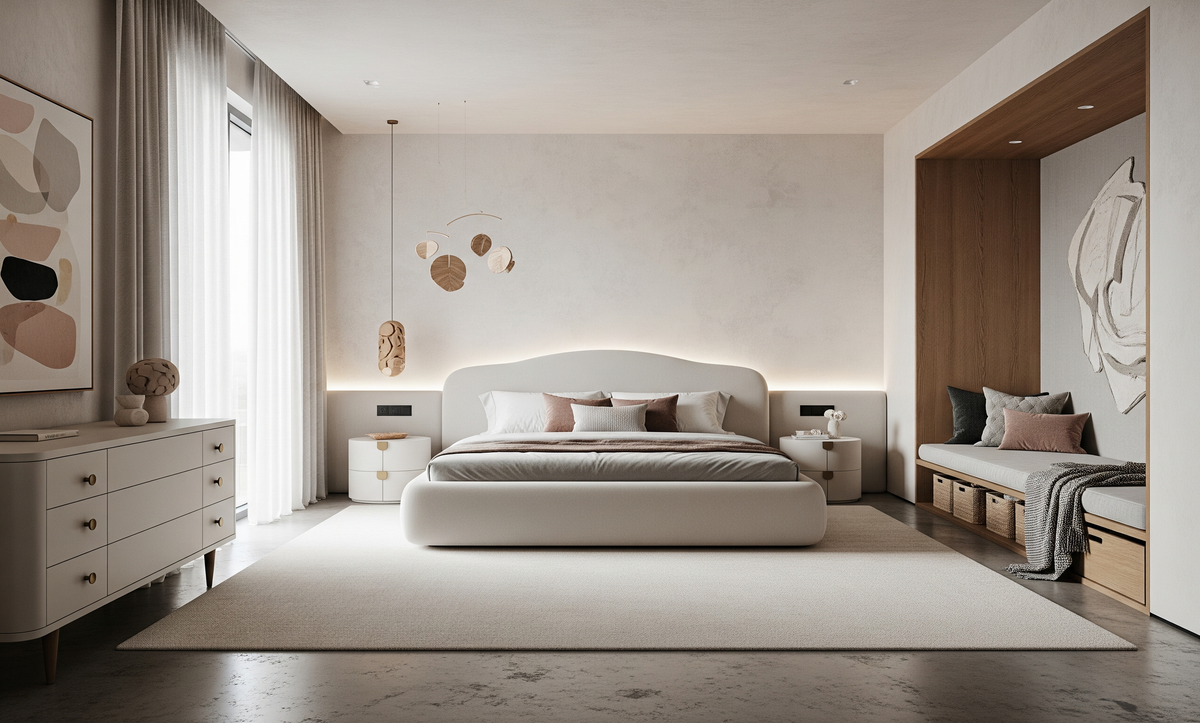
Label boxes for dolls, crafts, books, or school supplies. Clutter goes away in seconds. - Window seat with storage
If you have a window niche, a built-in bench with lids or drawers underneath can hide games, blankets, and soft toys while giving a reading spot.
Teach a simple rule: if it doesn’t fit inside the storage you already have, something else should leave the room. That keeps things under control over the years.
6. Safety checklist specific to girls’ bedrooms
Designing for girls often involves added elements like fairy lights, canopies, and smaller decor objects. Combine fun with solid safety habits.
Child safety checklists for kids’ rooms highlight a few critical points:
- Windows and balconies
- Install window stoppers or lockable handles
- Do not place beds or climbable furniture directly under windows
- If the room has a balcony, cover railings with safety netting or plexiglass and keep furniture away from edges
- Electricity and cables
- Use outlet covers where needed
- Keep extension cords and chargers away from beds and rugs
- Choose quality fairy lights with low heat and never leave them on all night for small kids
- Materials and finishes
- Pick paints and finishes with low VOC where possible
- Choose washable wall paint in case of crayons and makeup experiments
- Furniture safety
- Fix any tall shelf or wardrobe to the wall
- Prefer rounded corners on tables and beds for younger children
7. Styles and themes that age well
Trends in “girly” rooms have shifted. Many current examples of girls’ bedrooms mix soft color palettes, warm lighting, and personal objects instead of heavy cartoon themes.
Here are a few style directions that can grow from early childhood into teen years.
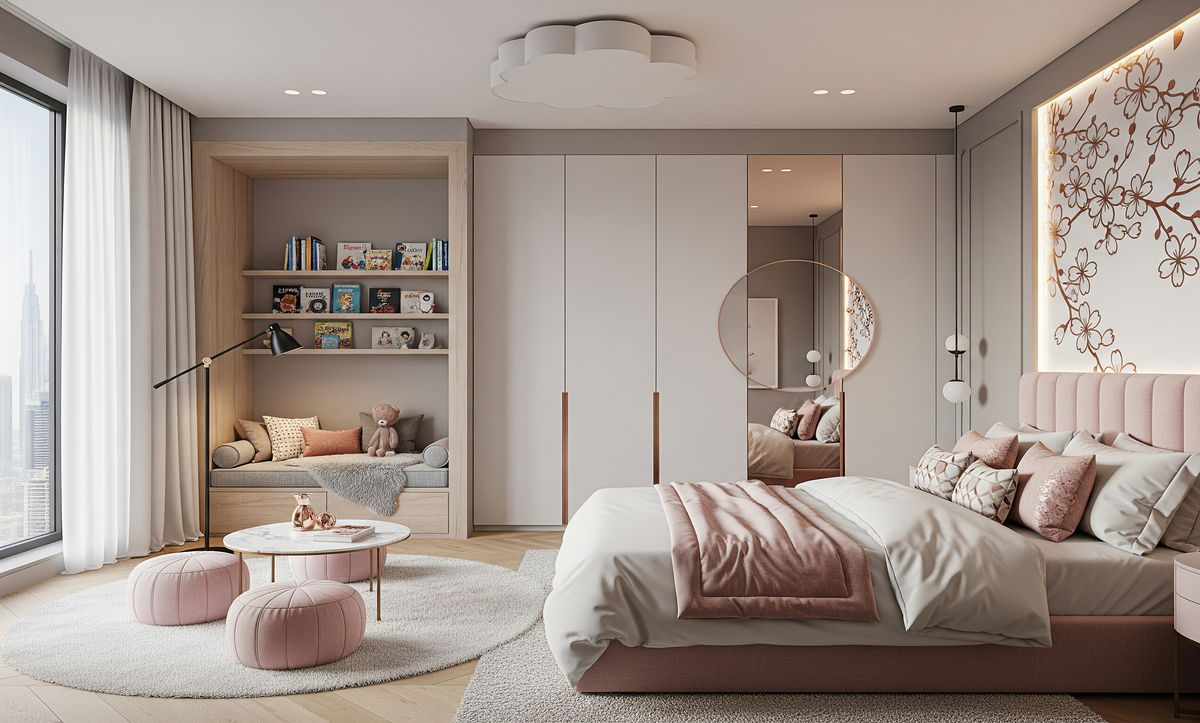
Soft pastel dream
- Walls in a pale blush, lavender, or soft blue
- White or light wood furniture
- Sheer curtains, a canopy over the bed, and layered cushions
- Wall art in simple shapes stars, hearts, flowers or subtle line drawings
Update for teenage years by swapping childish prints for photography, quotes, or abstract art, and by replacing toys on shelves with books, plants, or accessories.
Nature and botanicals
Perfect for girls who love animals, forests, or gardening.
- Sage green walls with white trim
- Botanical wallpaper on one feature wall behind the bed
- Woven baskets, rattan light fixtures, and natural fiber rugs
- Plant prints or real plants on shelves, if she is old enough to care for them
This style stays relevant for older ages by gradually moving from cute animals to more refined botanical prints and art.
Colorful creative studio
For artistic or extroverted girls, build a bedroom that feels like a small studio.
- Neutral walls with one bold accent wall in a warm coral, teal, or deep lilac
- Large pinboard or magnetic board for drawings, photos, and inspiration
- Open shelves with art supplies in pretty jars and labeled boxes
- A small table or desk dedicated to drawing, crafting, or digital art
The base stays the same, but the content changes from finger paints and glitter to sketchbooks, tablets, and moodboards.
Teen aesthetic bedroom
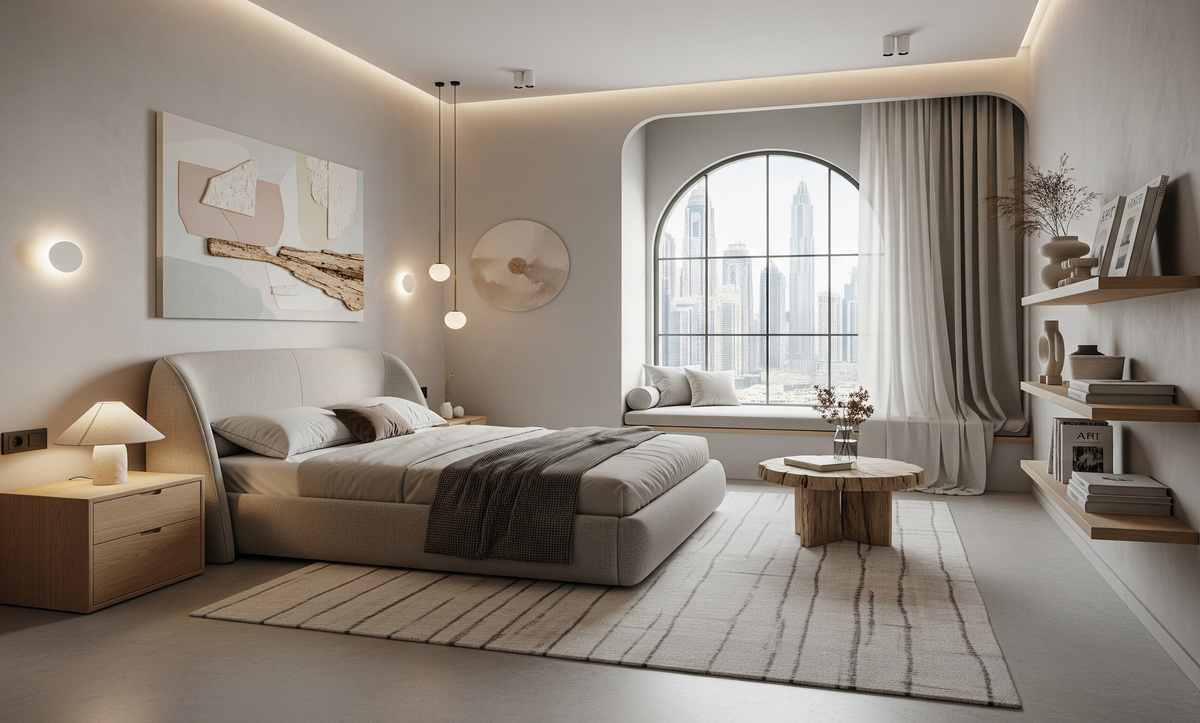
A teen girl often wants to control her space, so keep the shell simple and give her freedom over decor.
- Light or white walls for flexibility
- LED strip lights behind the headboard or around a gallery wall
- A mix of posters, Polaroids, playlists printed as art, and mirrors
- Integrated tech charging stations near the bed and desk
Pull ideas from current teen bedroom inspiration, but keep big pieces neutral so the room can evolve again when trends move on.
8. Lighting – layer it for comfort and focus
Lighting can change the mood of a girl’s bedroom more than any paint color.
You need at least three layers:
- General light
A ceiling fixture or large pendant that fills the whole room. - Task lighting
- Desk lamp with adjustable arm for homework and drawing
- Bedside lamp for reading that is easy to switch off while lying down
- Mood lighting
- Fairy lights, wall lights, or LED strips create a cozy feeling in the evening
- For younger kids, a nightlight with very soft, warm light helps them feel safe without disturbing sleep
Choose warm white bulbs in the sleep area and neutral white over the desk, so the room can switch between relaxed and alert modes.
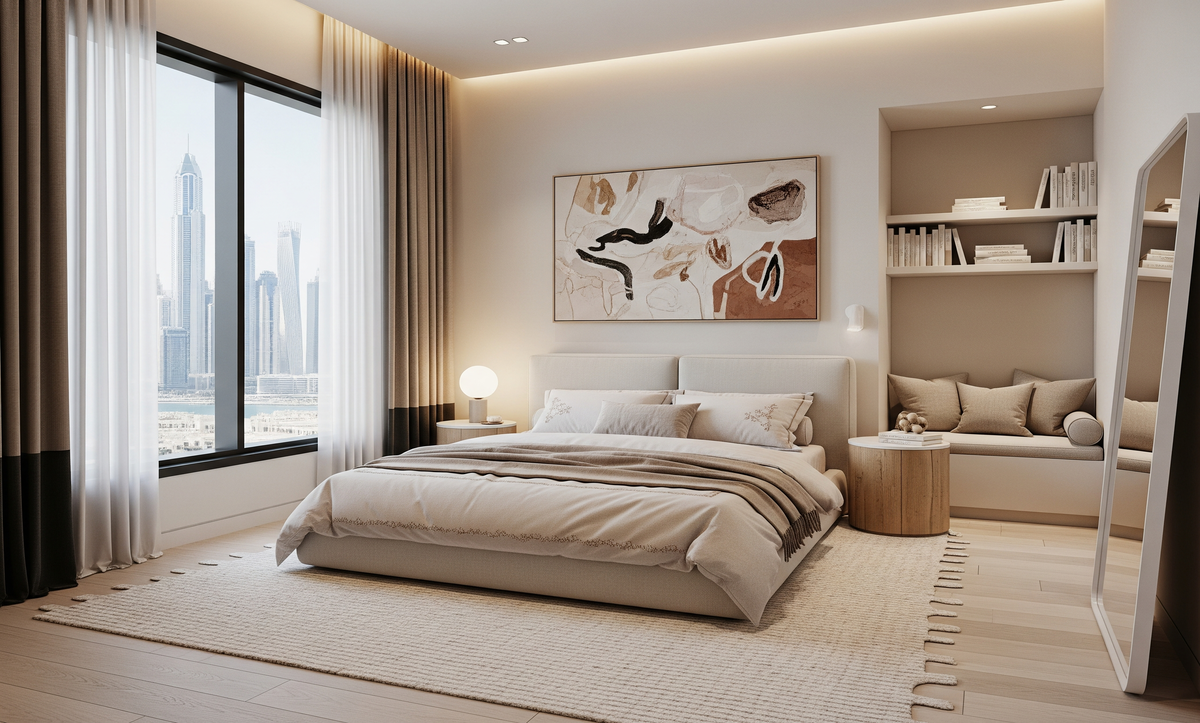
9. Textiles, patterns, and decor
Soft elements make the room feel personal. Here is how to use them without turning the space into visual noise.
Bedding
- Select bedding in colors that support calm sleep
- Use patterns on duvet covers and pillows rather than on every surface
- Keep an extra set of bedding in a box under the bed for quick changes
Harlequin and checkerboard motifs, stripes, and small florals are popular in current kids’ and teen interiors, especially when used in limited areas like a bedspread or rug.
Rugs
- A large, washable rug anchors the main area and softens hard floors
- For play zones, pick rugs with low pile so toys stand up easily
- If the room is shared, two smaller rugs can mark each girl’s area
Curtains and blinds
- Blackout lining helps with sleep, especially in bright cities
- Soft linen or cotton curtains make the room feel gentle and calm
- Roman blinds can suit older girls who prefer a cleaner look
Wall decor
- Gallery walls with frames in different sizes let you update art as she grows
- Pegboards or grid panels work for photos, notes, and accessories
- For younger kids, removable wall stickers are a low-commitment way to add characters or shapes
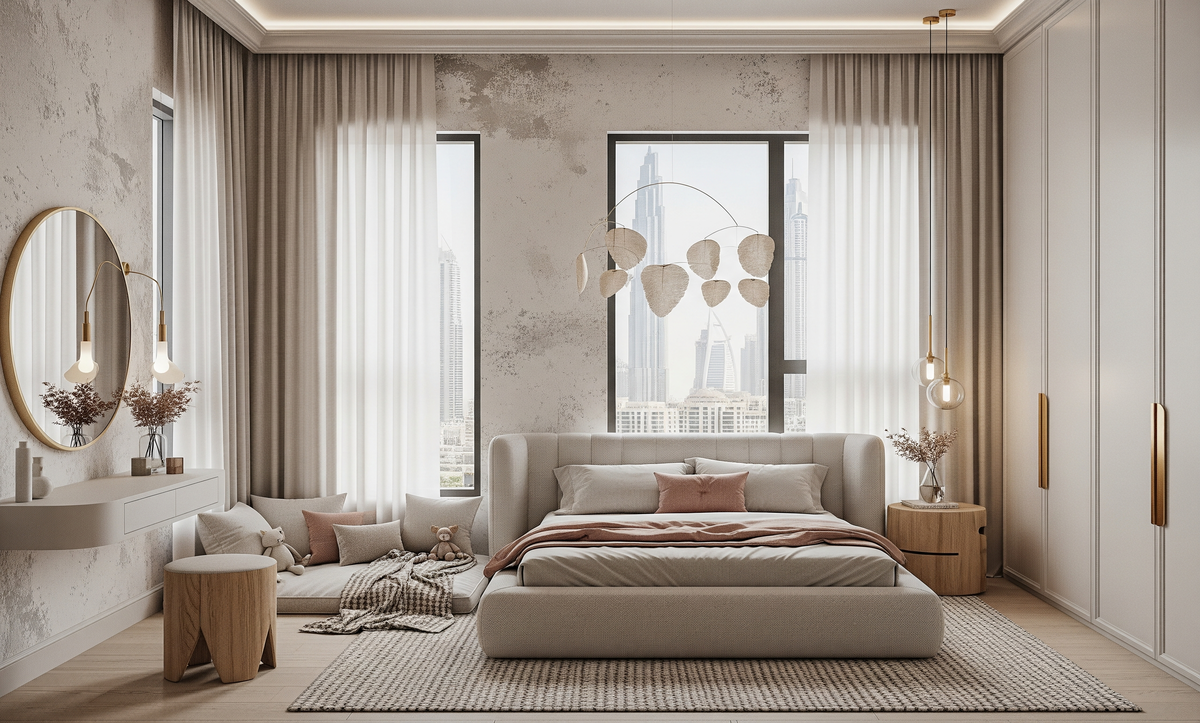
10. Designing shared bedrooms for sisters
When two girls share a room, tension usually comes from territory, light, and noise. Good design can reduce that.
- Give each girl her own zone where possible: a bed, a small shelf, a section of wardrobe, and a piece of wall for art
- You can unify the room with the same wall color and main furniture, then use different accent colors for each girl’s bedding and decor
- If the age gap is large, keep the older girl’s items higher on shelves, away from small hands
- Use headphones hooks near the beds, so teens can watch or listen without disturbing younger sisters
Bunk beds or L-shaped beds with storage underneath often work best in shared rooms.
11. Future proofing – planning for growth
Girls’ interests change quickly, and nobody wants to repaint the room every year. When you design, think of three stages:
- Childhood
Soft colors, character prints, toy storage, play rug - Preteen
More serious desk, larger wardrobe, mirror, fewer toys, more hobbies - Teen
Tech space, beauty or skincare area, mood lighting, more privacy in decor choices
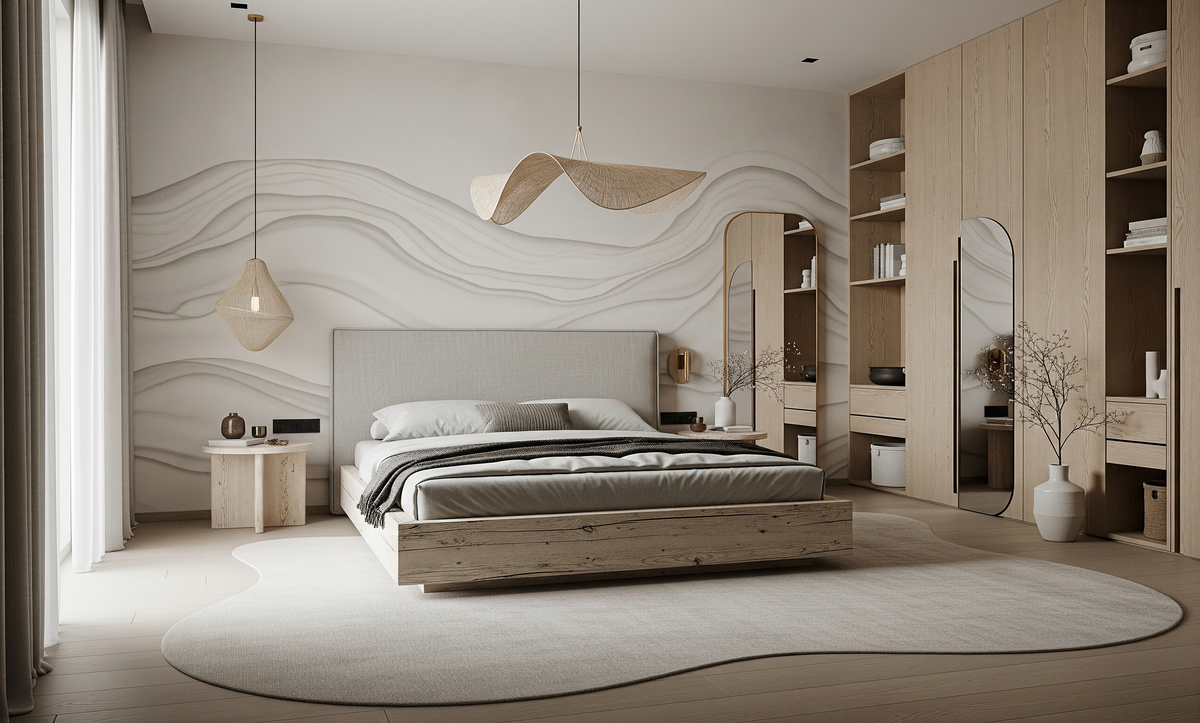
Design tips that help the room survive all three phases:
- Keep the flooring neutral and durable
- Choose main furniture bed, wardrobe, desk in a simple style and neutral color
- Use themes only on elements that are easy and affordable to replace bedding, posters, cushions
This way, you can move from princess to art student to young adult with small changes instead of major renovations each time.
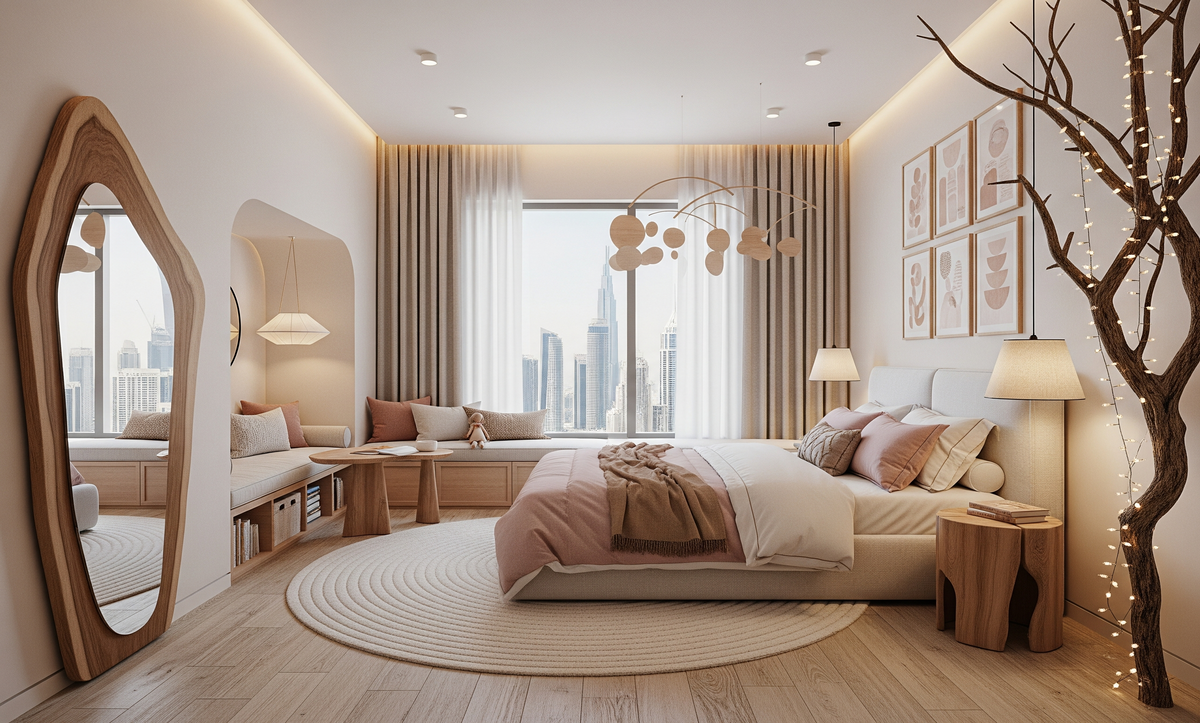
12. Step by step plan for a girl’s bedroom makeover
To make this all usable, here is a straightforward order you can follow.
- Talk to the girl
Ask what she likes and what she really dislikes. Decide on 2 or 3 colors and a loose mood: cozy, natural, creative, or minimal. - Measure the room
Draw the space on paper or in an app, including windows, doors, and radiators. - Plan the layout
Mark the sleep, study, play, and storage zones. Make sure there is a safe path from door to bed at night. - Choose walls and floor
- Wall color first calm, soft shade
- Decide whether you want a feature wall with wallpaper or stronger paint
- Choose main furniture
Bed, wardrobe, desk, and main shelf. Check safety points, especially for tall furniture and bunk beds. - Add storage solutions
Under-bed drawers, boxes, hooks, and baskets. - Layer lighting
Ceiling light, desk light, bedside light, then mood lighting. - Dress the room
Bedding, rugs, curtains, cushions, and decorative objects that fit her interests. - Finish with personal touches
Photos, books, trophies, drawings, or favorite characters in replaceable items. - Review safety again
Check windows, balcony, cables, and furniture stability once all items are in place.
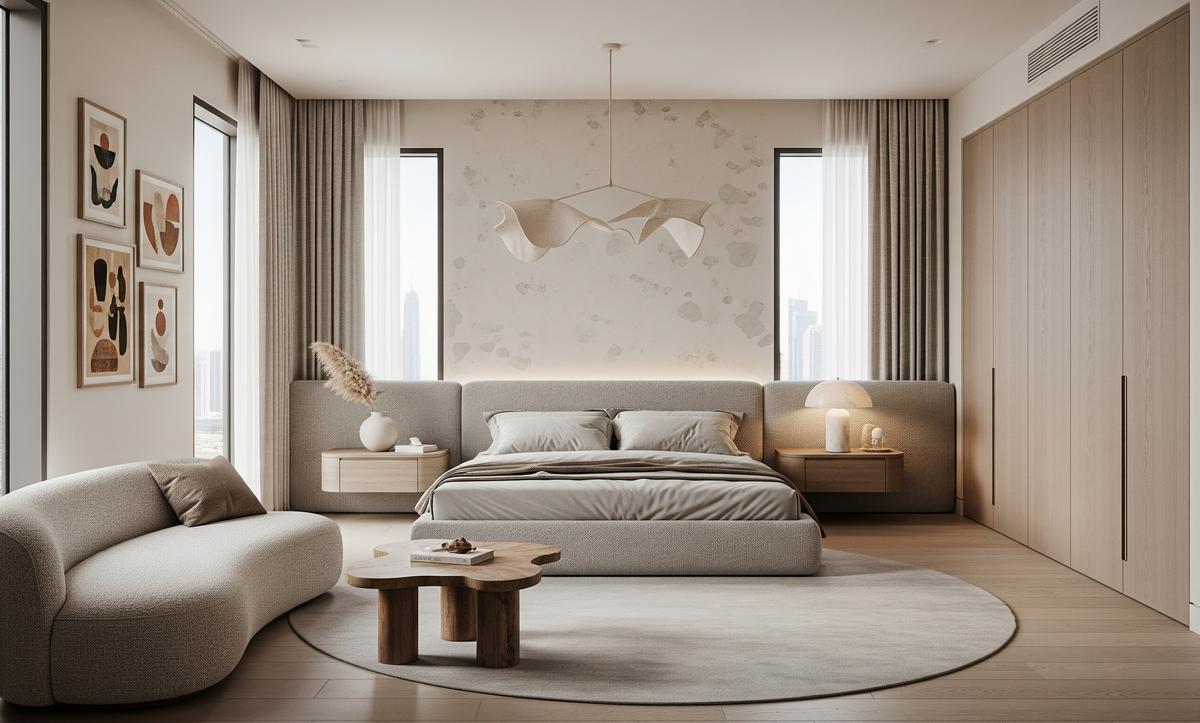
A girl’s bedroom is not just a pretty picture on Pinterest. When you combine the right colors for calm sleep, a clear layout with dedicated zones, safe and adaptable furniture, and space for her personality to grow, you create a room that actually supports her life. Trends will change, posters will come down, new ones will go up, but the bones of a well planned bedroom will keep working for many years.
Contact Us
If you want a professionally designed bedroom that suits your daughter’s personality and future needs, reach out to Algedra Interior Design Turkey. Our team plans every detail with a clear sense of style, comfort, and long-term usability.
Contact Algedra to start your project!
FAQ
1. What is the best color for a girl’s bedroom?
Soft shades like blush, lavender, sage, and muted blue work well because they support calm sleep and adapt easily as she grows.
2. How do I design a girl’s room that won’t feel childish in a few years?
Keep the main furniture and walls neutral. Add characters or trends only through items that can be replaced easily, like pillows, art, or bedding.
3. What should every girl’s bedroom include?
A comfortable bed, a functional study corner, enough storage, and a dedicated play or hobby zone suited to her interests and age.
4. How do I keep a girl’s bedroom organized?
Use cube shelves, labeled boxes, hooks, under-bed drawers, and window-seat storage. Keep categories clear so she can tidy up on her own.
5. What lighting is best for a girl’s room?
Use three layers of general light, a desk lamp for study, and soft mood lighting. Warm white bulbs near the bed help with better sleep.
6. How do I design a shared bedroom for sisters?
Give each girl her own zone with separate bedding colors, shelves, and decor panels. Unify the room with shared wall colors or main furniture pieces.
7. Is a bunk bed safe for a younger girl?
It can be safe if the structure is sturdy, the ladder is secure, and the top bunk is kept for older children. Avoid placing it near ceiling fans or windows.
8. What is the best layout for a small girl’s bedroom?
Place the bed on the longest wall, use vertical storage, choose a compact desk, and keep floor space open for play or movement.
9. Can a theme work without making the room look too busy?
Yes. Apply the theme through small accents while keeping major surfaces simple. This avoids visual clutter and makes updates easier.
10. How do I make a teenage girl’s room feel more mature?
Replace childish prints with photography, simple patterns, or a gallery wall. Add a comfortable reading area and organize her tech space neatly.