

The contemporary villa has evolved into a highly specialized ecosystem. Unlike the mid-century modern homes of the past that relied on standardized industrial materials, the contemporary villa is bespoke and site-specific. It utilizes computational design and advanced material science to solve the tension between luxury and ecological responsibility.
Do contemporary and modern mean the same style?
While "modern" and "contemporary" are often used interchangeably in casual conversation, in the world of architecture, they are distinct. Modernism refers to a specific historical movement (roughly 1920s–1950s) defined by "form follows function." Contemporary architecture, however, refers to the architecture of now—it is fluid, technologically advanced, and often breaks the rigid "box" of modernism to embrace organic shapes, regional identity, and extreme sustainability.
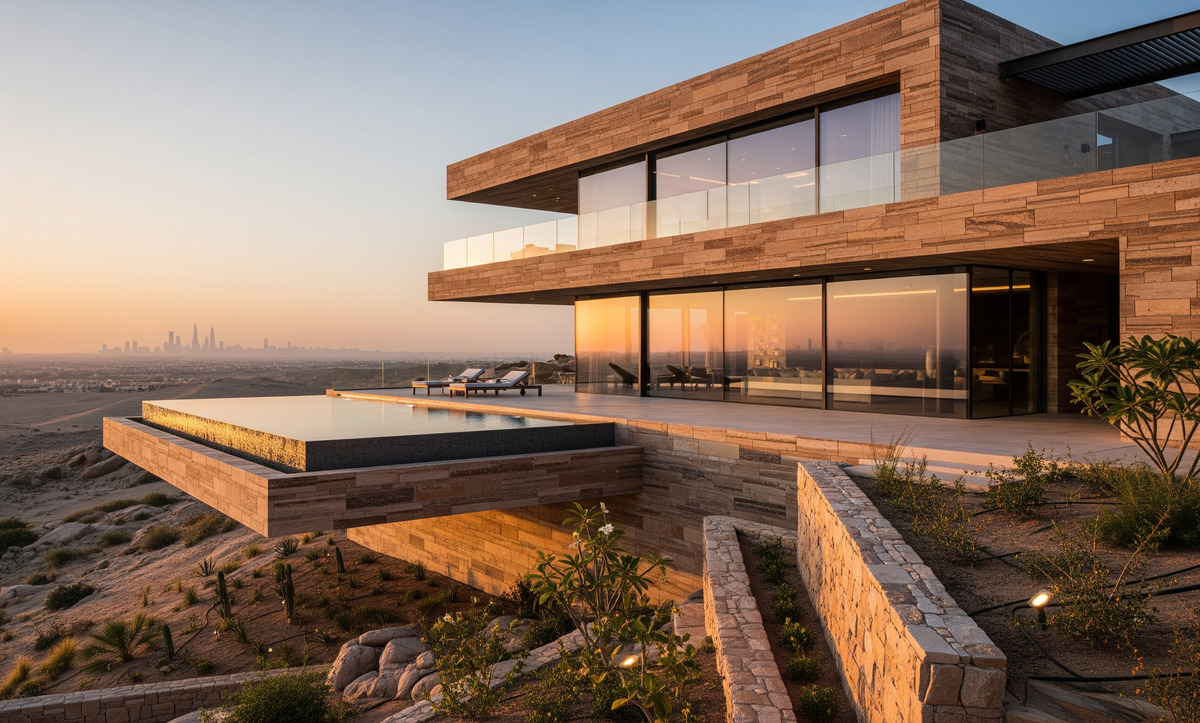
The contemporary villa is not a static style; it is a high-tech response to the specific challenges of the 21st century.
To understand the contemporary villa is to look at the intersection of "Parametric Design," "Performative Envelopes," and "Environmental Intelligence."
1. Beyond the Box: Parametricism and Organic Geometry
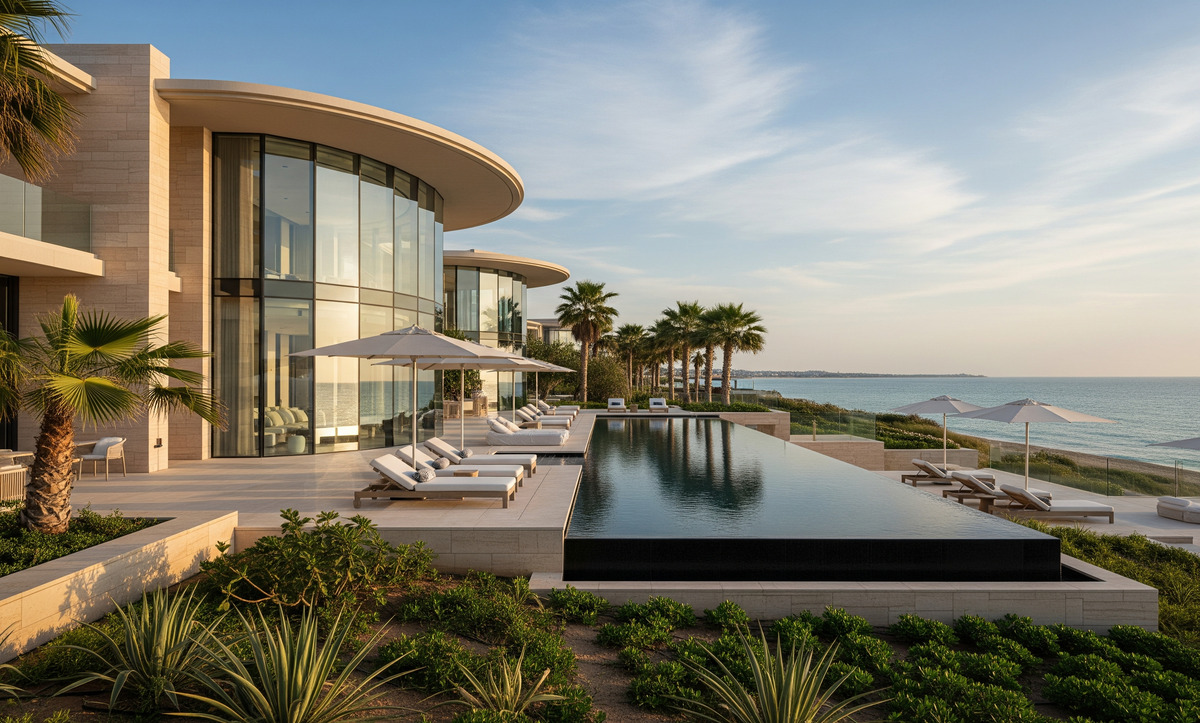
Modernist villas were defined by Euclidean geometry—rectangles and straight lines. Contemporary villas, however, often utilize Parametric Design. Architects use algorithms to "grow" the shape of the villa based on data: the trajectory of the wind, the specific angles of the sun on the summer solstice, and the viewshed of the landscape.

This results in Fluid Geometry. Instead of a flat roof, a contemporary villa might feature a "sweeping shell" made of ultra-high-performance concrete (UHPC). These curves aren't just decorative; they are engineered to deflect wind loads or to funnel rainwater into underground cisterns for garden irrigation.
2. The Performative Envelope: Smart Skins
In contemporary architecture, the wall is no longer a static barrier; it is a "Performative Envelope." While a modern house uses simple glass, a contemporary villa uses a "smart skin" that responds to the environment.
- Kinetic Shading: Many contemporary villas feature motorized louvers or "perforated metal screens" that move throughout the day. Controlled by light sensors, these screens track the sun to prevent glare and heat gain while maintaining the view.
- Selective Glazing: Contemporary glass technology involves "vacuum-insulated glazing" (VIG), which provides the insulation value of a solid brick wall while remaining perfectly transparent. This allows for the "glass house" aesthetic without the massive energy loss associated with 20th-century modernism.
3- The Structural Logic: The Free Plan and the "Floating" Slab
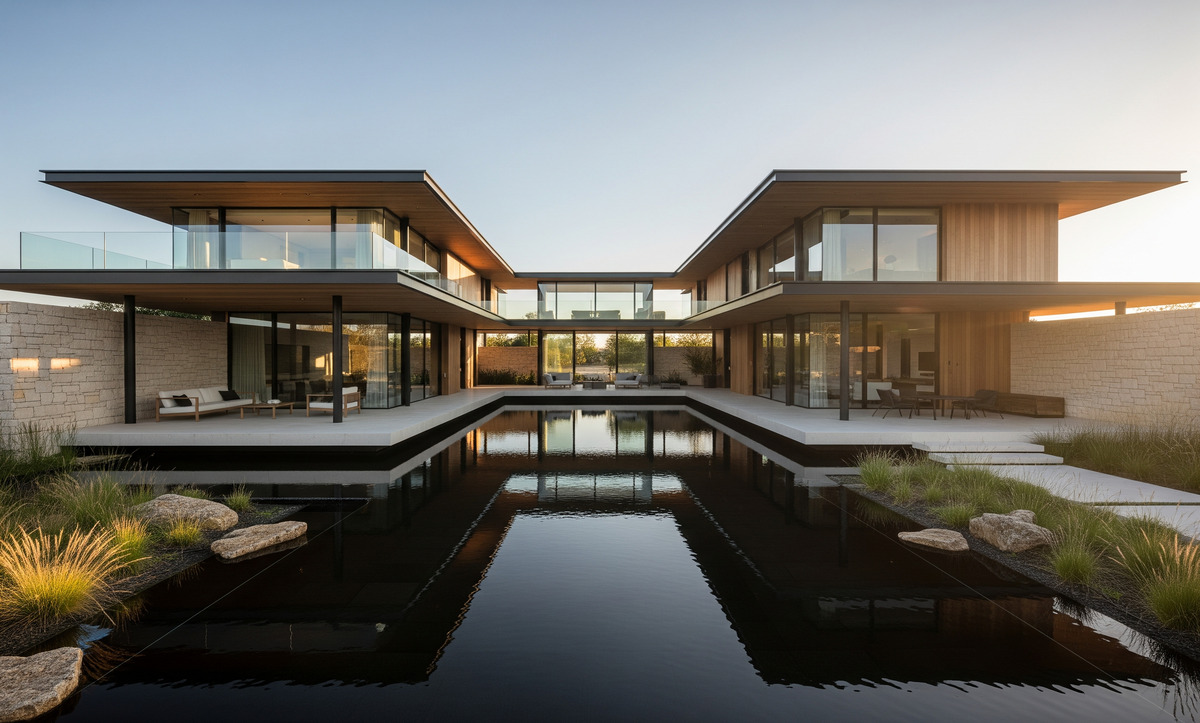
The defining technical achievement of contemporary villas is the separation of the structural skin from the interior partitions. Historically, walls held up the roof, which meant rooms were small and windows were limited.

Today, architects utilize a "Point-Support System." By using a grid of slender steel or reinforced concrete columns, the walls are relieved of their load-bearing duties. This allows for the Free Plan, a concept pioneered by Le Corbusier but perfected with modern materials. In a contemporary villa, you can walk from the kitchen through the living area and out to the pool without encountering a single solid wall. This is often accentuated by a cantilevered roof slab, where the roof extends far beyond the glass perimeter, providing "passive shading" that protects the interior from the high midday sun while allowing low-winter sun to provide natural warmth.
4- The "Envelope": High-Performance Glazing and Thermal Bridging
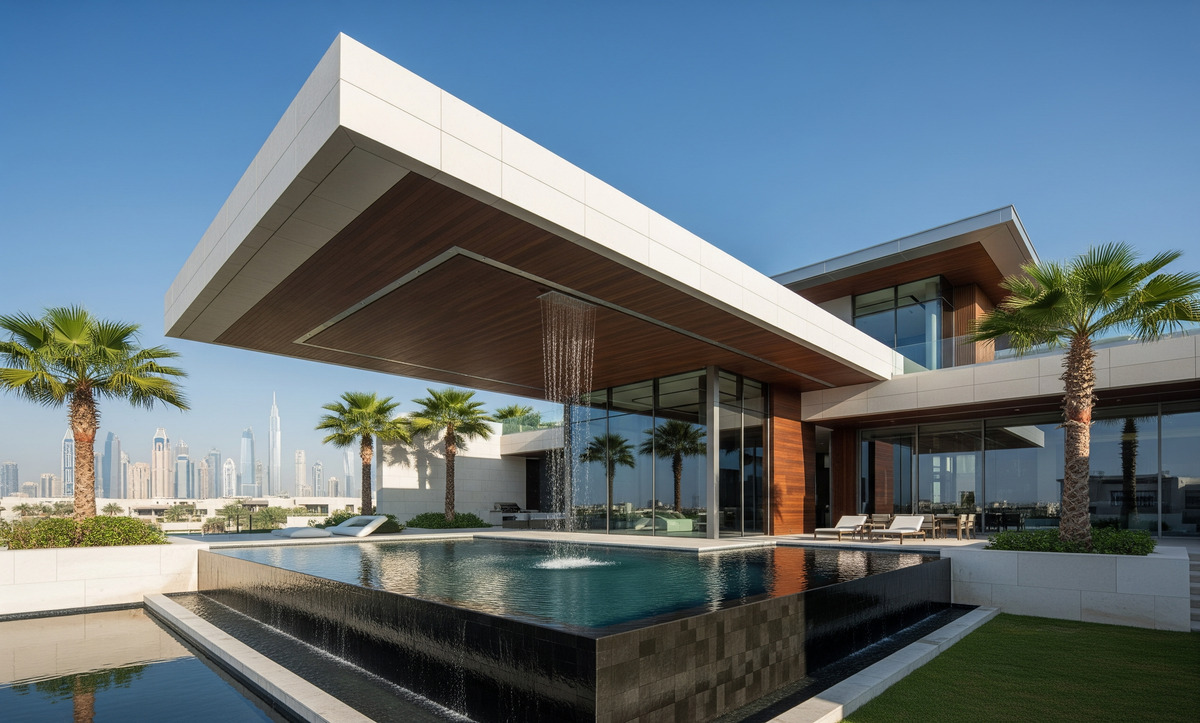
When people think of modern villas, they think of glass. However, the "informative" reality is that glass is a terrible insulator. To make a glass-heavy villa liveable, architects employ High-Performance Envelopes.
This involves using "triple-pane" low-emissivity (low-E) glass coated with microscopic layers of metallic oxides. These layers reflect infrared light (heat) while letting in visible light. Furthermore, to prevent "thermal bridging"—where heat escapes through the metal frames of the windows—architects use thermally broken frames. These frames have a polyamide strip separating the exterior metal from the interior metal, ensuring the villa stays cool in summer and warm in winter without the HVAC system running constantly.
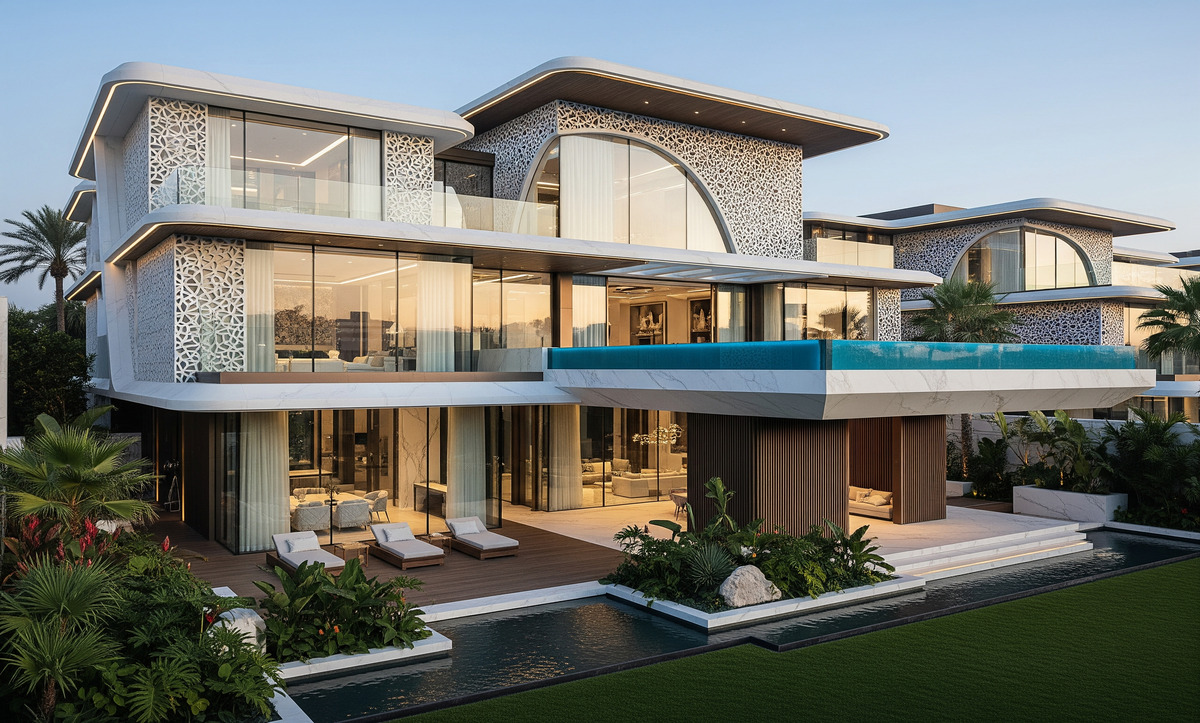
5- Spatial Sequencing: The Transition from Public to Private
A common critique of modern architecture is that it feels "exposed." Informative design solves this through Spatial Sequencing. Instead of a front door that opens directly into a living room, contemporary villas use a series of "buffer zones."
- The Threshold: A heavy, solid wall of stone or wood that protects the villa from the street, offering zero visual access.
- The Compressed Entry: A smaller, darker hallway or courtyard that "compresses" the occupant.
- The Release: The moment you turn a corner and the space explodes into a double-height ceiling with a panoramic view of the landscape.
This psychological "compression and release" is what makes a villa feel grand and secure simultaneously.
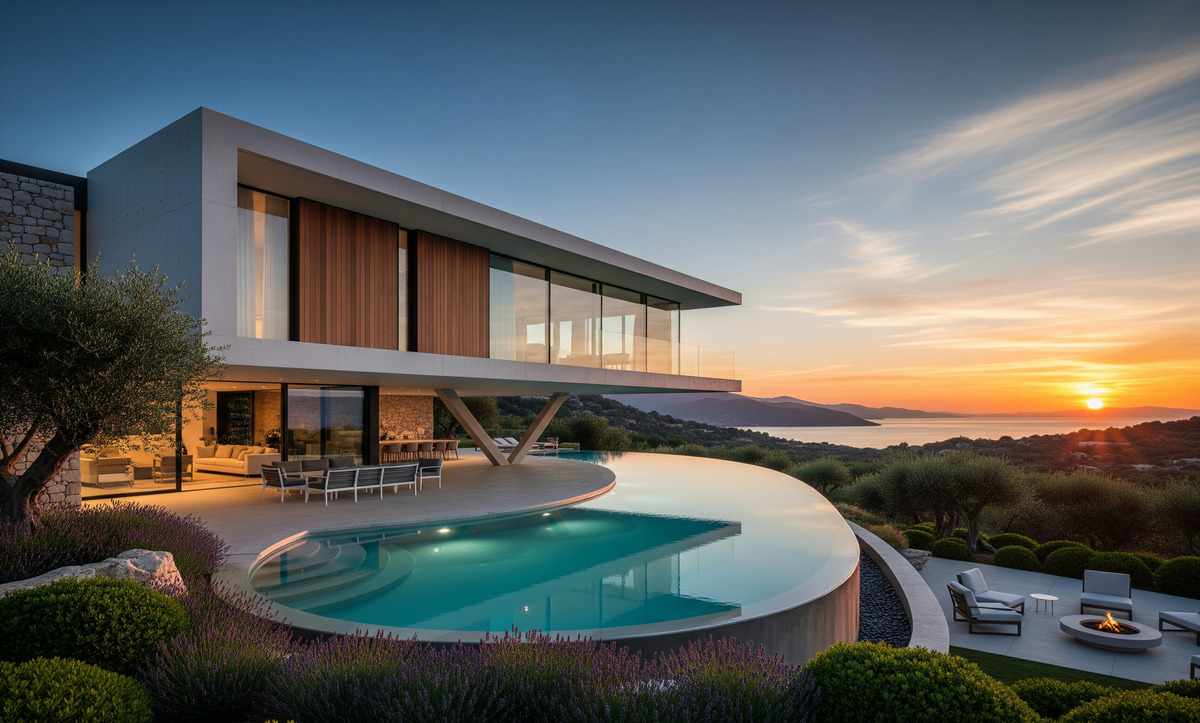
6- Site-Specific Topography: The "Stitched" Foundation
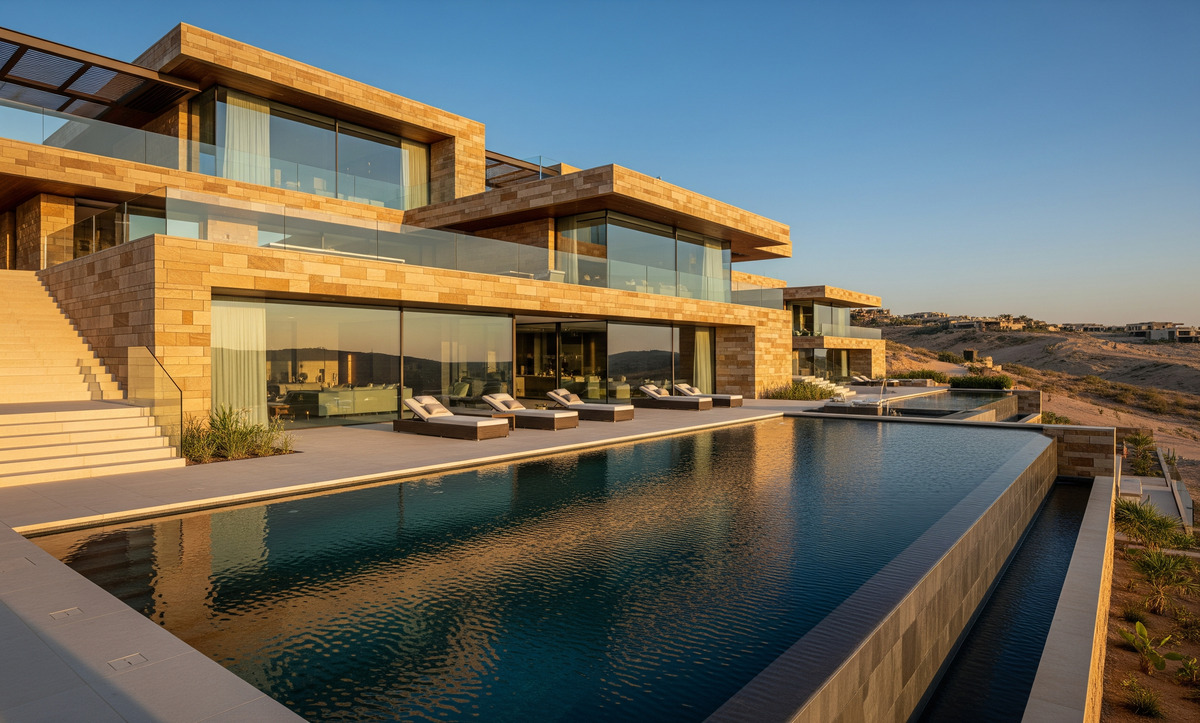
The most sophisticated villas are not built on the ground; they are built into it. In contemporary "Hillside Architecture," architects use subterranean levels to hide the "utility" of the house—the garage, the gym, and the cinema—leaving only the light, glass-filled living spaces visible above ground.
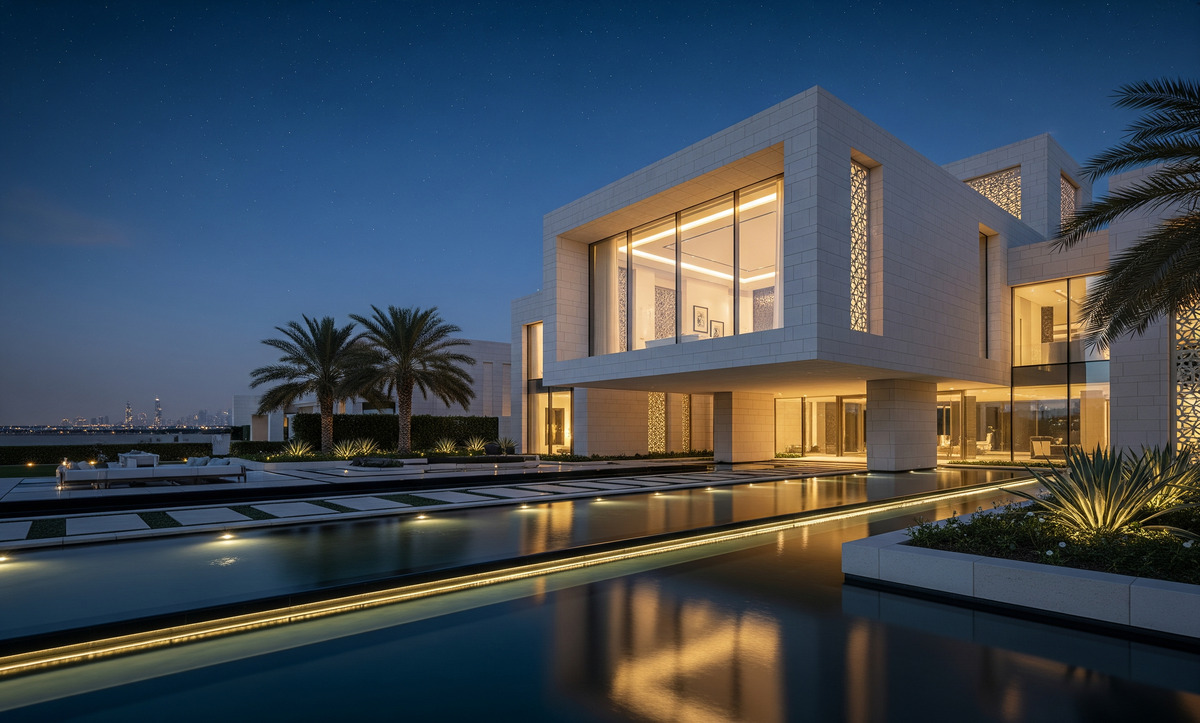
This is often achieved through topographical stitching, where the house follows the natural contour of the land. Instead of a flat foundation, the house may be split into three or four levels that "cascade" down a slope. This minimizes the visual impact on the environment and creates multiple "ground levels," so every floor—even the upper ones—can have access to a private garden or terrace.
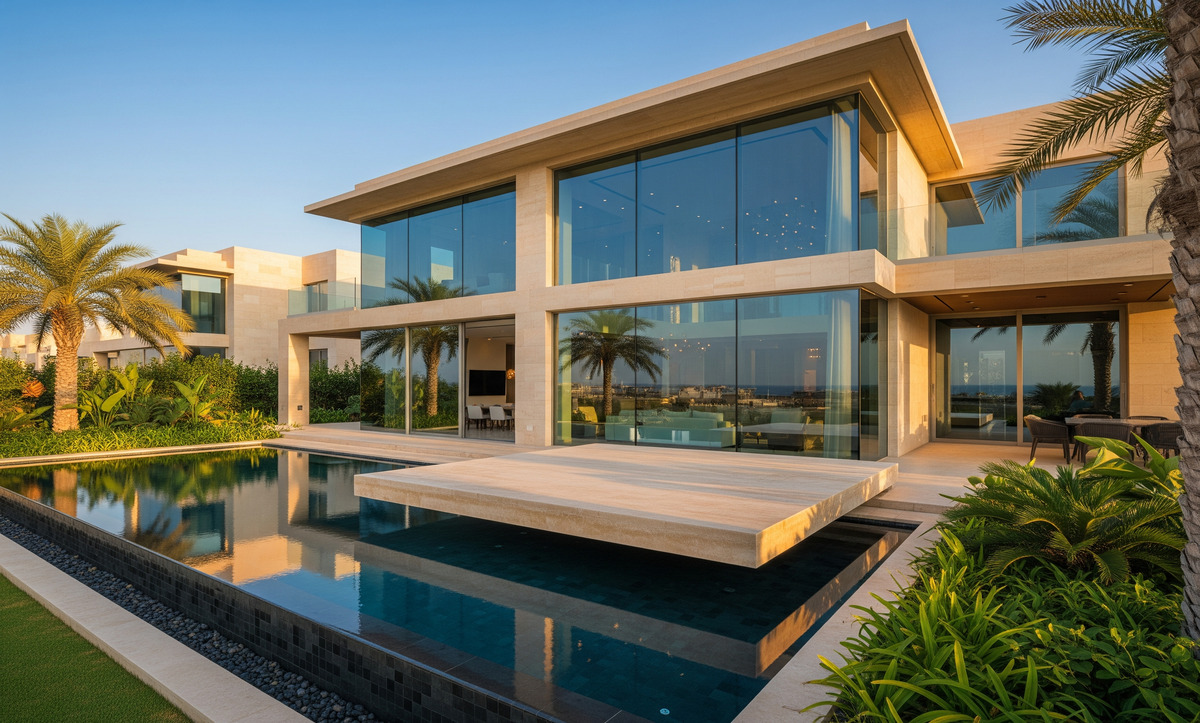
7- Material Integrity: The "Honest" Palette
In contemporary design, "informative" materiality means avoiding "fake" finishes like veneer or paint. Architects prioritize Monolithic Materials.
- Board-Formed Concrete: Concrete is poured into wooden molds so that the grain of the wood is permanently etched into the stone. It provides a brutalist, permanent feel that contrasts with the fragility of glass.
- Weathering Steel (Corten): A steel that develops a stable, rust-like appearance when exposed to the weather, eliminating the need for painting and allowing the building to change color over time, eventually matching the surrounding earth.
- Acoustic Management: Because modern villas have many hard surfaces (glass, stone, concrete), they can be echoey. Modern architects hide "perforated acoustic panels" inside the ceiling or behind wood slats to absorb sound, ensuring the "quiet" in "quiet luxury" is literal.
8- The "Smart" Microclimate
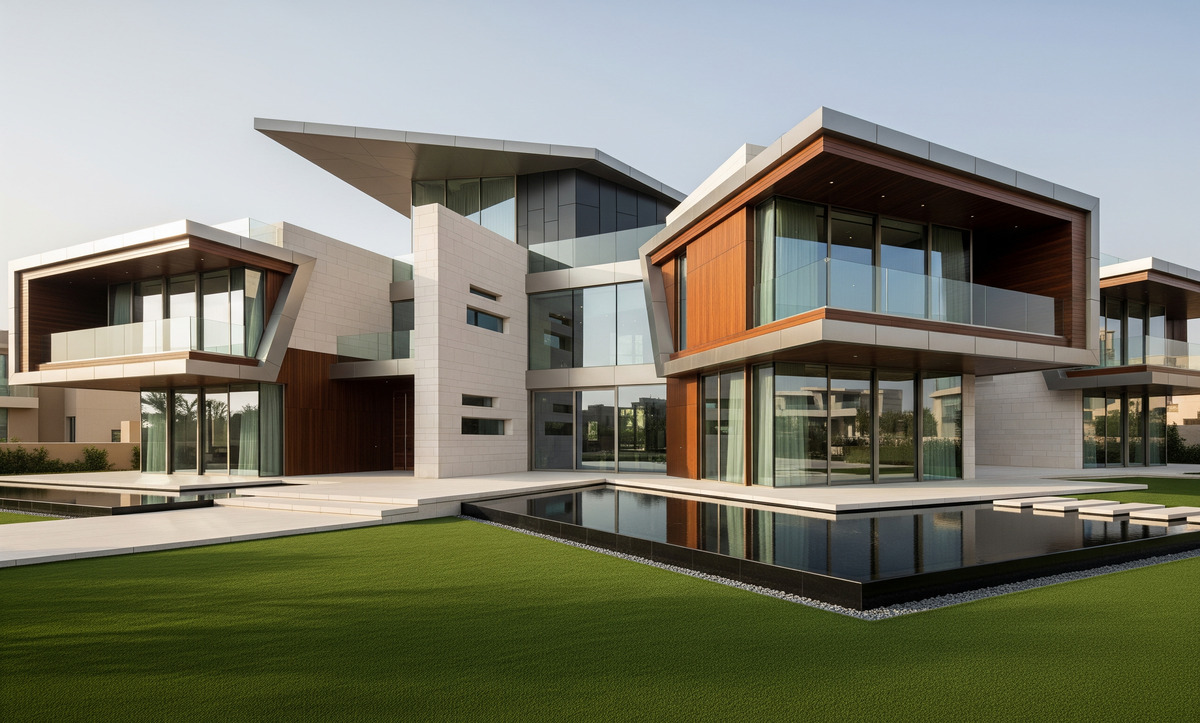
Beyond the walls, contemporary villa design now includes Microclimate Control. This isn't just a thermostat; it is the use of "thermal chimneys" and "water features" for evaporative cooling. By placing a shallow reflective pool at the entry of the villa, the incoming breeze is cooled as it passes over the water and is then drawn through the house by a central double-height void. This "Venturi Effect" creates a natural air current that can lower the perceived temperature by several degrees without any electricity.
Deep Dive: The Future of Villa Design
The next frontier is Kinetic Architecture—buildings that move. We are starting to see villas with "sliding roofs" that open a bedroom to the stars at the touch of a button, or "rotating walls" that change the orientation of a room based on the season.
If You Are Interested, Read;
Explore more specialized insights into residential design through our curated collection of architectural explorations:
- Contemporary Architecture Designs Portfolio: A showcase of boundary-pushing structures that redefine 21st-century luxury.
- Creating Luxury Villas with Modern Omani Architecture: A deep dive into how traditional heritage is being reimagined through contemporary lenses in the Gulf.
- Villa Exterior Design by Algedra: Professional insights into creating impactful first impressions through high-end exterior finishes.
- Comprehensive Approaches to Villa Exterior and Landscape Design: Understanding the holistic relationship between the building envelope and its natural surroundings.
- Villas in the Style of Hi-Tech: Exploring the raw industrial aesthetic and advanced structural expressionism in residential living.
Contact Algedra
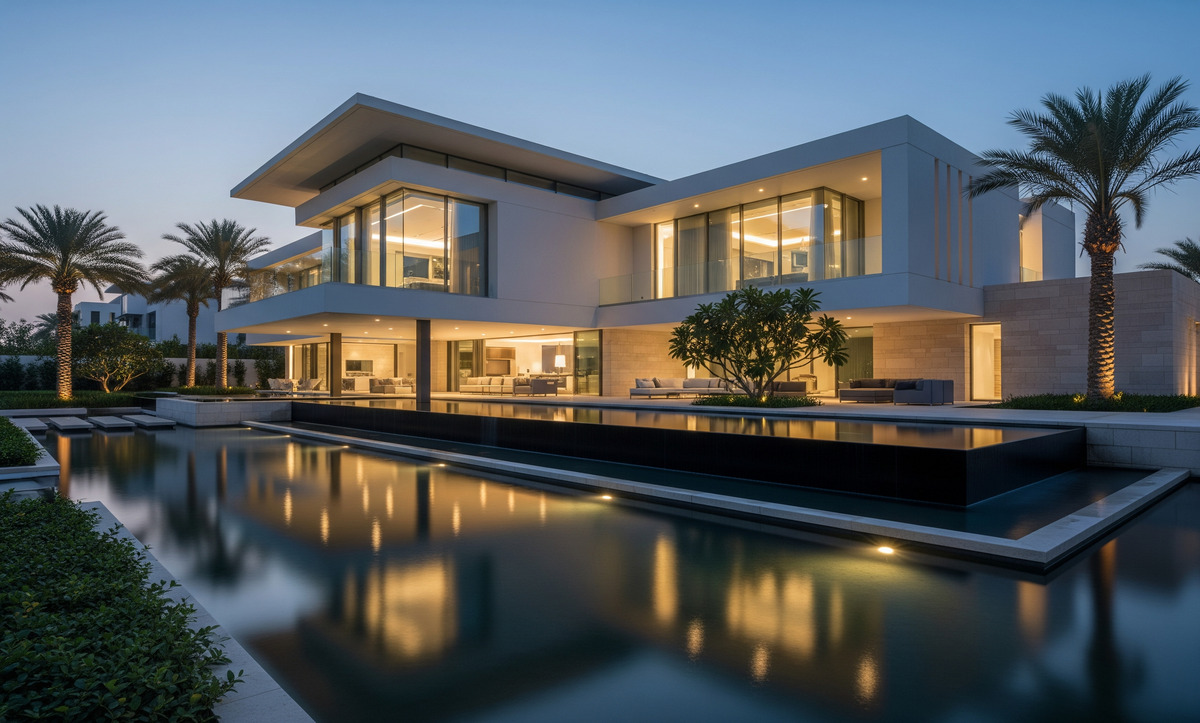
At Algedra, we believe that every extraordinary project begins with a conversation. Whether you are envisioning a futuristic contemporary villa, a luxury interior renovation, or a large-scale commercial development, our team of award-winning architects and designers is ready to bring your vision to life.
FAQs
1. What services does Algedra provide?
Algedra is a full-service design firm specializing in high-end interior design, architectural engineering, landscape design, and fit-out supervision. We handle projects from the initial conceptual sketches and 3D visualizations to the final handover, ensuring that the architectural integrity of the design is maintained throughout the construction process.
2. Does Algedra work on international projects?
Yes. While our main headquarters is in Dubai, we have a global reach with offices in Turkey, the USA, and the UK. We have successfully completed luxury residential and commercial projects across the Middle East, Africa, Europe, and North America, adapting our designs to local regulations and cultural aesthetics.
3. How long does a typical villa design process take?
The timeline for a villa design varies based on the complexity and scale of the project. Generally, the conceptual phase takes 4 to 6 weeks, while the full detailed architectural and interior package can take 3 to 5 months. We prioritize precision and quality, ensuring every technical detail is perfected before construction begins.
4. Can Algedra help with both the exterior and interior design of my villa?
Absolutely. One of our core strengths is holistic design. We believe that the exterior architecture and interior spaces should function as one seamless ecosystem. By handling both aspects, we ensure that the "Indoor-Outdoor" flow, material palettes, and structural logic are perfectly synchronized.
5. What is the "Modern Omani" style mentioned in your portfolio?
Modern Omani architecture is a contemporary design movement that blends traditional Omani heritage (such as arched motifs, crenelated rooftops, and natural stone) with modern minimalist principles. We use high-tech glass, sustainable cooling systems, and open-plan layouts to modernize the traditional aesthetic, making it suitable for 21st-century luxury living in the Gulf region.