

Choosing a style for a villa asks more of an owner than styling an apartment ever does. A villa carries volume, long sightlines, double-height halls, and a direct relationship with land and light that a city flat rarely offers. The style you settle on has to hold across large rooms, read well from the garden looking in, and still feel intimate at the scale of a single seating area. It also has to suit where the villa actually stands, because a stone house above a Bodrum bay and a forested retreat near Sapanca ask for very different things from the same word "modern."
Turkey makes this decision both richer and more demanding. The country sits across two continents, produces some of the finest natural stone and timber in the region, and holds an architectural memory that runs from Ottoman symmetry to Aegean simplicity. A villa here can draw on any of these without looking like a copy of something seen abroad. The guidance below moves through the questions experienced designers ask before a single mood board is built, so that the style you choose fits the building, the site, and the way you genuinely live.
1- Begin with the architecture and the region
The most reliable starting point is the villa itself and the ground it occupies. A coastal villa in Çeşme or Bodrum, open to sea breeze and strong summer light, leans naturally toward airy Mediterranean and Aegean schemes: lime-washed walls, deep terraces treated as outdoor rooms, and pale stone underfoot that stays cool through July. A villa on the Bosphorus shore in Istanbul carries a different inheritance, where waterfront yalı tradition, reflective light off the strait, and a more formal urban setting reward layered, sophisticated interiors. An inland property near Lake Sapanca or in the forests above the city invites warmer, grounded materials and a closer dialogue with the surrounding green.
The distinction between a standalone villa and one inside a gated community matters as well. Detached homes on the coast or in the hills above Istanbul, in areas such as Zekeriyaköy, Çubuklu, or Acarkent, often allow a freer architectural personality and a stronger indoor-outdoor scheme. Villas within a managed compound may carry shared façade guidelines, which steers the boldest expression inward toward the interior and the private garden.
Reading the building before choosing a look saves expensive correction later. Ceiling heights, window placement, the position of the staircase, and the way rooms open onto one another all set limits and opportunities that a style has to respect. For owners who want a sense of where the market is moving before committing, where villa interiors are heading across Turkey this year maps the regional differences in useful detail, while waterfront owners will find that designing around a strong water view raises questions about orientation and reflection that shape every later choice. The exterior matters here too, since the façade and the interior should speak the same language; a coordinated approach to villa exterior design keeps the two from drifting apart.
2- Let the scale of the volume guide you
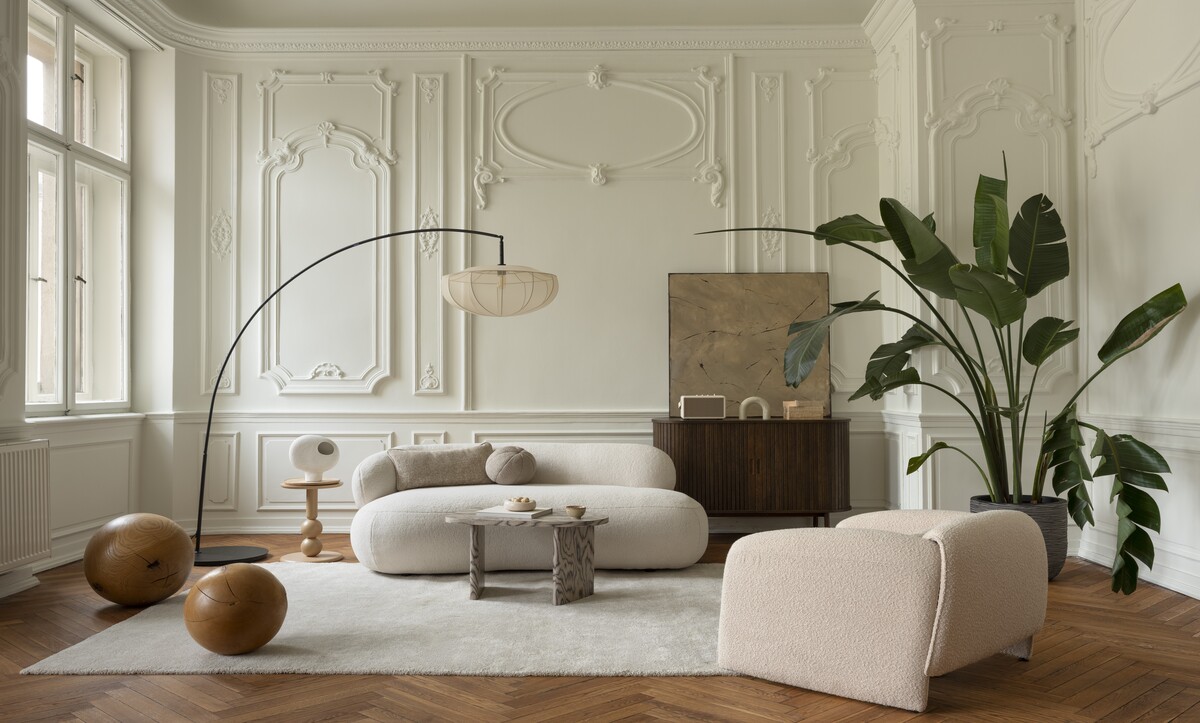
Villas reward styles that can fill space with confidence. A double-height living room or a wide entrance hall can swallow furniture that would feel generous in an apartment, and a style chosen without regard for that scale tends to look thin once installed. Larger volumes carry architectural gestures comfortably: a sweeping staircase as a sculptural centrepiece, a run of full-height glazing onto the terrace, a fireplace wall finished in book-matched marble. Each of these reads as deliberate in a villa and overpowering in a smaller home.
Scale also changes how a palette behaves. Pale, restrained schemes keep large rooms feeling open and luminous, while deeper, more saturated tones can bring warmth and definition to a hall that might otherwise feel cavernous. Furniture has to be specified to suit these proportions, which is where bespoke pieces earn their place: a sofa built to the length of the room, a dining table sized for genuine gatherings, and rugs cut to anchor each seating zone so that the floor plan reads clearly even in an open plan. Off-the-shelf pieces sized for apartments tend to float in a villa, leaving the room feeling under-furnished however expensive its contents. The arrival sequence deserves particular thought, because the entrance is where a villa announces its character; the way an arrival sequence sets the tone shows how scale, light, and a single strong material choice establish the mood for everything beyond the door. For properties at the upper end, where the brief includes home spas, double salons, and guest wings, the planning of luxury villa design treats volume and circulation as the foundation that the chosen style then sits upon.
3- Match the style to how you actually live
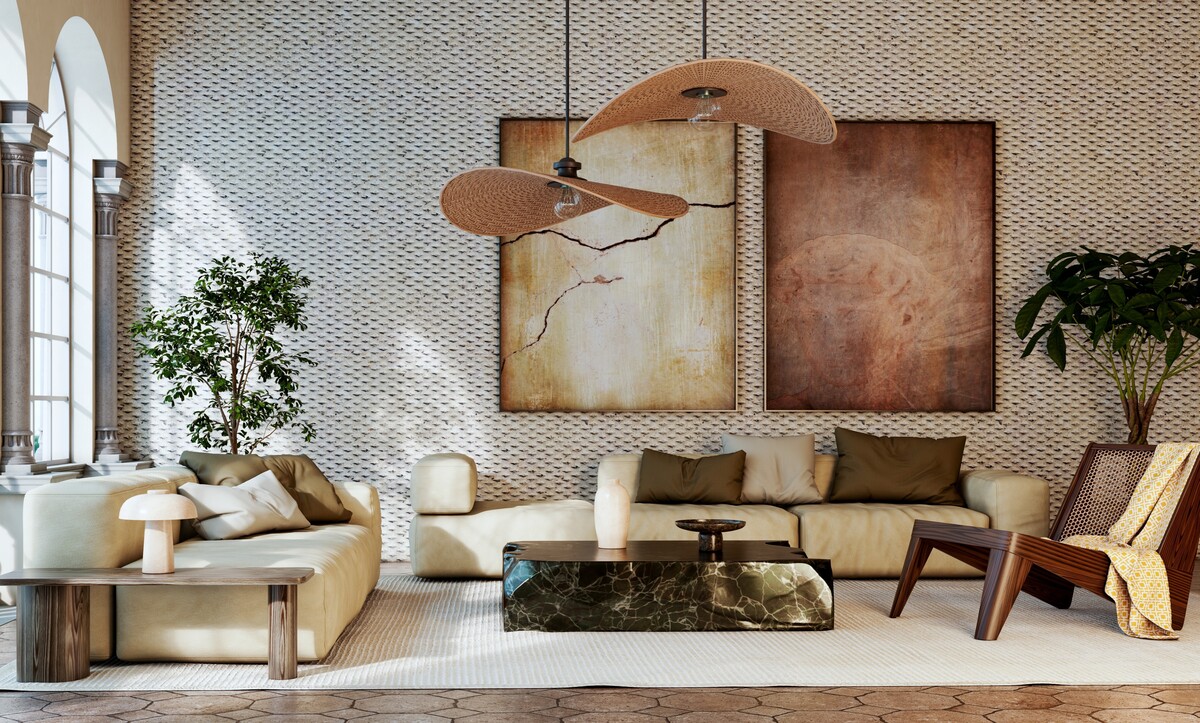
A style earns its place by supporting daily life, not by photographing well. The most useful exercise before choosing is an honest account of how the house will be used. Owners who entertain often need generous, connected social spaces, a kitchen that performs under pressure, and a layout that lets guests move easily between the dining hall, the lounge, and the garden. Families with young children value durable surfaces, forgiving finishes, and rooms that adapt as the household changes. Owners who treat the villa as a retreat tend toward calm, tactile materials and a slower, quieter palette.
Cultural habits shape the brief as much as practical ones. Many clients across Turkey and the Gulf request a formal majlis or a reception salon kept distinct from the family living area, which influences both the floor plan and the level of ornament each space carries. Indoor-outdoor living, almost universal in coastal villas, means terraces, shaded loggias, and pool surrounds have to be styled with the same care as the interior. Eng. Tareq Skaik, Head of Design at Algedra Group, frames the principle plainly: "A villa style only works when it follows the rhythm of the household. We start by asking how a family wakes, cooks, hosts, and rests, and the aesthetic grows out of those answers." Letting function lead the look is what keeps a beautiful villa livable a decade after handover.
4- Understand the major villa styles and who each suits
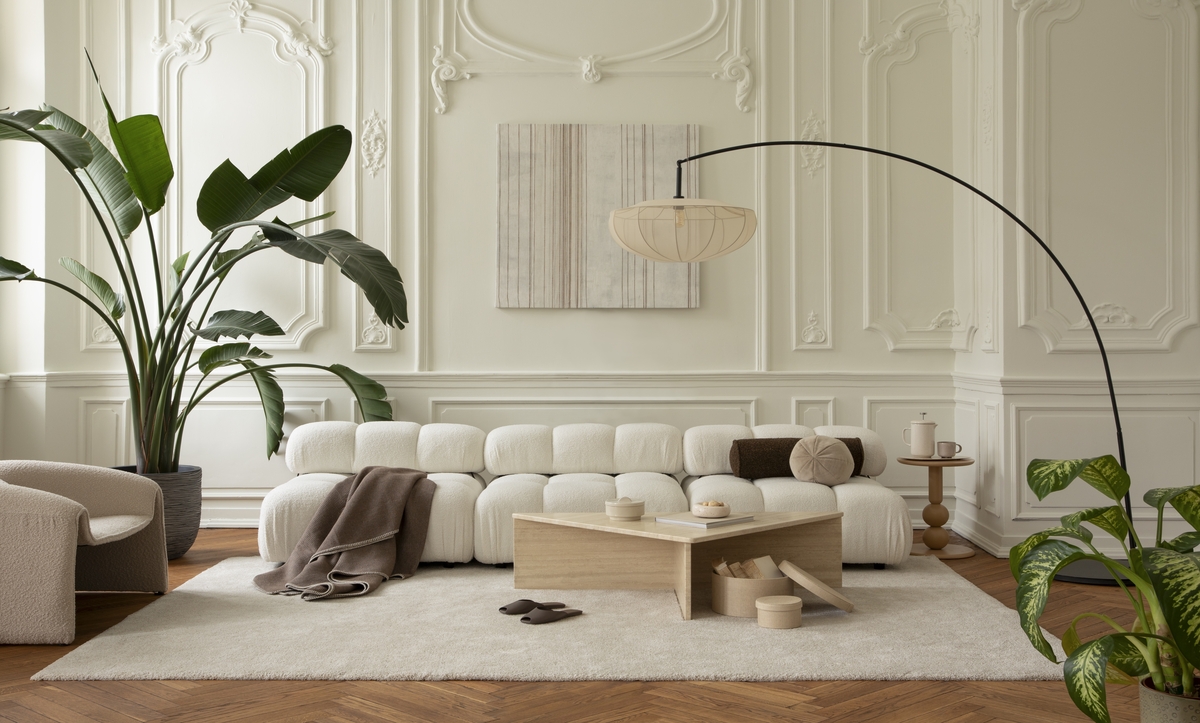
Several design directions recur in Turkish villa projects, each with its own strengths. Contemporary and modern schemes favour clean lines, open plans, and a restrained material palette of stone, glass, and warm timber. They suit owners drawn to light-filled, uncluttered spaces and pair naturally with new-build architecture; the structural thinking behind a modern villa explains how façade, glazing, and interior flow are resolved as one system. Mediterranean and Aegean interiors, with their whitewashed surfaces, arched openings, terracotta, and natural textiles, remain the enduring choice for coastal homes where the climate and the view do much of the work.
Neoclassical and Ottoman-influenced styles answer a different appetite, one for ceremony, symmetry, and craftsmanship. Marble floors, decorative cornicing, and considered lighting give these villas a sense of occasion well suited to formal entertaining. For owners who want heritage expressed through pattern and geometry, Islamic interior design brings arabesque detail, mashrabiya screening, and structured symmetry into a contemporary home with real cultural depth. A growing number of clients gravitate instead toward warm minimalism, sometimes called quiet luxury, where the richness lives in materials and proportion held to a disciplined palette; the thinking behind a pared-back, materially rich interior translates directly to villa scale. Owners who resist a single label often land on a confident eclectic mix, and the styles shaping Istanbul homes at the moment shows how cultural references can be layered without losing coherence. For a broader orientation across the field, a wider survey of design directions worth knowing helps narrow a personal preference before the brief is finalised.
5- Let Turkish light and local materials shape the palette
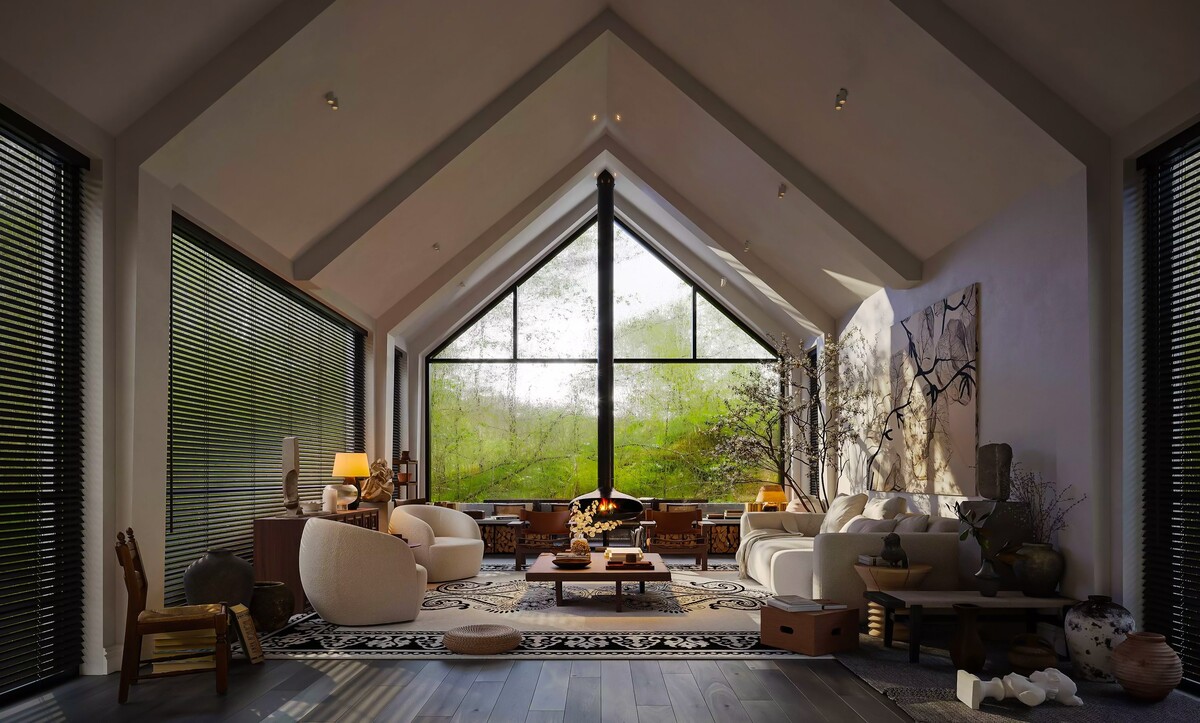
Light behaves differently across Turkey, and a palette that flatters a villa in one region can fall flat in another. The bright, near-Aegean sun along the western and southern coasts intensifies colour and favours cool, reflective surfaces and pale walls that hold their freshness through long summers. Istanbul's light shifts with the weather and the water, silvery in winter fog and golden at dusk over the Bosphorus, which rewards palettes with enough depth to stay alive in changing conditions. Inland villas, set against forest or lake, sit comfortably with warmer, earthier tones drawn from the landscape itself.
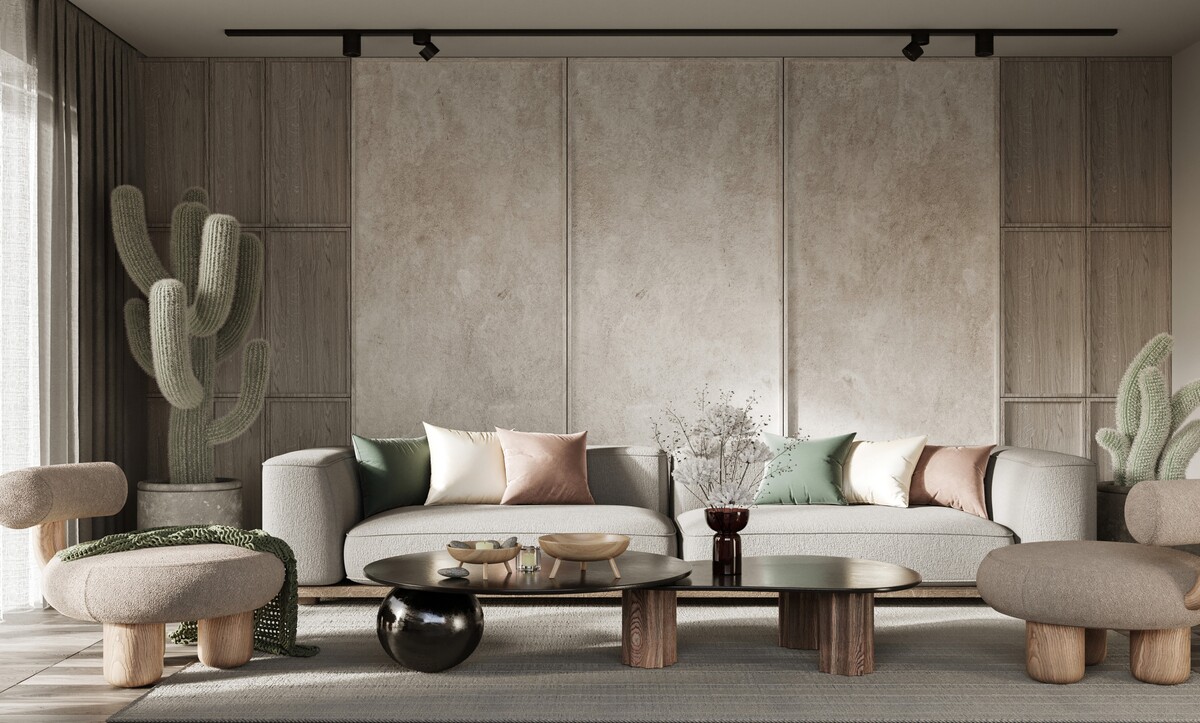
Material sourcing is one of the genuine advantages of building a villa style in Turkey. The country quarries an extraordinary range of natural stone, from Afyon White and Marmara Island marble to the grey-veined Aegean varieties, alongside a mature timber and textile industry. A designer working here can visit a quarry, select an individual slab, and control quality at the source, which gives a villa interior a richness and authenticity that imported substitutes struggle to match. Stone underfoot, solid timber joinery, hand-finished plaster, and locally woven textiles give a scheme weight and a sense of place. Practical details follow from the climate as well: large-format stone laid with minimal grouting suits the open floors of a coastal villa and stays cool in summer, underfloor heating beneath natural stone earns its keep in inland homes through a colder winter, and salt-resistant, solution-dyed fabrics hold their colour in sea-facing rooms where ordinary upholstery would fade. Owners weighing the financial side of these choices will find that what a project of this kind typically costs sets realistic expectations before a material palette is locked in.
6- Plan for cohesion across rooms, the exterior, and the garden
A villa is read as a whole, so the chosen style should carry through from the entrance to the furthest bedroom and out into the grounds. Cohesion comes from a consistent material story and a controlled palette repeated with variation, so that each room feels related to the next while keeping its own purpose. A formal salon can carry more ornament than a family kitchen, yet both should share the same underlying language of stone, timber, and tone. Sightlines deserve attention, because in an open villa one room is almost always visible from another, and clashing directions become obvious the moment the spaces connect. Lighting carries the same logic: a consistent approach to colour temperature, fitting style, and layered ambient, task, and accent light holds the rooms together after dark, when a villa is most often enjoyed.
The relationship with the outdoors is where villa design separates itself most clearly from apartment work. Terraces, pool surrounds, and garden rooms function as additional living space for much of the Turkish year, which makes villa landscape design an integral part of the brief and a true extension of the living space. The architecture itself should set the frame, with the interior and the structure resolved together; coordinated villa architecture design ensures that rooflines, window rhythm, and internal flow support the style instead of fighting it. When the exterior, the interior, and the planting share one intention, a villa reads as a single considered work.
7- Budget, longevity, and working with a designer
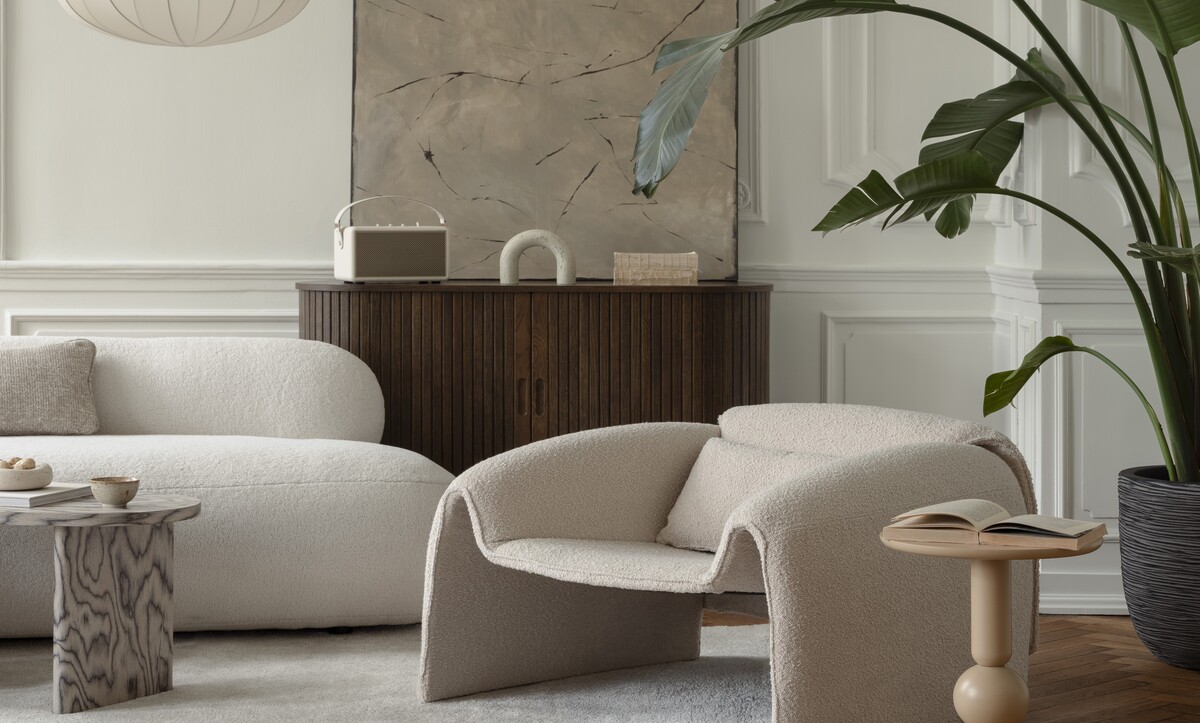
A villa style is a long-term commitment, and the wisest choices balance present appeal against how a scheme will age. Trend-led interiors can date quickly at villa scale, where the investment is substantial and the rooms are large enough that fashions show plainly. Classic proportions, quality materials, and a restrained core palette tend to hold their value, with personality layered through art, textiles, and lighting that can evolve over time. Budgeting honestly at the outset, room by room, prevents the common mistake of a grand entrance financed at the expense of the spaces a family uses every day.
Bringing in a designer early shapes the outcome more than any single material decision. A studio that understands Turkish architecture, regional light, and local sourcing can steer an owner toward a style that fits the building and the budget, then carry it through to fit-out without the gaps that appear when concept and execution sit in different hands. Professional villa interior design in Turkey covers that full arc, from the first reading of the site to the final placement of furniture, which is where a chosen style finally becomes a home.
8- Why owners across Turkey work with Algedra
Algedra is an interior design and architecture studio with an established base in Istanbul and active projects across Turkey and the Gulf. The team handles villa work as a single continuous process, from concept and 3D visualisation through technical drawings, site supervision, and final fit-out, so that the style agreed at the start survives intact to completion. Direct access to Turkish quarries, joinery workshops, and textile producers gives every project genuine control over material quality, and an in-house team means mood boards, drawings, and on-site coordination stay under one roof. For owners choosing a villa style in Turkey, that combination of regional knowledge and end-to-end delivery turns a difficult decision into a clear, well-supported path.
9- Bring your villa's style to life
Choosing the right interior style for a villa in Turkey is a decision worth making with expert guidance, grounded in the building, the region, and the way you live. The Algedra team works with villa owners across Istanbul, the coasts, and beyond to shape interiors that feel personal, cohesive, and built to last.
Tell us about your project, and one of our designers will be in touch to discuss your villa, your site, and the style that suits both. Start the conversation today and begin your villa with confidence.
Frequently asked questions
Which interior style suits a coastal villa in Turkey best?
Coastal villas in regions such as Bodrum, Çeşme, and the wider Aegean tend to suit Mediterranean and contemporary styles, with pale palettes, natural stone, and strong indoor-outdoor connections that work with the climate and the light.
Can traditional and modern styles be combined in one villa?
Yes. Many successful Turkish villas blend contemporary lines with Ottoman or Mediterranean detail, holding the mix together through a consistent material palette and careful attention to proportion and sightlines.
How early should I choose a style in the villa design process?
A clear style direction is best set at the start, alongside the architecture and the budget, so that the floor plan, material choices, and exterior all develop in support of a single intention.
What local materials work well in Turkish villa interiors?
Turkish natural stone such as Afyon White and Marmara marble, solid regional timber, hand-finished plaster, and locally woven textiles give villa interiors depth and authenticity, with the added advantage of quality control at the source.
Does the villa's location really change the right style?
Location is one of the strongest factors. Light, climate, view, and regional architecture differ markedly between the coast, Istanbul's waterfront, and inland settings, and each rewards a different treatment of palette, material, and layout.