

A dedicated home office within an upscale residence works as a controlled interior where long schedules, decisive tasks and private discussions unfold throughout the day. The room supports uninterrupted progress and presents a composed atmosphere. Every component—layout, lighting, surfaces and storage—contributes to a high-performance environment.
This type of interior follows architectural logic. Straight lines, structured volumes and measured detailing establish a steady rhythm. The space feels professional while remaining fully integrated into the aesthetic of the home. An executive home office thrives when the design anticipates work habits, visual preferences and required equipment.
1- Desk placement as the anchor of the interior
The desk influences movement, access to tools and overall experience inside the room. A centered placement facing the entrance creates a strong command point ideal for leadership roles and frequent online meetings. A lateral orientation works well for reading, writing and immersive work sessions. Both approaches emphasize clear geometry and ease of use.
The wall behind the desk benefits from height and order. Tall cabinetry, shelving or a single art piece form a steady backdrop. This wall shapes the visual character of the office and enhances the impression during video calls.
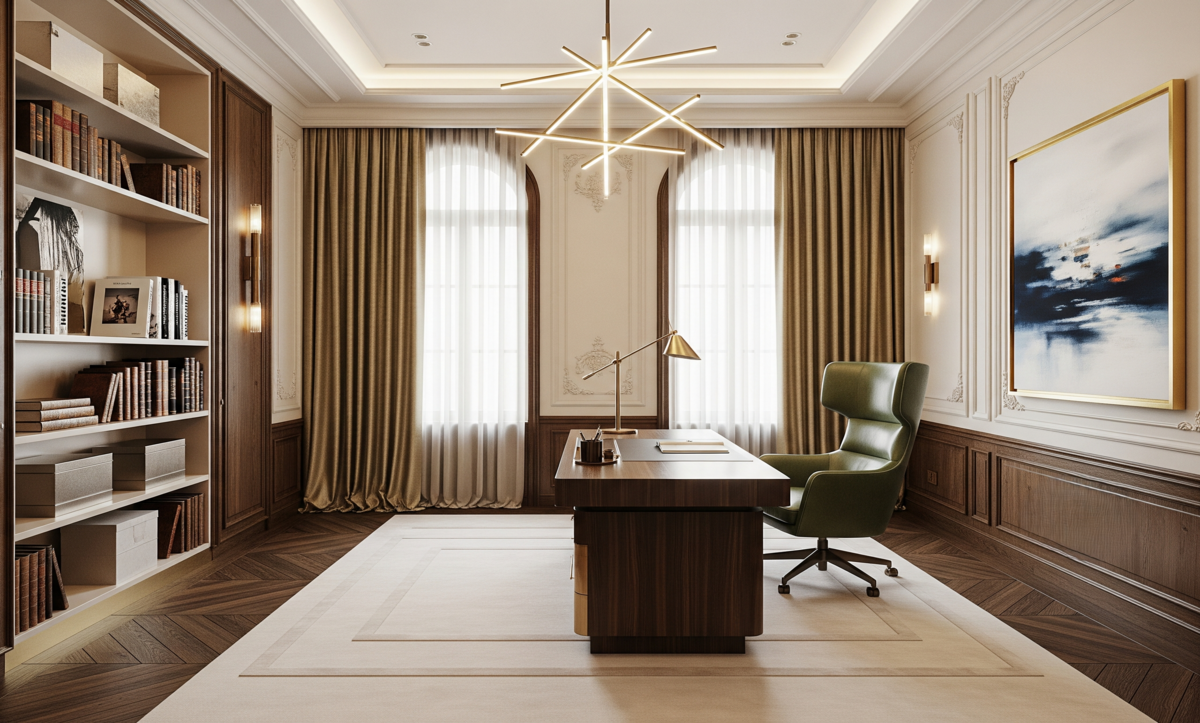
A structured reference for desk-focused planning appears here at our interior design work for home office design.
2- Lighting shaped for long, steady workdays
A premium home office requires an advanced lighting strategy. Comfort improves when light sources support every hour of the day.
Task lighting creates focused visibility for reading, writing and detailed assignments.
Ambient lighting distributes illumination across the room in an even, steady way.
Accent lighting highlights shelves, artwork or architectural surfaces.
Warm neutral tones create a welcoming atmosphere during early morning tasks, mid-day meetings and evening deadlines. Window treatments manage natural light shifts throughout the day and support camera-ready visibility for video calls.

Comprehensive lighting guidance appears here: best office interior design ideas.
3- A material palette that reinforces presence
A luxury home office gains strength through substantial materials. Timber with depth, stone surfaces, brushed metal hardware and structured textiles deliver confidence and durability.
A desk with generous thickness signals stability. Cabinetry with consistent vertical lines brings order. Upholstery with supportive profiles enhances comfort during extended sessions. Finishes should maintain harmony across all surfaces, creating an interior with quiet authority.
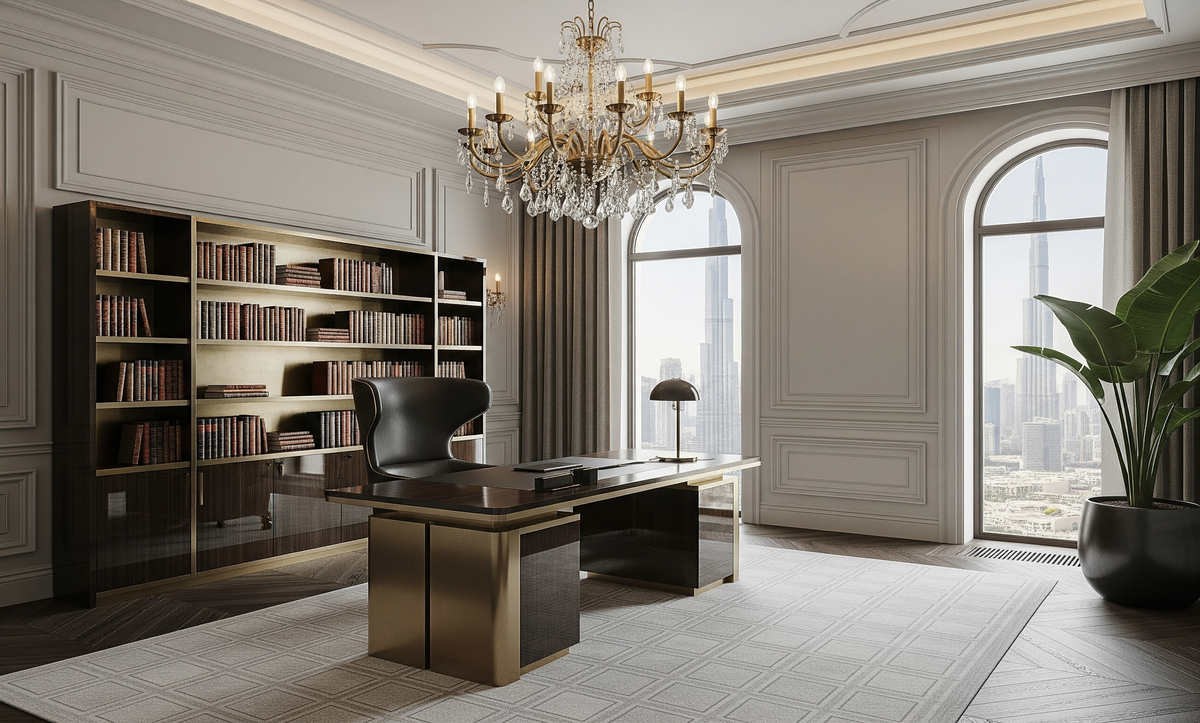
When the home office sits inside a bedroom suite, room separation strategies appear here: bedroom office design.
4- Storage that supports an organized pace
High-level home office interiors rely heavily on storage. Order elevates productivity, and storage systems ensure smooth routines throughout the day.
Key elements include:
- Tall cabinetry that extends the room’s vertical structure
- Closed compartments for equipment, documents and devices
- Slim drawers for stationery and daily essentials
- Curated open shelves for objects with personal relevance
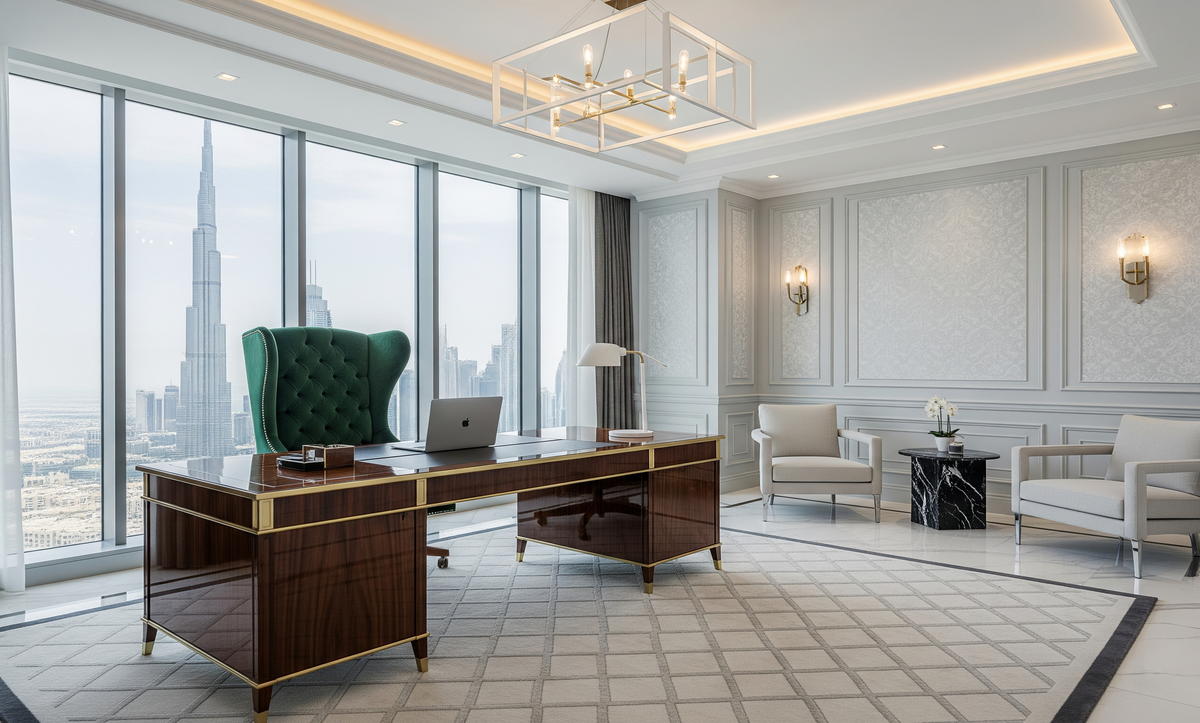
Integrated charging sections inside drawers support phones, tablets and accessories. Cable channels within cabinetry keep surfaces clean. A well-planned storage wall enhances the room’s authority and supports executive-level work.
5- Dual seating for different working modes
A distinguished home office benefits from two seating categories.
Primary seating
A supportive desk chair with a refined profile. Leather or structured textile enhances longevity and comfort during extended hours.
Secondary seating
A compact meeting area with two armchairs and a table. This zone serves reading, reviewing documents, short meetings or quiet planning away from the desk.
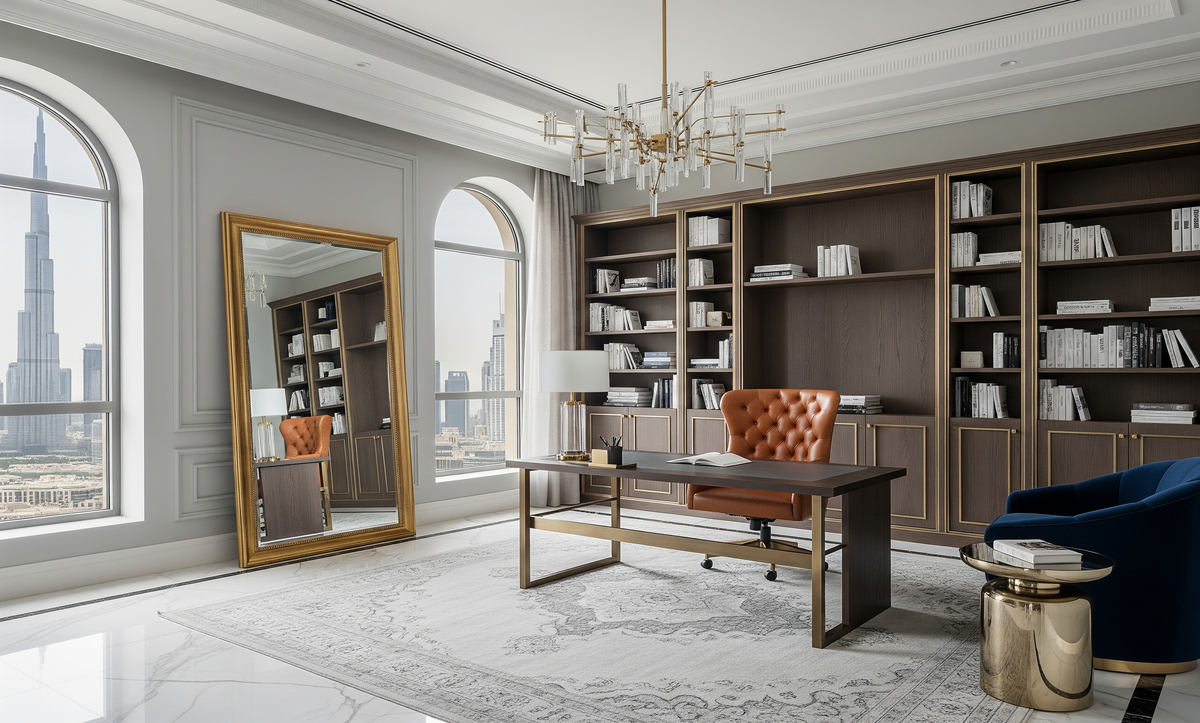
This dual arrangement expands the usability of the room and reflects the layout of high-end offices featured in editorial design media.
Explore additional office layouts at office design by Algedra.
6- Technology positioned with architectural discipline
A contemporary executive home office depends on seamless integration of equipment. Thoughtful placement of outlets, data points, charging bases and dedicated cabinetry ensures order.
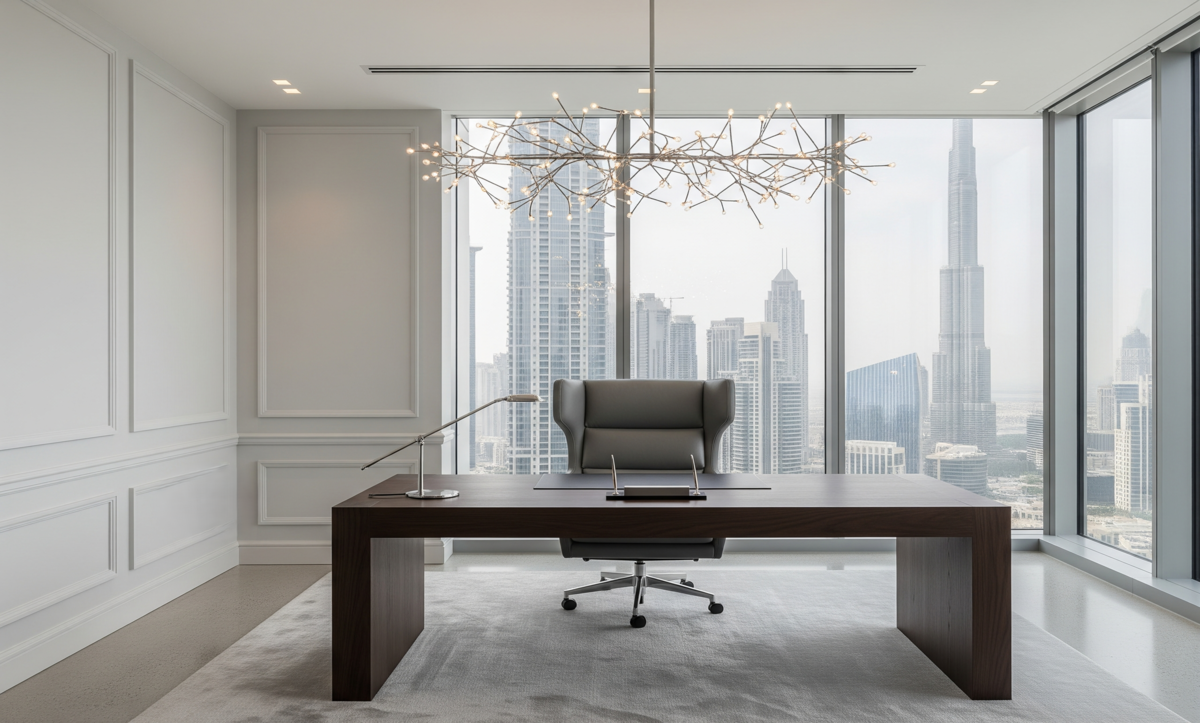
Printers, routers and storage drives gain enclosed compartments with ventilation. Screens maintain balanced proportions relative to the desk. Wireless accessories reduce clutter. This approach supports a visually cohesive environment while maintaining advanced capabilities.
7- Acoustic strategy for calm, clear communication
Sound quality plays a substantial role in modern home offices. Area rugs, upholstered seating, lined curtains and textured wall finishes enhance acoustic performance. These elements support clearer speech during calls and help maintain privacy throughout the day.
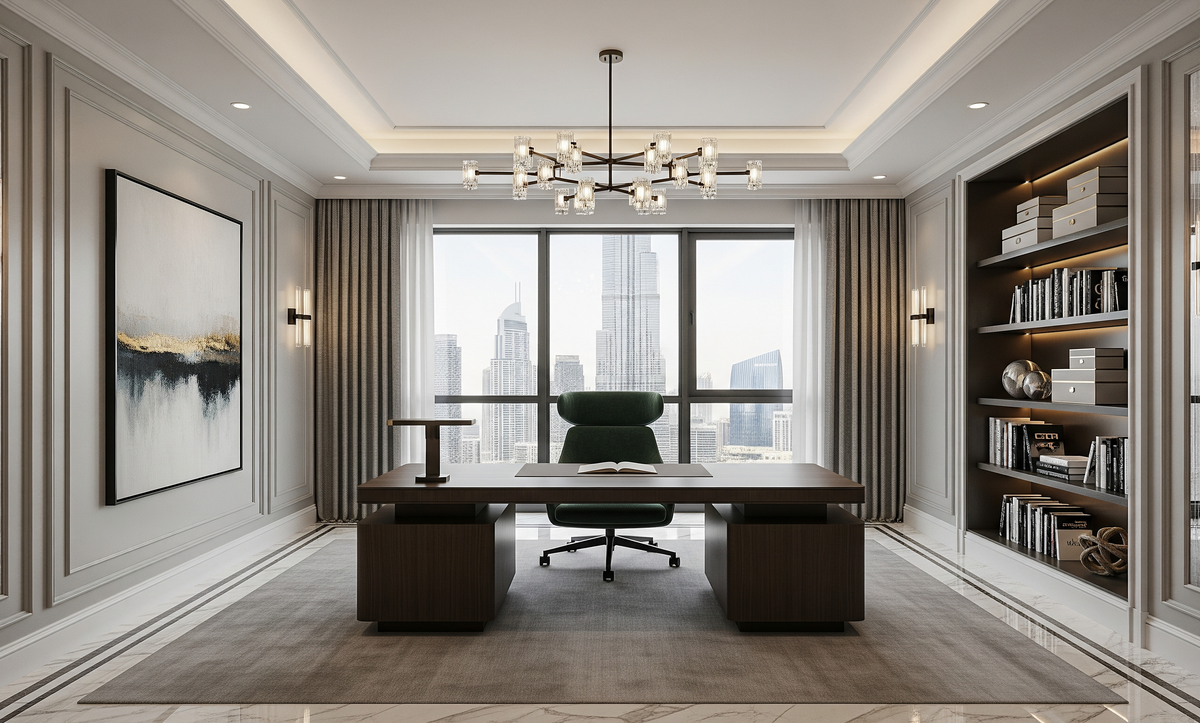
A substantial door strengthens acoustic separation. Strategic placement of seating away from busy household paths reduces disturbances. High-level offices benefit from an acoustic plan that gives the user confidence during every conversation.
8- Styling with a curated, editorial mindset
Styling in a luxury home office follows a focused direction. Accessories remain purposeful and restrained.
Suitable items include:
- A single artwork on the main wall
- A structured group of books with clean spines
- A sculptural object with strong form
- A desk organizer that keeps essentials visually controlled
Every item contributes to the identity of the room. This curated approach echoes the styling found in top-tier interior magazines where clarity and intention dominate the scene.
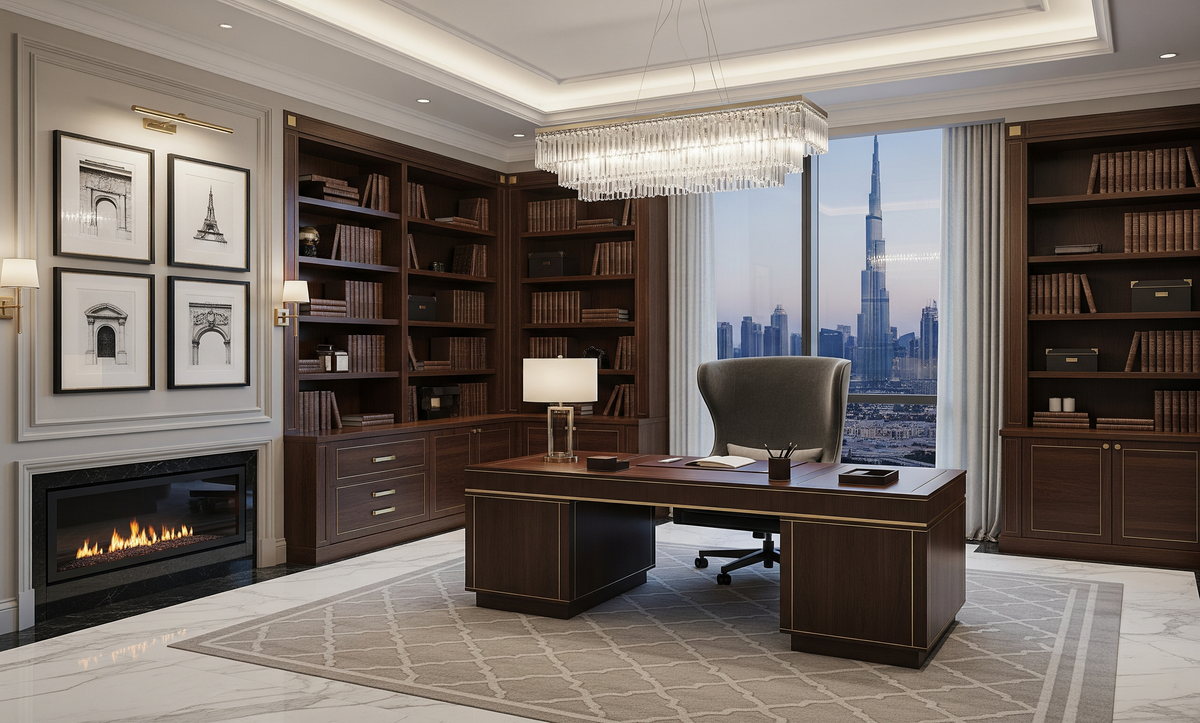
9- Color strategy that supports extended work
Color plays a distinct role in shaping the atmosphere of an executive home office. Deep blues, stone neutrals, rich greens and charcoal tones create a grounded backdrop for thought-heavy tasks. These palettes complement timber, stone and metal materials with ease.
Color consistency across cabinetry, textiles and wall surfaces produces a stable interior that supports long hours without visual fatigue.
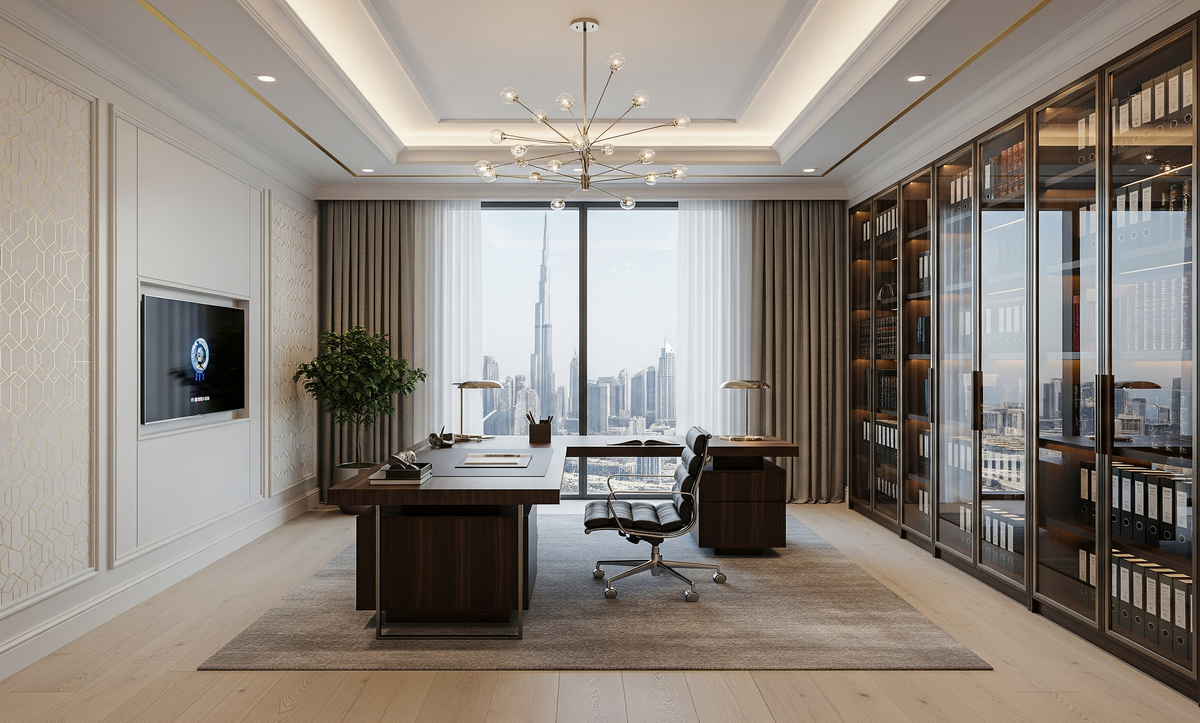
10- Privacy strengthened through spatial planning
Privacy increases the utility of the home office. Rooms near quieter sections of the house encourage uninterrupted work. When the layout places the office closer to active areas, thoughtful design preserves focus.
Examples include:
- A compact entry zone that filters sound
- Window treatments offering adjustable coverage
- Desk orientation that favors inward attention
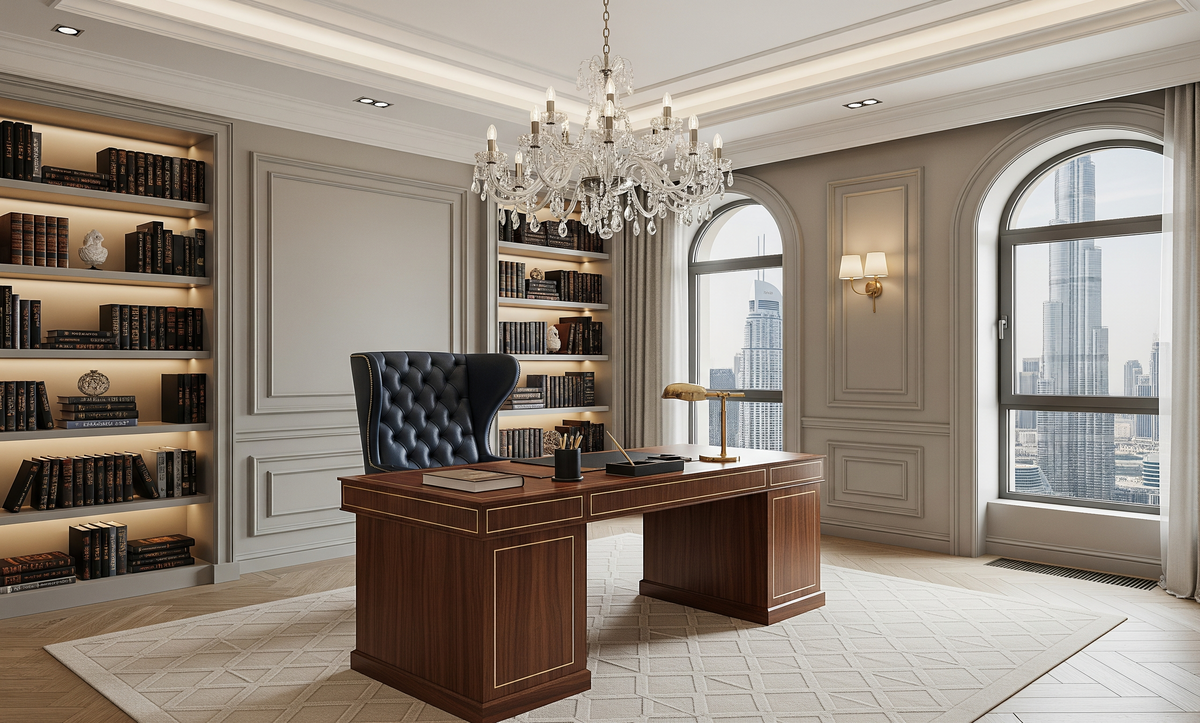
These strategies ensure that the office operates effectively throughout the day with minimal interruption.
11- Why an office interior design company enhances results
A luxury home office benefits from advanced planning across cabinetry, lighting, materials, acoustic solutions, technology integration and furniture scale. Professional designers understand how these components interact throughout the workday. Their expertise ensures that the space reaches executive standards with architectural clarity and dependable performance.
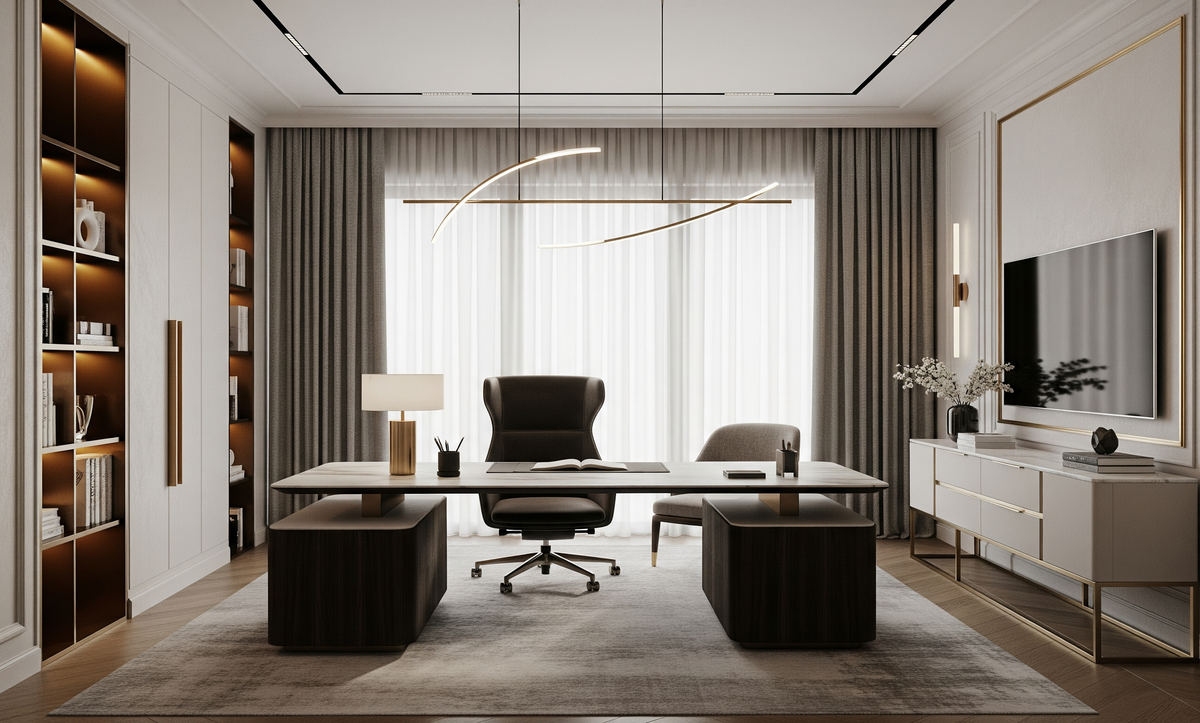
A specialized team streamlines decisions, provides accurate drawings, supervises custom fabrication and guides installation. The result is a home office suited for long schedules, sharp concentration and high expectations.
Contact to Algedra
Algedra creates home offices with strong structure, refined materials and tailored working environments. The team delivers interiors that support demanding workloads and architectural precision.
To begin your custom home office design, contact Algedra for a dedicated consultation.
FAQs
1. What forms the foundation of a high-level home office?
A strong desk placement, organized storage and a lighting plan that supports long sessions.
2. Which materials suit premium office interiors?
Timber, stone, metal and structured textiles contribute durability and visual strength.
3. How does a secondary seating zone enhance the office?
It supports reading, quick meetings and planning away from the main desk.
4. Why is technology placement important?
Correct placement streamlines daily routines and maintains visual order.
5. How does lighting influence productivity?
A balanced combination of task, ambient and accent lighting sustains comfort through long workdays.