

An organized and beautiful closet is an integral part of a home that can make day‑to‑day life easier. Whether you’re designing a luxury dressing room, planning a small walk‑in closet or revamping a reach‑in wardrobe, the key is to blend style with elegance.
This comprehensive guide explores the latest closet design trends, practical organization tips and the benefits of working with a professional interior designer. Use it as inspiration for creating a closet or dressing room interior that reflects your personality and supports your daily routine.
1- Trend‑Driven Ideas for Modern Closet and Dressing Room Design
1.1. Accent Lighting Moves to Center Stage
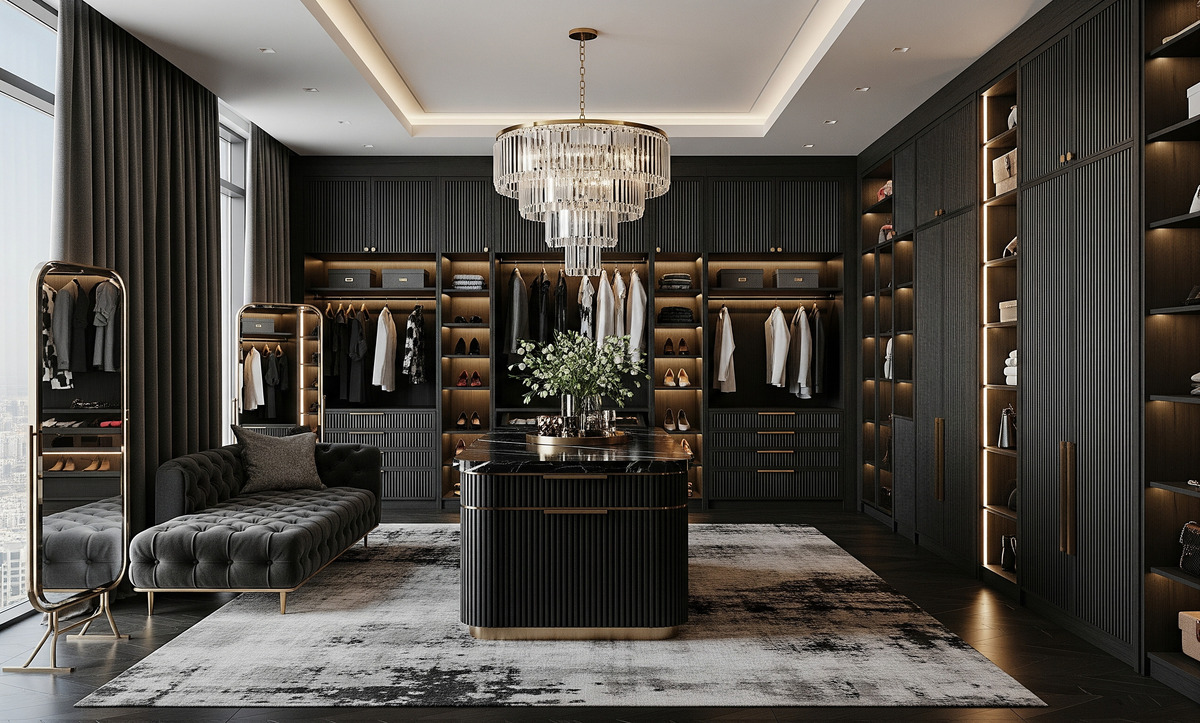
Lighting has evolved from a purely practical element to a central design feature in 2025. According to the Closets & Organized Storage industry report, accent lighting is now the single most requested upgrade — 31% of professionals say their clients prioritize it. LED strip lights under shelves, along hanging rods and around display cases add depth and drama while making clothing and accessories easier to find. Motion‑activated lighting provides convenience in master closet ideas by illuminating sections as you approach. Homeowners also install lighted hanging rods, illuminated drawer interiors and statement ceiling fixtures for an upscale ambiance.
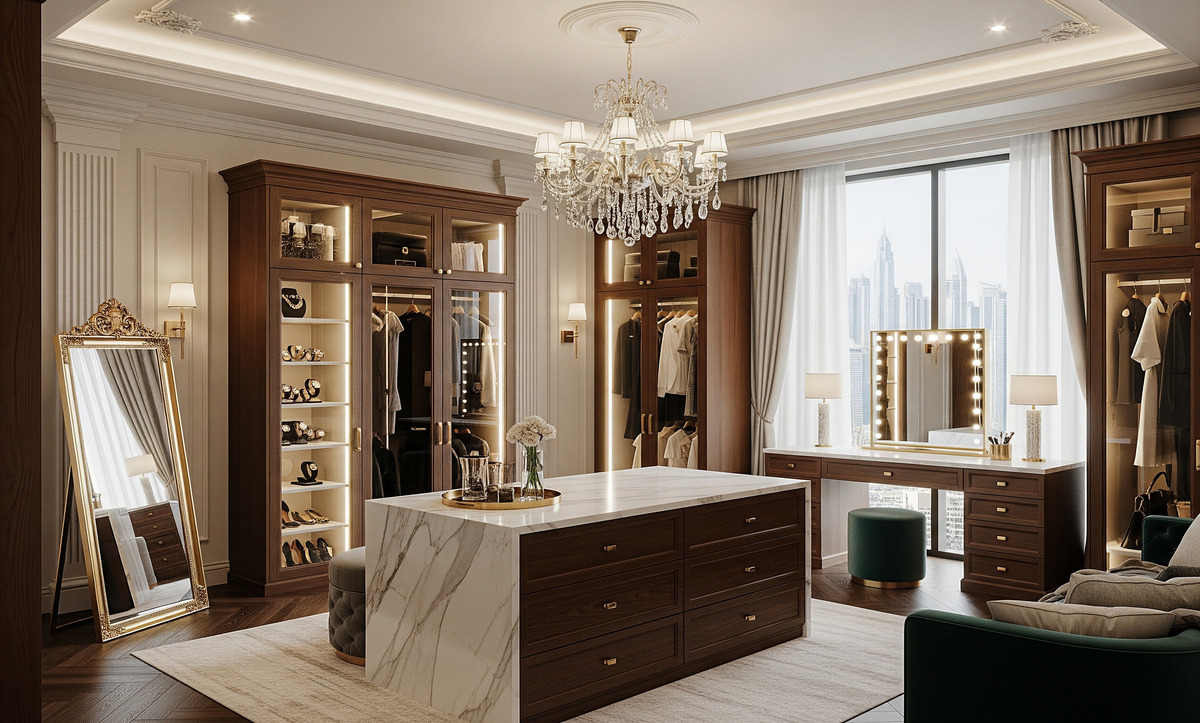
1.2. Multi‑Functional Spaces Blur the Lines Between Closet and Dressing Room
Modern closets are evolving into multi‑purpose retreats. In 2026, homeowners want spaces that support dressing, relaxing and getting ready in one place. This blurring of boundaries between closet, dressing room and personal retreat often includes:
- Comfortable seating: A bench or chaise adds a spot to put on shoes or relax.
- Vanity station: Integrated lighting and storage make it easy to apply makeup or jewelry.
- Charging and tech integration: Built‑in charging ports, Bluetooth speakers and even small work stations turn a closet into a mini personal office.
This design approach adds value to renovations and new builds because it enhances function without requiring more square footage.
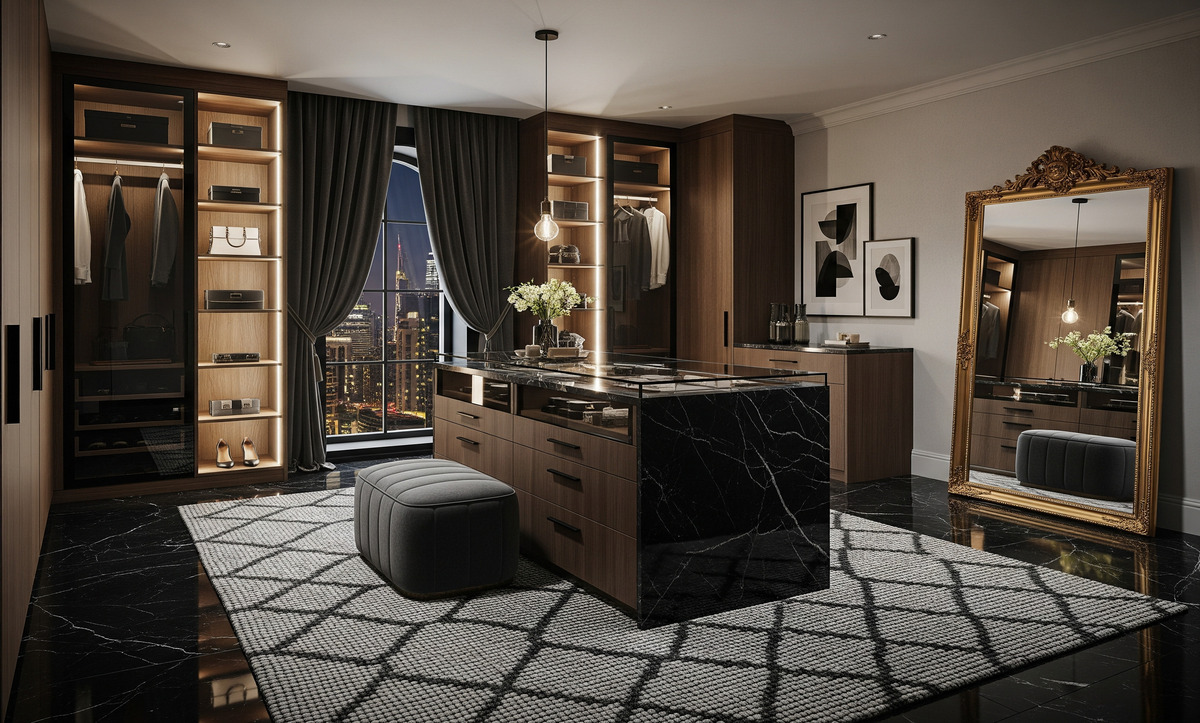
1.3. Decorative Hardware Becomes Self‑Expression
Hardware — knobs, pulls and handles — isn’t just a practical detail. It’s a way to inject personality. Decorative hardware is the second most requested upgrade. Popular trends include mixed metal finishes, leather‑wrapped handles, geometric designs and vintage‑style pieces. Changing hardware is an easy way to refresh a closet interior design without a major renovation, giving the space a unique flair.
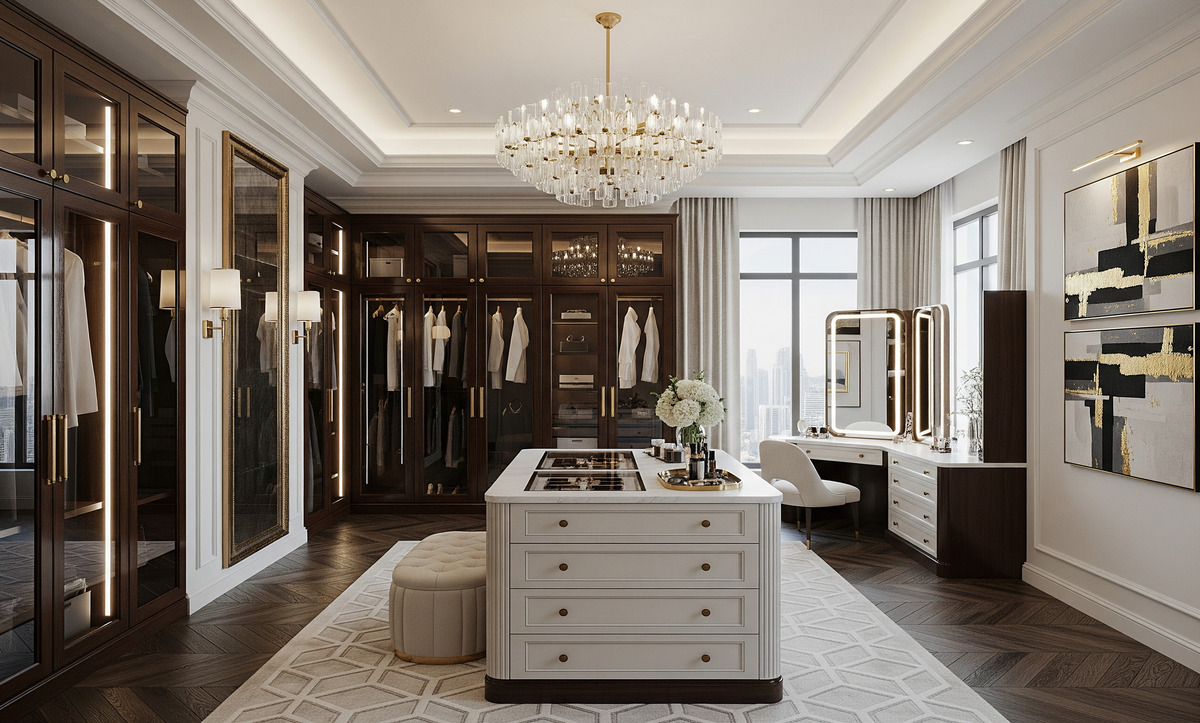
1.4. Mix of Materials Adds Depth and Interest
While durable laminates still dominate closet construction, designers are mixing materials to create richer textures. In 2025, 64% of builds still use laminates, but solid wood or wood veneers appear in about 39% of projects. Combining glass cabinet doors, metal mesh inserts, textured laminates and natural wood warms up modern closets and allows airflow. These combinations prevent the closet from feeling like an afterthought and instead make it feel like part of the home’s decor.
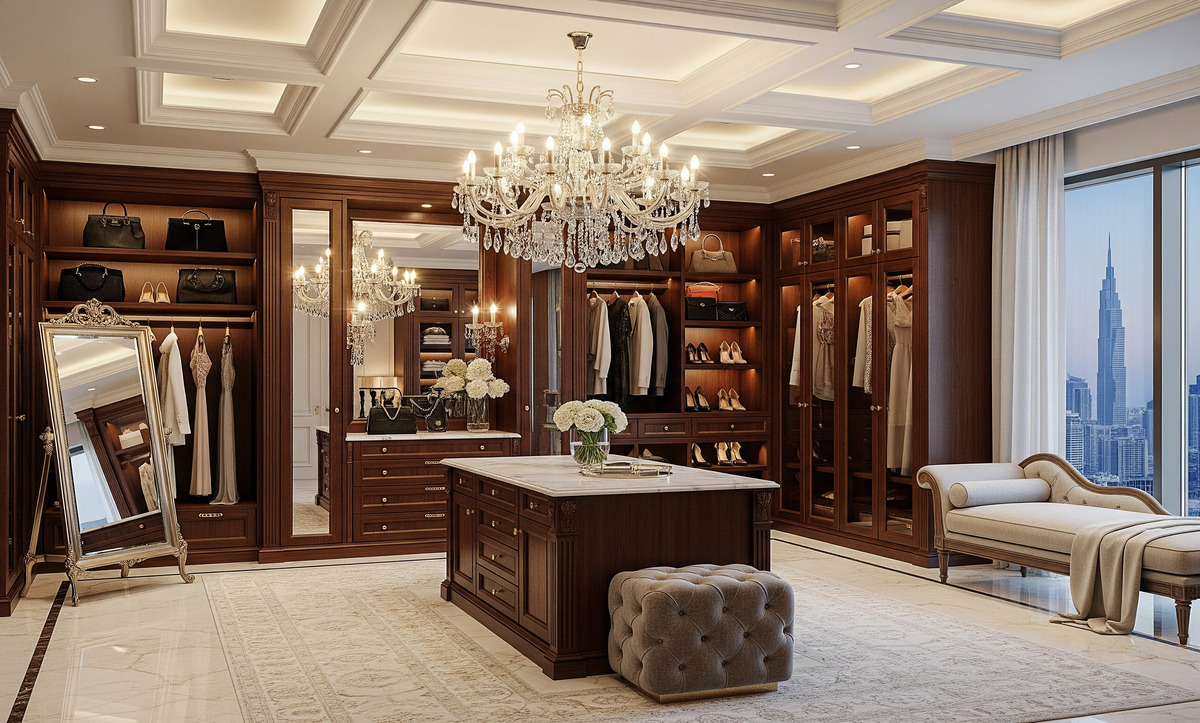
1.5. Color Evolves Beyond White
White remains a classic closet design color, but homeowners are experimenting with warmer neutrals, bolder hues and two‑tone finishes. Light wood grains are now the second most requested finish after white, and homeowners are adding accent colors in drawers or specific sections. Two‑tone designs help define zones within the layout and make the closet feel connected to nearby rooms.
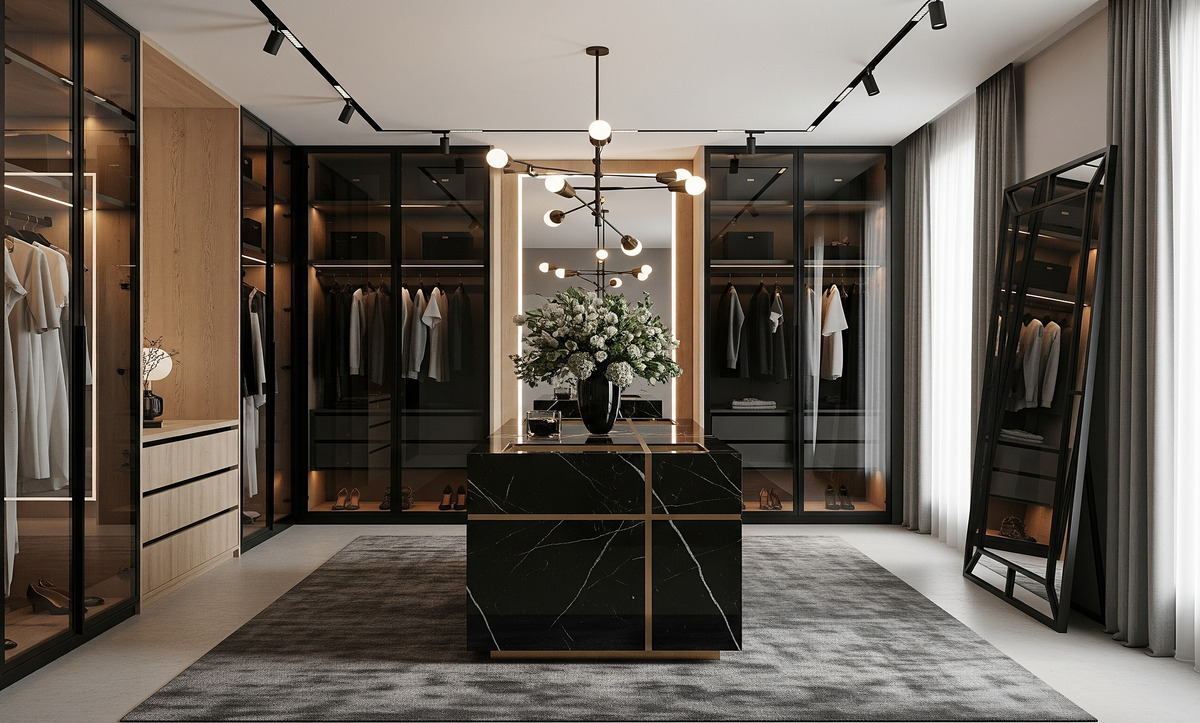
1.6. Smart Storage Innovations Simplify Organization
Clever storage solutions are essential as homes evolve into multi‑purpose spaces. Trends gaining momentum include:
- Pull‑out valet rods for outfit planning.
- Specialized compartments for accessories like watches, scarves and ties.
- Adjustable shelving systems that adapt as needs change.
- Decorative baskets and containers that blend style with function.
These innovations keep closets organized and flexible, accommodating growing families without constant layout changes.
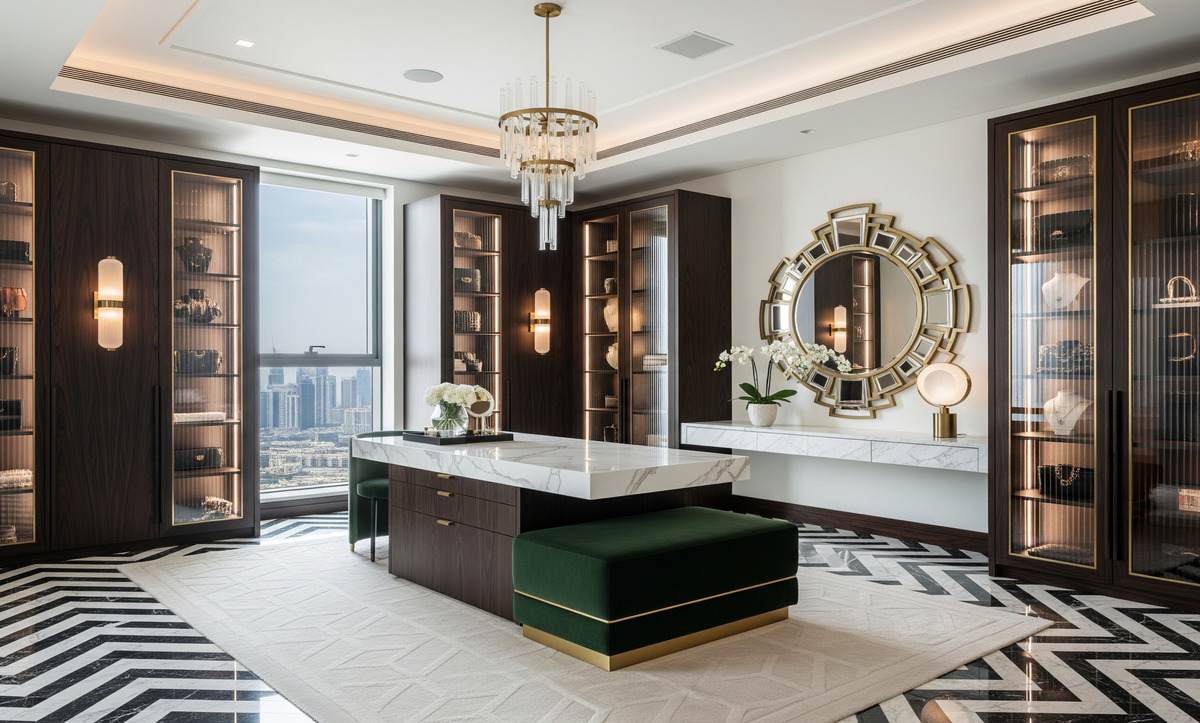
1.7. Technology Integration and AI
The rise of smart technology is one of the biggest changes in closet trends. Only 25% of professionals used AI in 2024, but the number has jumped to almost 75% in 2025. Homeowners can now:
- Use virtual previews to explore designs before installation.
- Install motion‑activated lighting, climate control and even inventory tracking systems.
- Add high‑tech features like built‑in screens or voice‑controlled systems to manage wardrobes or listen to news while getting ready.
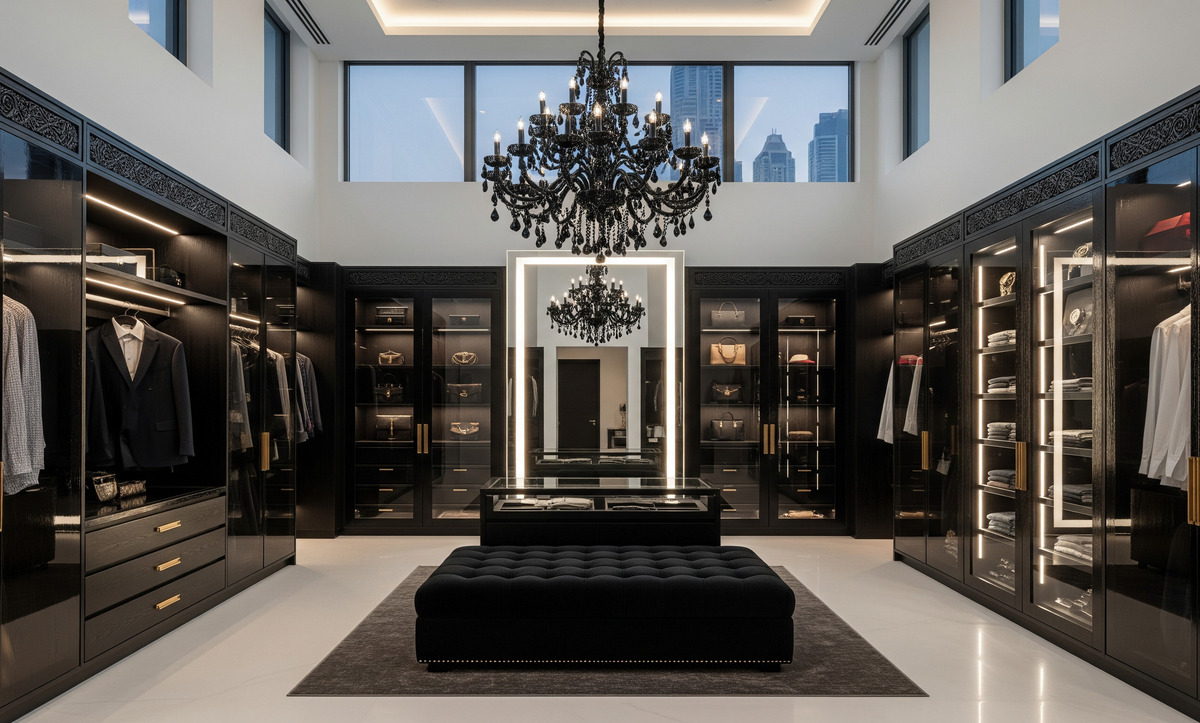
1.8. Natural Elements and Sustainability
Closets are joining the broader sustainability movement. Designers use responsibly sourced wood, low‑VOC finishes and energy‑efficient lighting. Maximizing natural light through thoughtful design and using sustainable materials like bamboo and reclaimed wood reduces environmental impact. Bamboo’s rapid renewability and low water use make it a superior eco‑friendly choice. Reclaimed wood repurposes resources and helps curb deforestation.
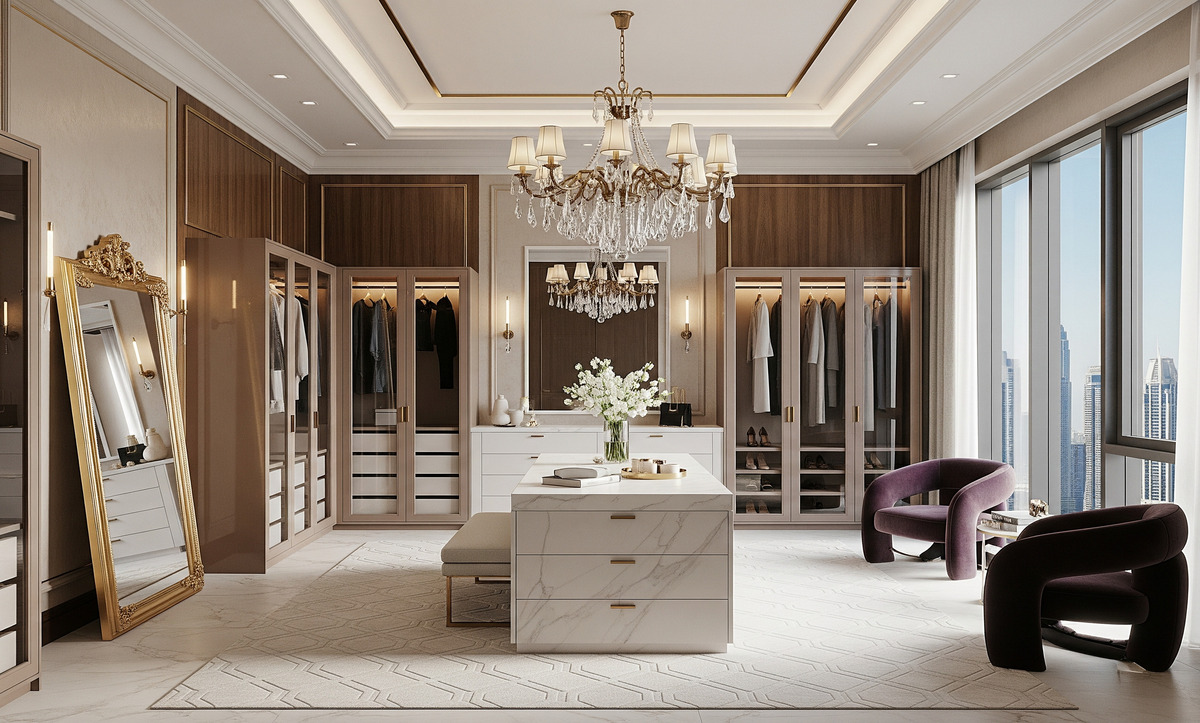
1.9. Minimalist and Space‑Saving Solutions
Minimalism improves daily life by reducing stress and decision fatigue. Keeping only essential clothing items can cut carbon, waste and water footprints by 20–30%. Innovative space‑saving techniques include using matching hangers, rotating seasonal wardrobes, adding extra hanging rods and using decorative ladders to create vertical storage. These ideas make even small reach‑in closets feel organized and spacious.
1.10. Customization and Modular Design
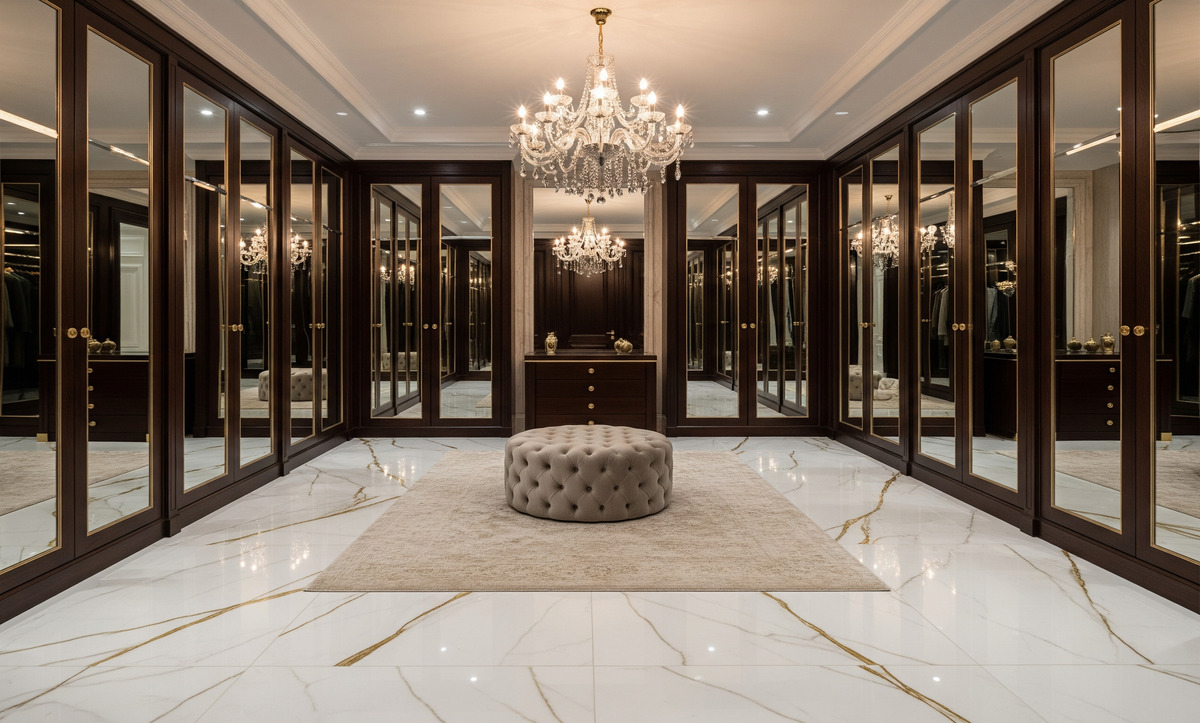
Customized closet systems and modular designs allow you to build flexible storage tailored to your habits. Custom solutions ensure every item has a designated spot and can adapt to large or small walk‑in closets. Modular features like pull‑out baskets, hidden drawers and combinations of wire and wood shelving grow with changing needs. Integrating cabinets with glass or solid doors, internal lighting and adjustable inserts transforms closet storage into an expression of personal style.
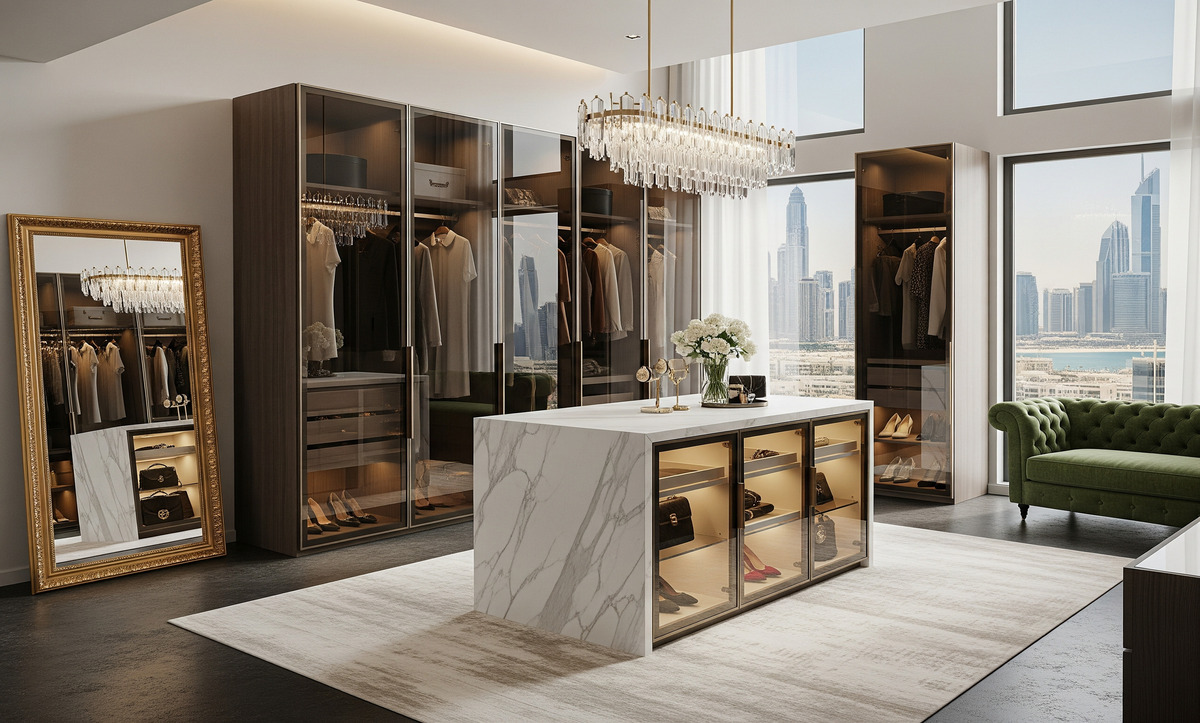
1.11. Designing a Luxury Dressing Room
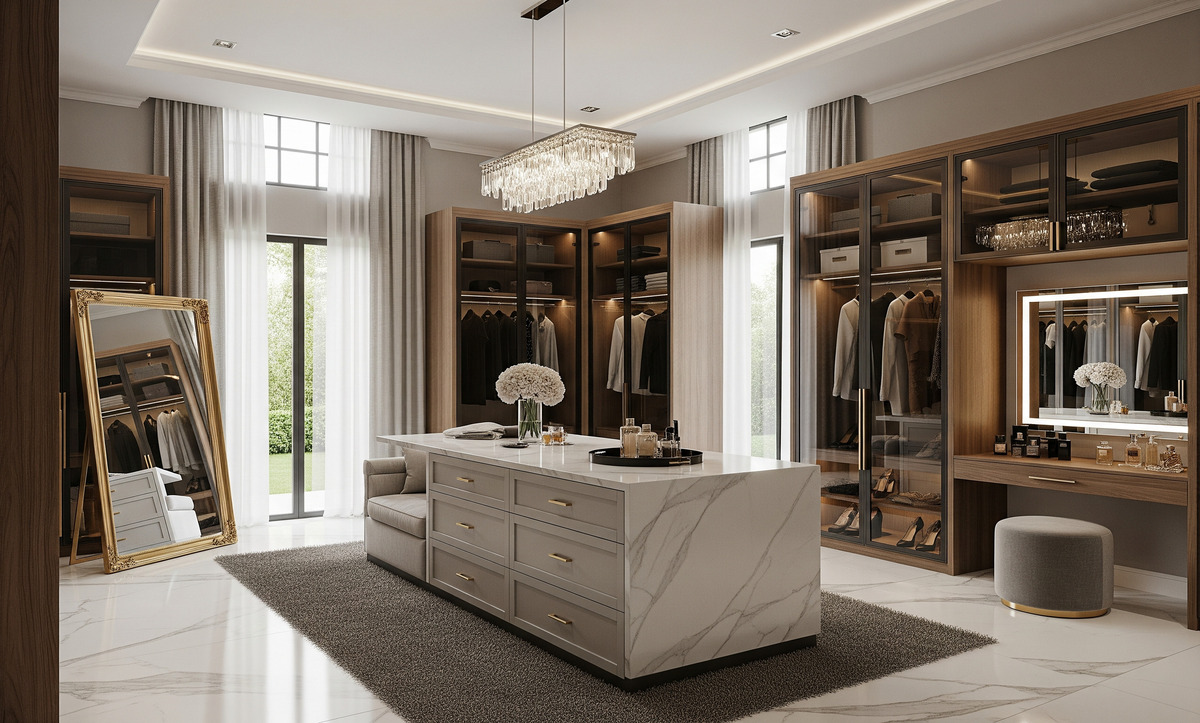
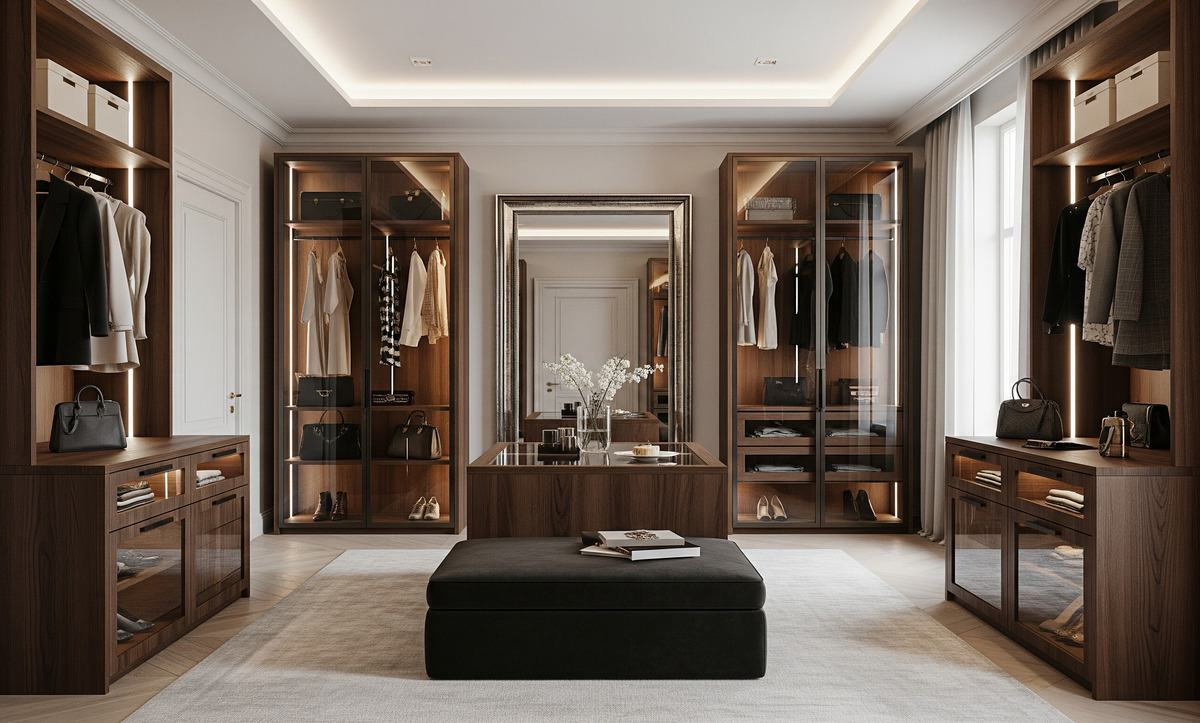
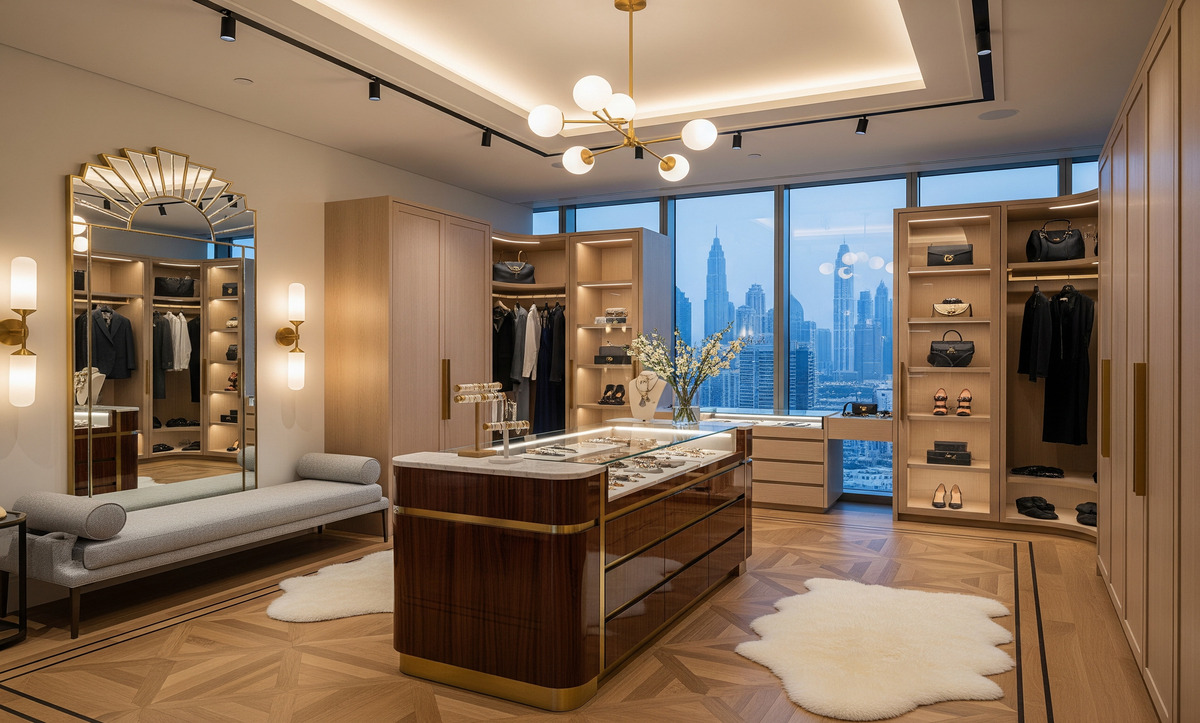
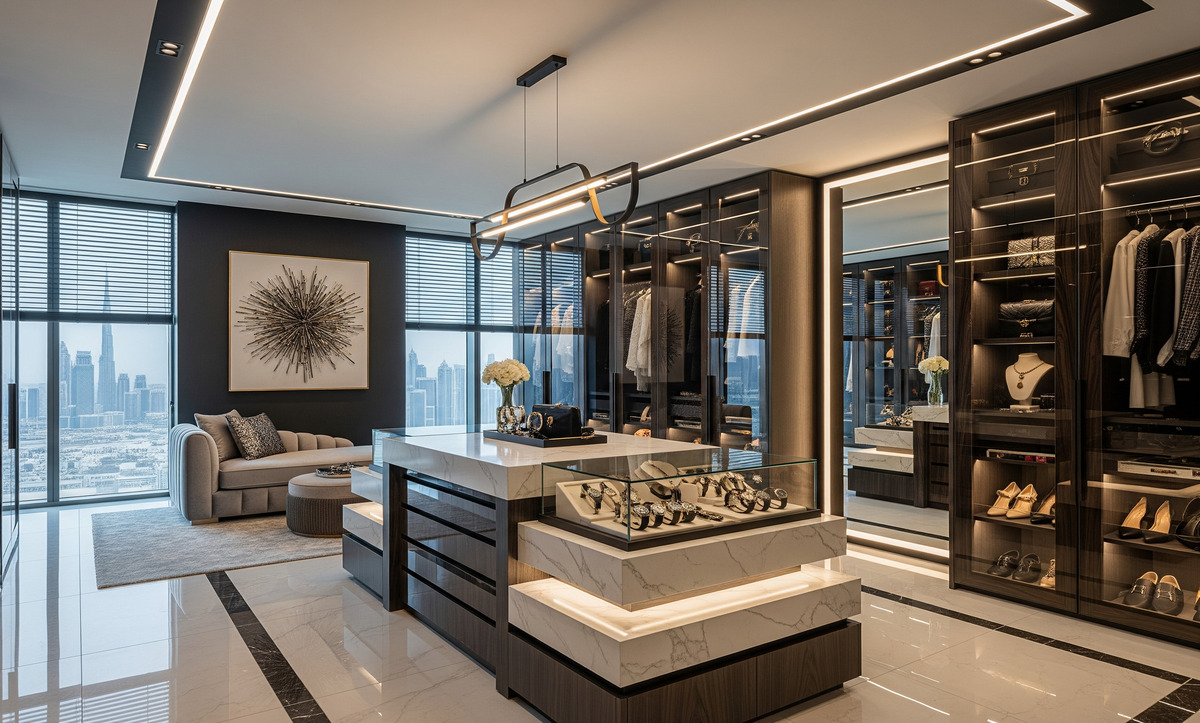
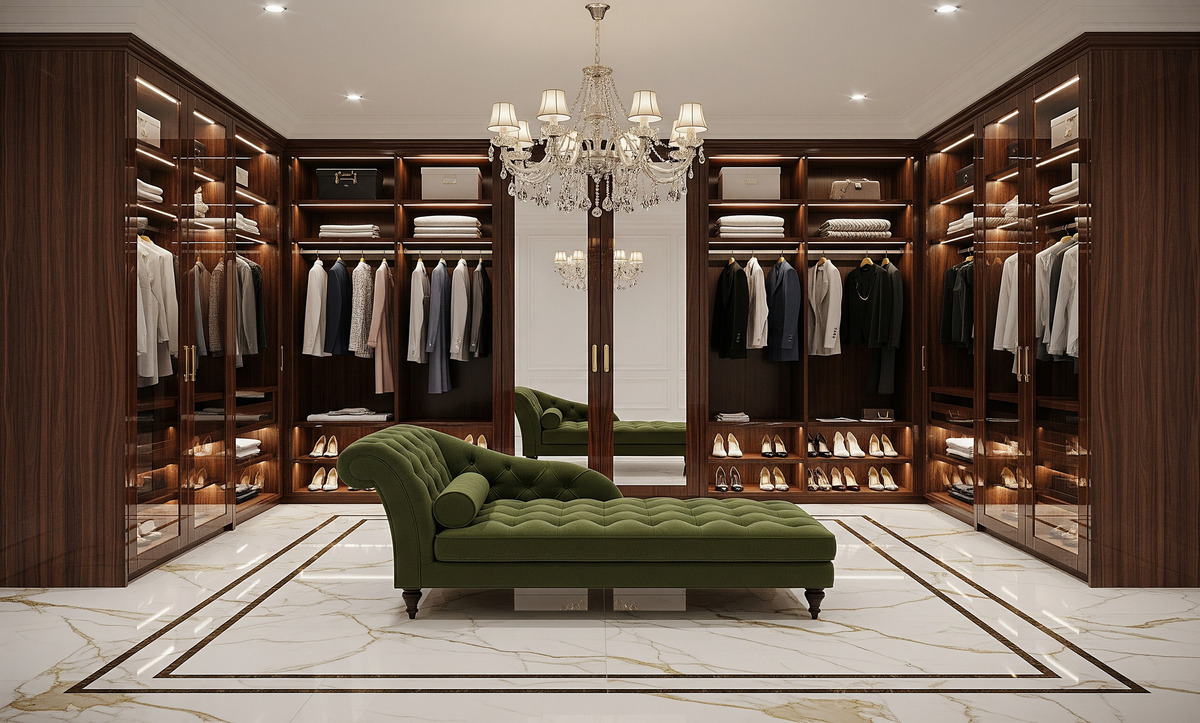
A dressing room is essentially a glorified walk‑in closet that feels like a personal boutique. To create a luxury dressing room:
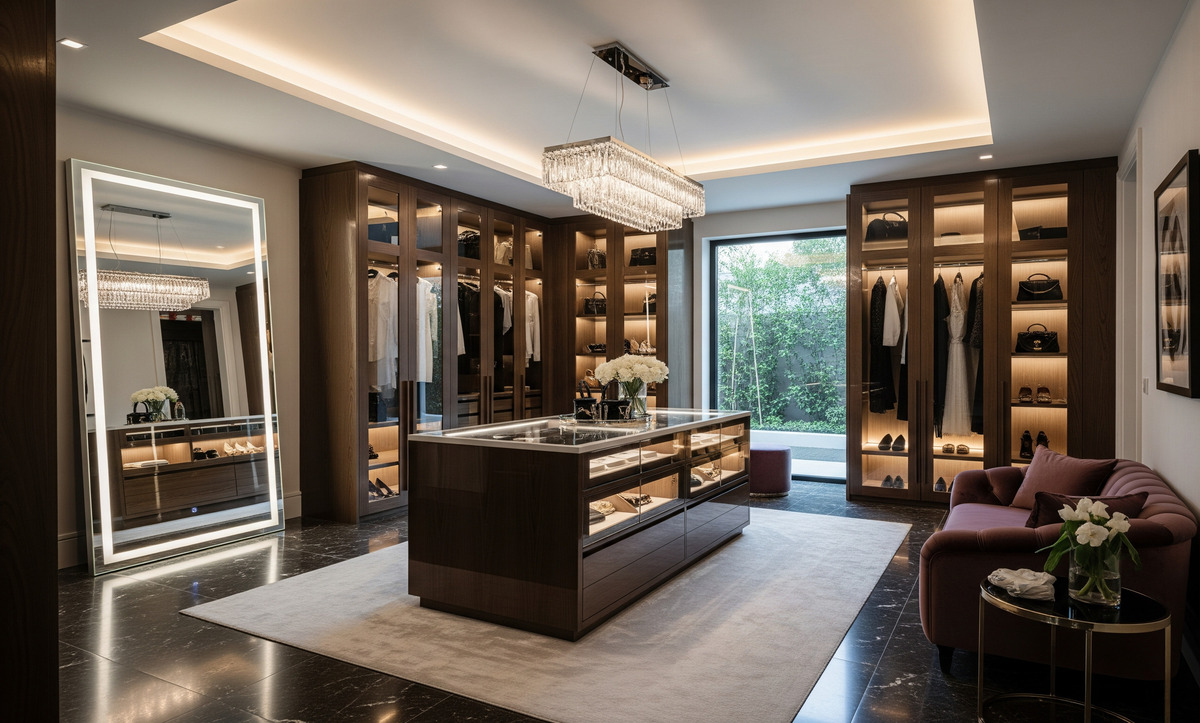
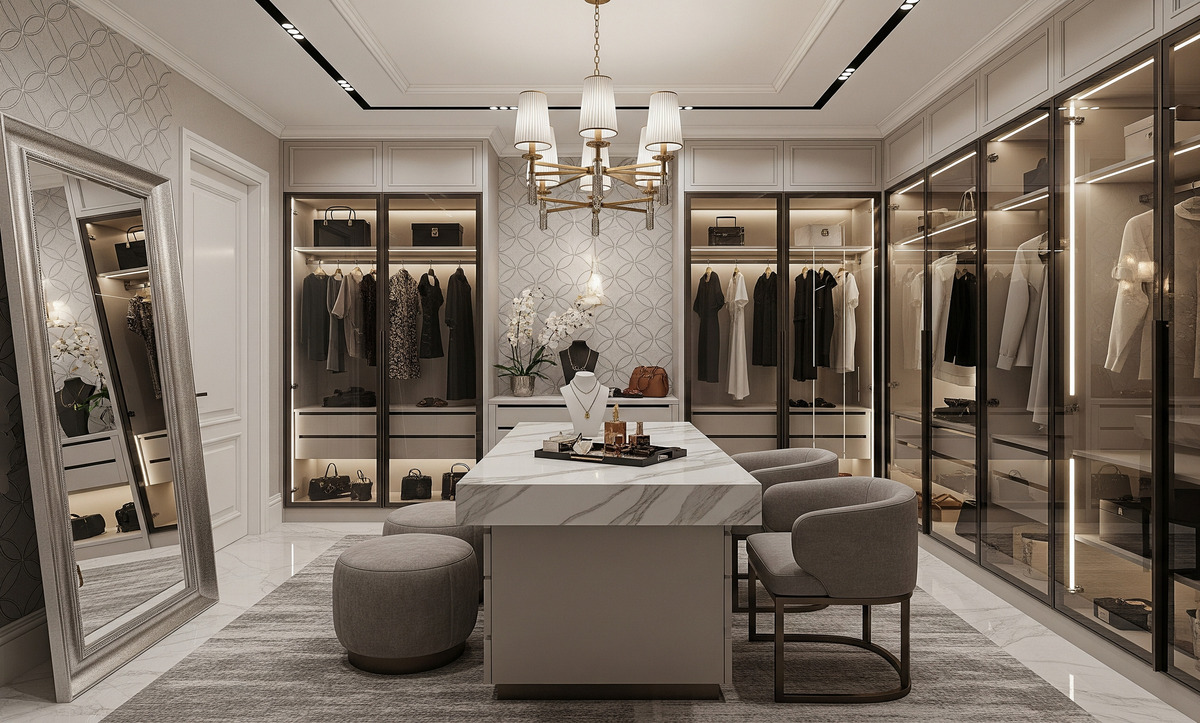
- Add an island or peninsula: A central island provides drawers for jewelry and accessories and offers a surface for folding clothes or displaying items.
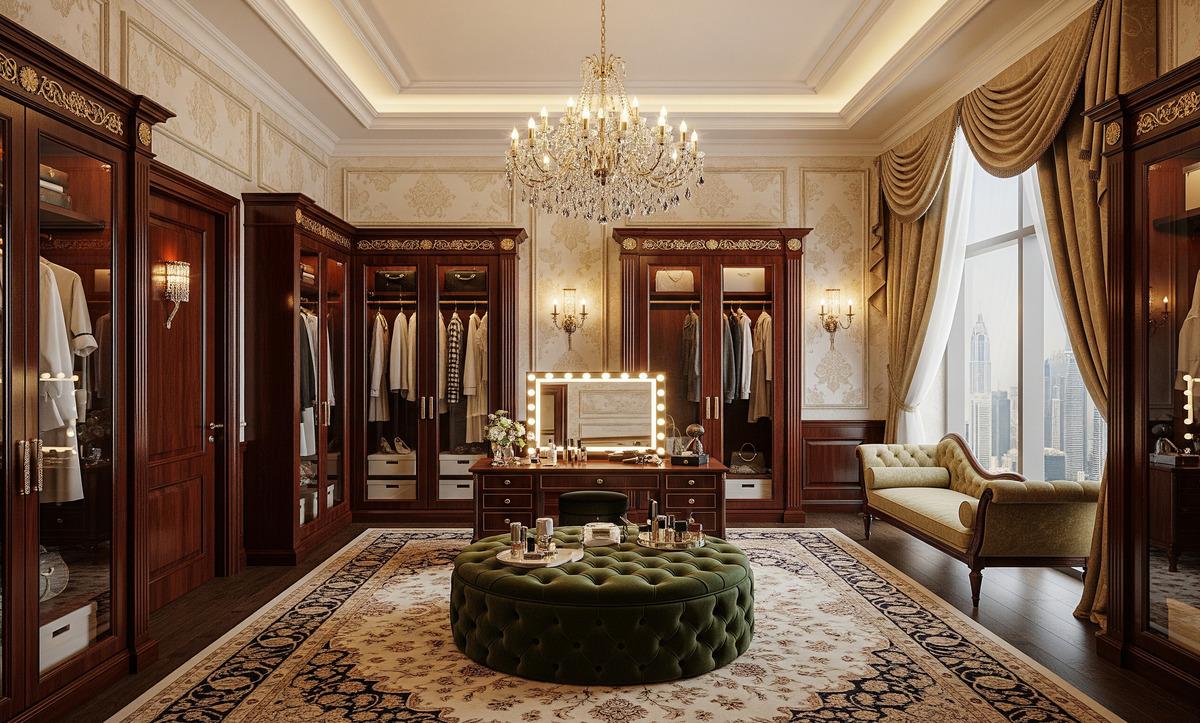
- Include full‑length mirrors: Mirrors enlarge the sense of space and help with outfit planning. For extra glamor, consider backlit mirrors or an antique‑style frame.
- Incorporate seating: A plush stool, bench or chaise lounge makes it easy to put on shoes or have a moment of relaxation.
- Install a statement chandelier or pendant lighting: This draws the eye upward and turns the room into a showpiece.
- Display items like a boutique: Use glass-front cabinets or open shelves for shoes and handbags to create a curated look.
- Personalize with art and decor: Framed prints, small sculptures or a rug transform the space into your own sanctuary.
2- Organization and Styling Tips
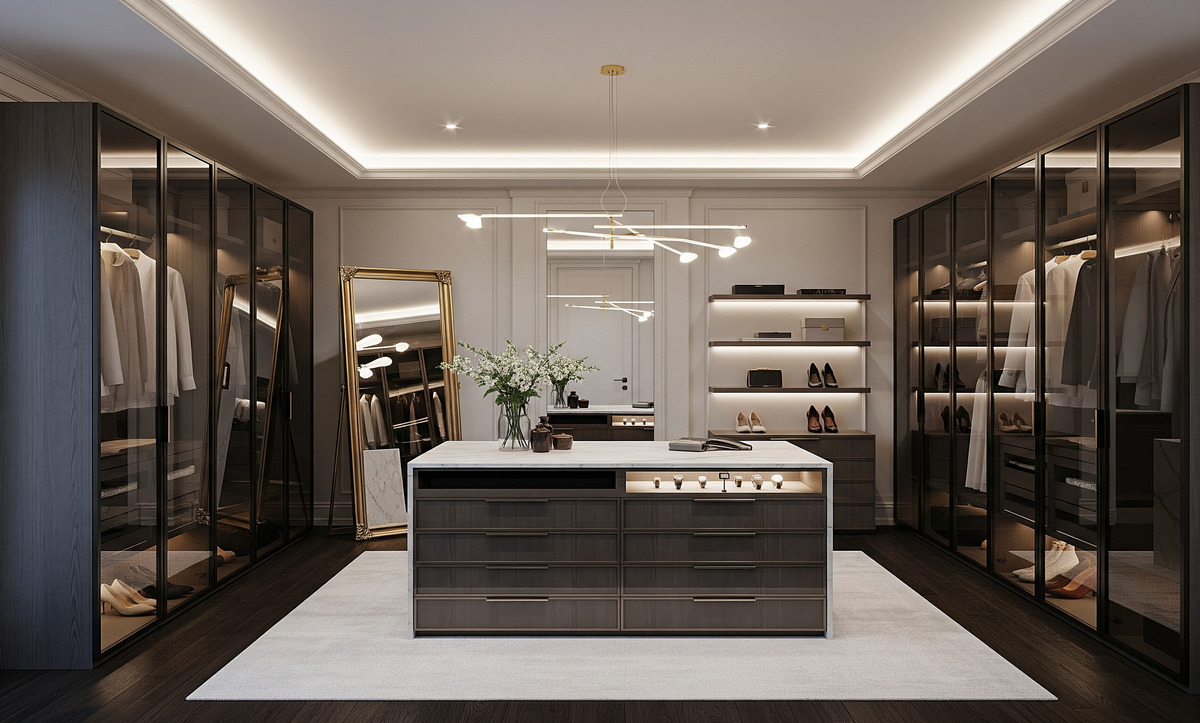
Building a dream closet or dressing room is only half the battle — keeping it functional requires thoughtful organization and styling. Here are strategies to maximize your space and maintain a polished look:
- Categorize and purge: Sort clothing and accessories by category (shirts, trousers, dresses, shoes, accessories) and donate items you no longer use. This makes it easier to find what you need and reduces clutter.
- Zone your closet: Group items by frequency of use — everyday items at eye level, occasional pieces higher up or lower down. Zones help you maintain order and create a visual rhythm.
- Use matching hangers: Uniform hangers keep clothing at a consistent height and make the closet look cohesive. Slim velvet hangers save space and prevent slippage.
- Rotate seasonally: Store off‑season clothing in bins or high shelves to free up room for current items. Seasonal rotation is especially useful for small closets.
- Utilize vertical space: Install double hanging rods, add shelves above clothing racks, and use over‑door organizers to maximize vertical storage.
- Add clear bins and labels: Transparent bins allow you to see contents at a glance, while labels maintain order.
- Protect delicate items: Use drawer dividers for jewelry and scarves, and invest in dust bags for handbags and shoes.
- Incorporate a display area: Reserve a section of your closet or dressing room for favorite pieces — a purse display or shoe wall turns storage into decor.
- Include a dressing mirror: Whether wall‑mounted or free‑standing, a mirror is essential for outfit planning.
- Bring in greenery: A small potted plant adds life and improves air quality. Choose low‑maintenance plants that thrive in indirect light.
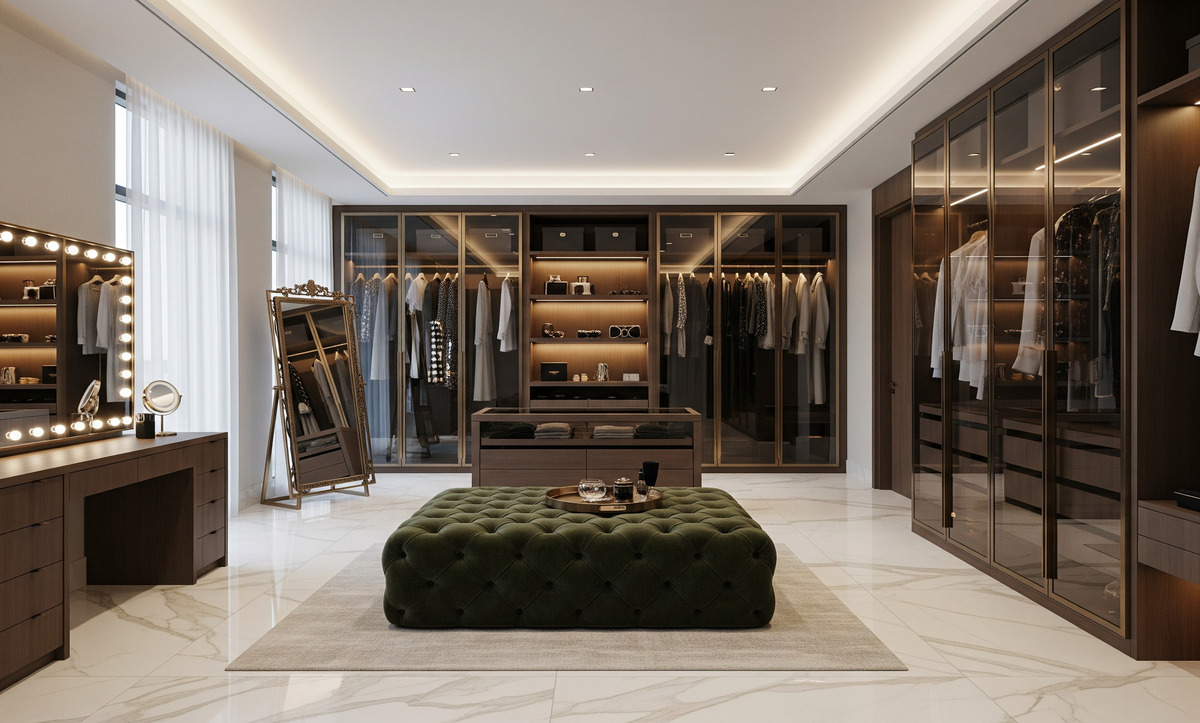
These dressing room styling tips help maintain order and ensure your closet remains a pleasant space rather than a catch‑all storage room.
3- Why You Should Hire an Interior Designer
Designing a custom closet or dressing room is both art and science. While DIY projects can be fun, working with a professional interior designer for your dressing room can save time, reduce stress and produce a more polished result. Numerous sources highlight the advantages of professional help:
3.1. Expertise and Experience
Professional interior designers bring specialized training and a wealth of experience. Algedra explains that designers interpret your style and identify your needs to offer customized solutions. They stay updated on trends and innovations, ensuring your closet is both stylish and functional. A trained eye sees opportunities and potential issues that homeowners often miss.
3.2. Time and Cost Efficiency
Design projects can be time‑consuming and costly if not managed properly. Designers handle everything from concept to installation and have established relationships with suppliers and contractors. Their professional assessment helps you understand which parts of a home need renovation and which can be repurposed, avoiding unnecessary expenses. Contrary to the myth that designers are expensive, Algedra notes that hiring one can actually save money by avoiding costly mistakes and reducing project time.
3.3. Personalized Design Solutions
A designer creates a space that reflects your personality and lifestyle. Algedra emphasizes that they work closely with clients to understand their vision and deliver personalized solutions. Designers also help define your style if you’re unsure where to start.
3.4. Access to Resources and Materials
Professionals have access to unique resources and materials not readily available to the public. Designers connect clients with high‑quality furnishings, fabrics and accessories. According to Algedra, they also have a reliable network of contractors, artisans and suppliers, so you don’t have to find tradespeople yourself. Their industry connections often lead to better pricing and faster delivery.
3.5. Proper Planning and Budgeting
Interior designers excel at planning and budgeting. Algedra notes that they develop a plan that aligns with your requirements and budget and know where costs can be reduced while still achieving a stunning result. They handle research on the latest trends and materials so you can make informed decisions.
3.6. Increased Property Value
A well‑designed interior can significantly increase the value of your property. Algedra points out that potential buyers often pay a premium for aesthetically pleasing and functionally efficient homes. Investing in a professionally designed closet can pay dividends if you ever decide to sell.
3.7. Stress Reduction
Managing a renovation or new build can be overwhelming. Professional designers oversee planning, budgeting and coordination with contractors, reducing stress. Algedra adds that designers make decisions objectively and can mediate when family members have conflicting opinions, ensuring a smooth process.
3.8. Avoiding Costly Mistakes
One of the biggest benefits of hiring a designer is avoiding mistakes that lead to additional expenses. Algedra emphasizes that while some homeowners believe designers are costly, not hiring one often results in spending more money and time later. Designers carry out professional assessments and plan logically, preventing hidden costs.
3.9. Reliable Network and Industry Insight
Designers work with a network of trusted electricians, carpenters, plumbers and other specialists. They also have insight into the latest industry trends, technologies and materials, giving your closet a competitive edge.
In short, hiring a professional interior designer can ensure your dream closet or dressing room meets high standards, stays within budget and increases the value of your home.
Ready to Transform Your Closet?
Algedra Interior Design is renowned for creating sophisticated closets, dressing rooms and luxury interiors tailored to client lifestyles. Our experienced designers stay ahead of industry trends, ensuring each project blends innovative storage solutions with timeless style.
Whether you need a small reach‑in closet makeover or a full luxury dressing room with smart technology, our team has the expertise to bring your vision to life.
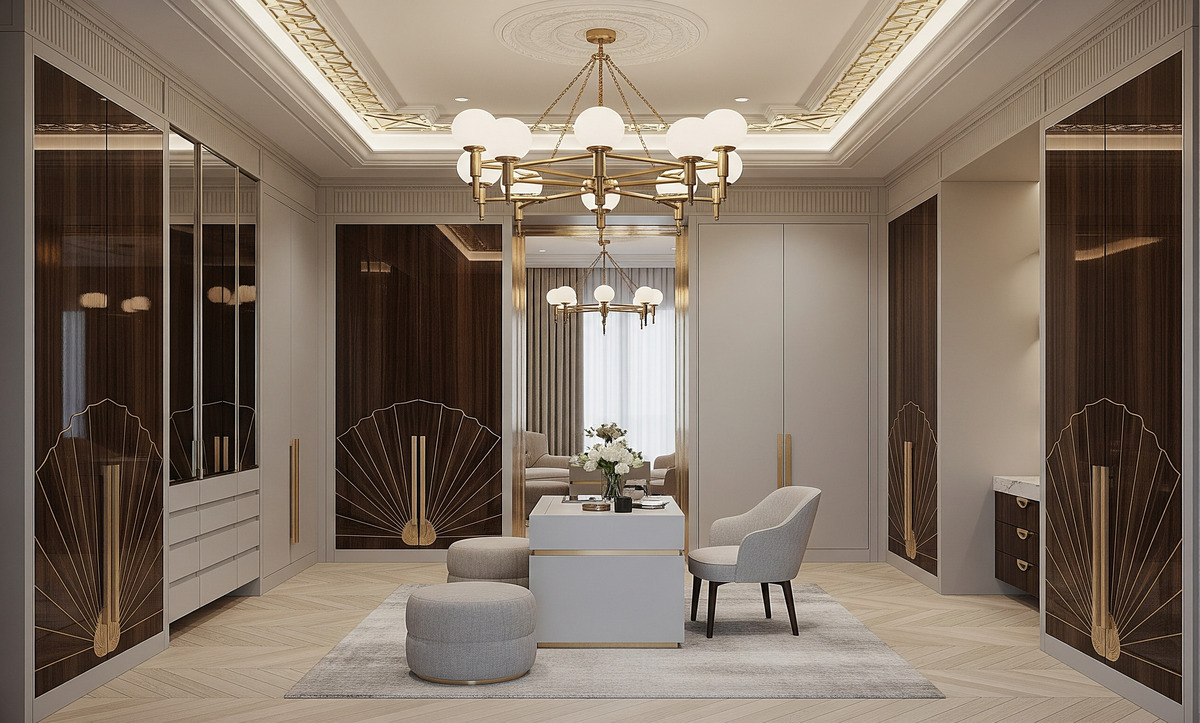
Contact us at Algedra to schedule a consultation and discover how our bespoke closet design services can elevate your home. We handle everything from initial concept and space planning to material selection and installation. Your dream dressing room is just a phone call or message away.
FAQ
1. What are the essential features of a modern dressing room?
A modern dressing room should combine function with style. Key features include adequate hanging space, shelves or drawers for folded items, a dedicated shoe zone, a mirror (preferably full‑length), accent lighting, and seating. Adding an island for accessories or a vanity with specialized lighting enhances the space. Smart elements like motion‑activated lights, climate control or built‑in speakers can elevate the experience.
2. How do I maximize storage in a small closet or reach‑in wardrobe?
Use vertical space by installing double rods and high shelves. Matching slim hangers free up space and create uniformity. Add pull‑out baskets or drawers for accessories, and use the back of the door for hooks or over‑door organizers. Rotating seasonal items reduces clutter. Modular systems with adjustable shelving allow you to adapt as your needs change.
3. What materials are best for sustainable closet design?
Look for responsibly sourced wood (e.g., FSC‑certified), bamboo (which has rapid renewability and low water usage) and reclaimed wood. Pair these with low‑VOC finishes and energy‑efficient LED lighting. Reclaimed wood adds character and reduces the need for new timber.
4. Why should I hire an interior designer instead of designing my closet myself?
Designers bring expertise, experience and access to resources. They save time and money by avoiding costly mistakes, manage projects efficiently and provide personalized solutions that reflect your style. Designers also have networks of trusted contractors and vendors, ensuring quality workmanship.
5. How long does it take to design and install a custom closet?
Time frames vary depending on project complexity. A simple reach‑in closet redesign can take a few weeks from consultation to installation. A large walk‑in or dressing room with custom cabinetry, lighting and smart technology may take several months. Working with an experienced design firm like Algedra ensures efficient planning, realistic timelines and minimal disruption.
Transform your closet into a beautiful, organized sanctuary by embracing current trends, optimizing storage and seeking professional guidance. Whether you dream of a luxury dressing room with all the amenities or need a functional solution for a small space, the right design will make getting dressed each day an enjoyable experience.